
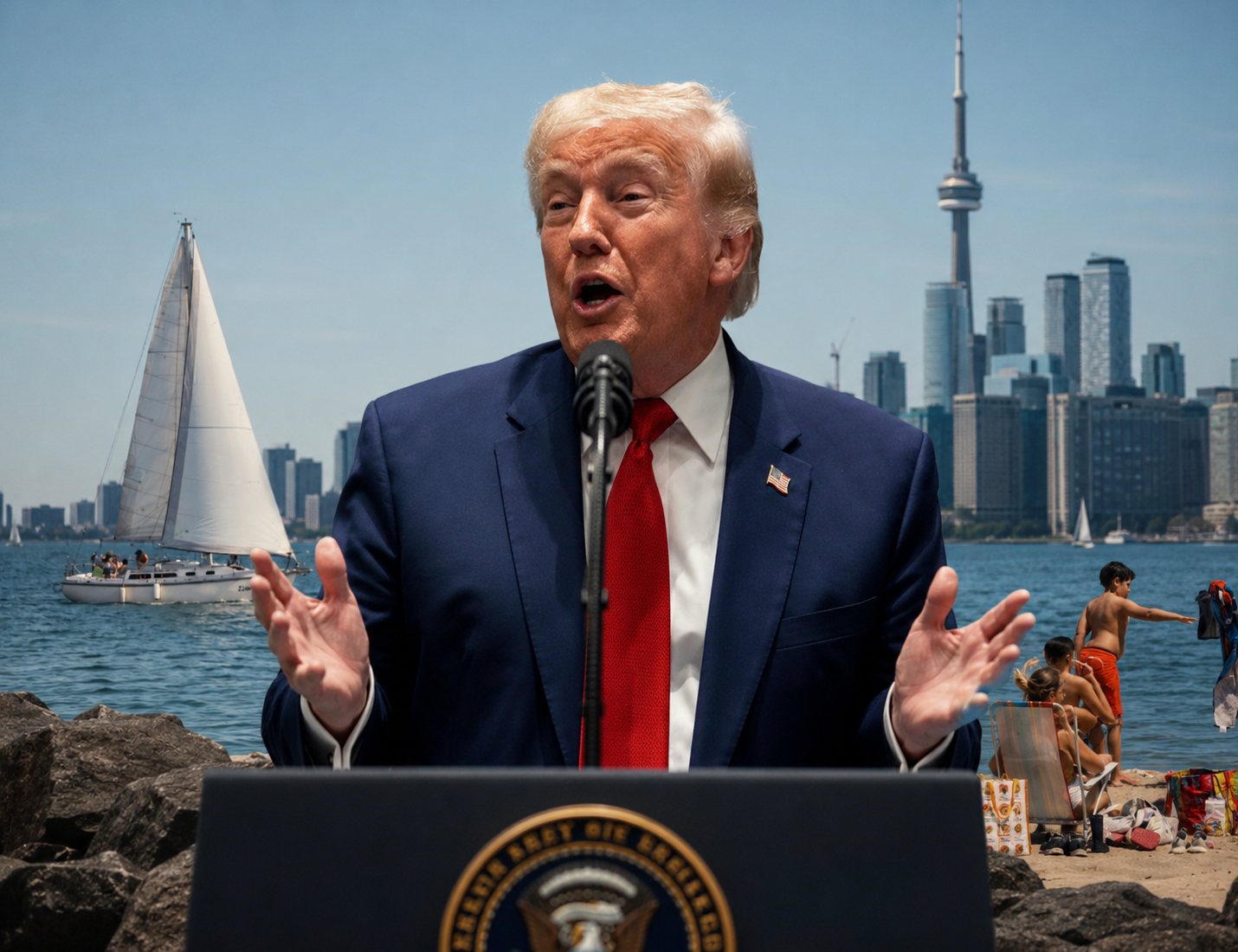
President Donald Trump said Tuesday that the United States is giving “serious consideration” to renaming Lake Ontario “Lake America,” adding another dispute to strained US/Canada relations.
Trump announced the proposed name change Tuesday on Truth Social, linking it to worsening economic relations with Ontario and Canada.
The move follows his earlier effort to replace the name Gulf of Mexico with “Gulf of America” for official US federal use. Lake Ontario presents a different international complication.
The waterway is shared by Canada and the United States, with Ontario and New York governing their respective shorelines and lakebed areas.
The two countries also cooperate through the International Joint Commission and the Great Lakes Water Quality Agreement.
That means the US president could change the geographic name used by federal agencies, but such an action would not determine what Canada or international organizations call the lake.

Trump’s announcement came as Washington and Ottawa faced another breakdown in trade negotiations.
Canadian Prime Minister Mark Carney said Saturday that Canada had rejected demands involving French language protections and Canadian culture, describing those issues as unacceptable.
Trump disputed that account, saying he would not interfere with Canadians speaking French.
US Trade Representative Jamieson Greer separately characterized the dispute as a disagreement over requirements affecting American streaming companies rather than restrictions on the French language.
The broader confrontation has also involved tariffs. Trump said Monday that 50% tariffs on Canadian automobiles, auto parts, trucks and steel would take effect Jan. 1, 2027, accusing Canada of unfair treatment of American producers.
Vice President JD Vance defended the administration’s approach during a Monday appearance in Maine while leaving open the possibility of renewed negotiations. He said Washington expected fairness in its trade policy.
No change to Lake Ontario’s name has been finalized. Trump’s proposal currently represents a potential US federal naming change rather than an internationally binding renaming.


