
KEY POINTS
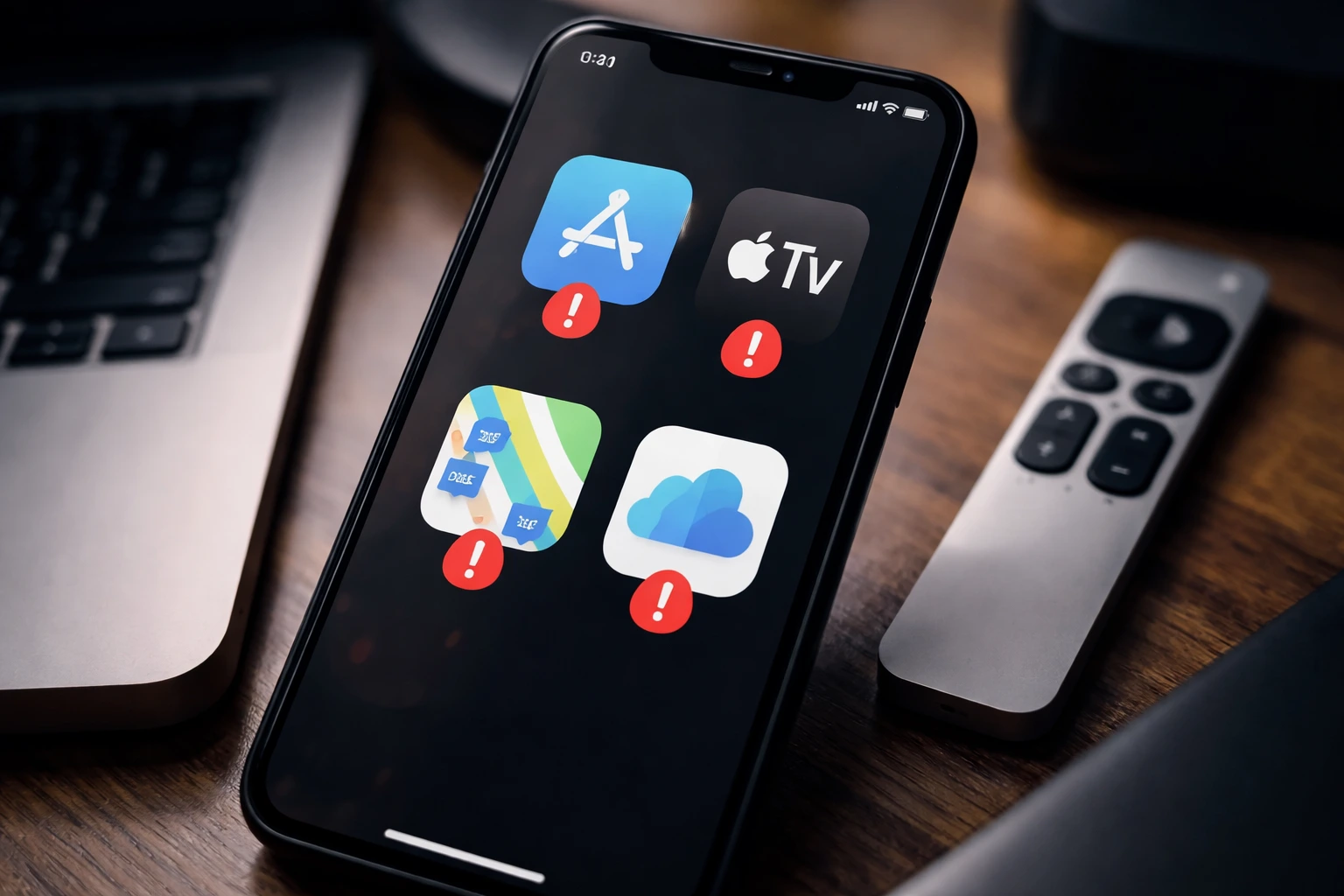
- The Apple services outage affected core consumer and developer tools across multiple regions
- Media streaming, app distribution and live navigation data were temporarily unavailable
- Apple restored most services within four hours, with limited residual issues
An Apple services outage disrupted access to the App Store, Apple TV, iTunes Store and several iCloud linked features Tuesday evening.
Leaving users unable to download apps, stream shows or view live traffic data for nearly four hours, according to Apple’s system status page.
The disruption underscored how deeply Apple’s ecosystem depends on always-on cloud infrastructure.
For many users, routine actions such as updating apps, watching Apple TV content or syncing photos failed without warning.
Developers also reported delays in pushing updates and processing in app purchases, showing how a single Apple services outage can ripple across consumer and enterprise workflows.
Apple operates one of the world’s largest consumer cloud platforms, supporting more than one billion active devices.
Over the past decade, the company has shifted critical functions such as app distribution, payments, navigation and media streaming to centralized services.
While Apple rarely discloses technical causes, past incidents have been linked to maintenance, authentication failures and regional routing issues.
In twenty twenty three, a brief App Store interruption delayed updates for several productivity apps.
Industry analysts said the incident illustrates the growing fragility of tightly integrated digital ecosystems.
“When a single authentication or routing layer fails, the effects cascade quickly,” said Patrick Moorhead, a technology analyst.
Cloud reliability has become a competitive differentiator as Apple expands services revenue.
A prolonged outage could therefore carry reputational and financial risks, even if hardware sales remain strong.
For users, the outage was immediately visible. “My commute home relied on live traffic data, and suddenly everything froze,” said Maria Gomez, a rideshare driver in Los Angeles.
Developers also felt the disruption. “We could not push a security patch during the outage window,” said Daniel Wu, lead engineer at a fintech startup in Singapore. Apple acknowledged the problems on its status dashboard.
Apple has invested in redundancy. Experts said the company is likely to review the incident to identify single points of failure.
As regulators in Europe and elsewhere require Apple to open parts of its platform, resilience will become more critical.
The Apple services outage highlighted how dependent modern life has become on invisible digital infrastructure.
While the disruption was relatively short, it affected users and developers globally for Apple overall. Maintaining reliability will remain key to user trust and long-term growth.
In my analysis, this Apple services outage reflects a deeper vulnerability in hyper centralized digital ecosystems, where a single backend failure can disrupt billions of micro transactions in real time.
I predict major platforms will be forced to adopt decentralized redundancy standards similar to financial clearing systems.
For everyday users and small developers, these outages translate into lost income and broken trust.
NOTE! This report was compiled from multiple reliable sources, including official statements, press releases, and verified media coverage.
Adnan Rasheed, Lead Research Analyst


