
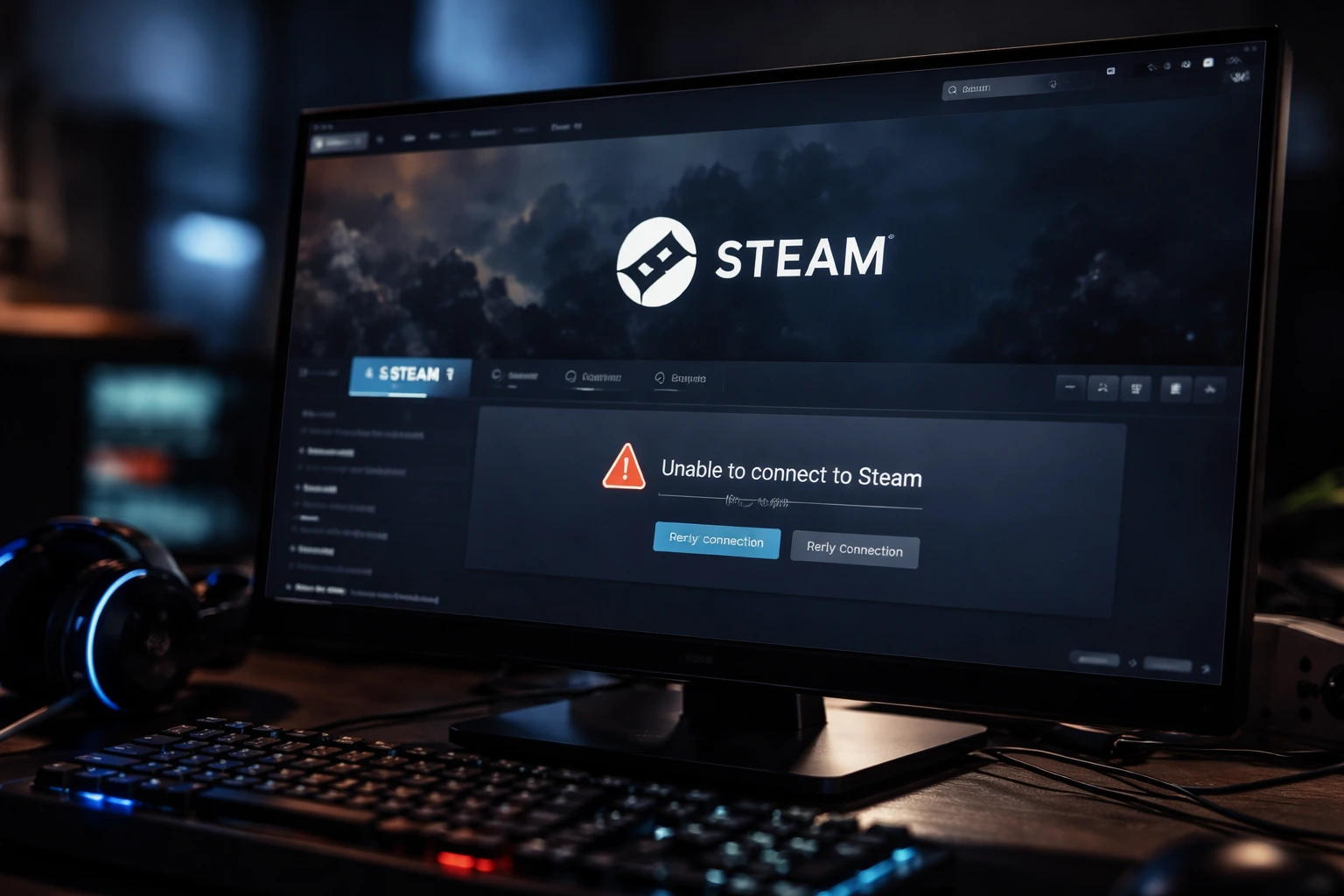
A widespread Steam outage disrupted access to the world’s largest PC gaming platform on Tuesday, leaving users unable to browse the digital storefront or play several of Valve’s most popular online games.
The disruption began early afternoon on the US East Coast and appeared to affect users globally, according to outage tracking services and community reports.
Valve, the privately held company behind Steam, had not publicly acknowledged the outage as of late afternoon. However, third party monitoring site SteamDB reported that multiple core services were offline, including the Steam Store, Steam Community features and Steam Web APIs.
Steam is the primary distribution platform for PC games, serving tens of millions of daily active users. Beyond selling games, it provides authentication, matchmaking and backend services for online multiplayer titles, including Valve developed games such as Dota Two, Counter Strike Two and Team Fortress Two.
During the outage, users reported being unable to log in, access their game libraries or connect to online matches. Valve’s mobile applications were also inaccessible, suggesting a broader infrastructure level failure rather than a localized issue.
According to DownDetector, more than six thousand outage reports were logged around one fifteen p.m. Eastern Time, with complaints coming from North America, Europe and parts of Asia.
Industry analysts said the Steam outage appeared consistent with a backend service failure affecting application programming interfaces, or APIs, which many games rely on for online functionality.
“When authentication and API services go down, it cascades quickly across the entire ecosystem,” said Marcus Feldman, a digital infrastructure analyst at NetScope Research. “Steam is not just a store. It is the backbone for multiplayer connectivity, user profiles and cloud services.”
Feldman added that outages of this scale are uncommon but not unprecedented, particularly during periods of heavy traffic or system maintenance. Valve did not respond to emailed questions seeking comment on the cause or expected duration of the disruption.
Steam’s last significant outage occurred in October, when the platform’s store and online services were unavailable for roughly one hour.
In September, the highly anticipated launch of Hollow Knight Silksong briefly overwhelmed multiple digital storefronts, including Steam, Microsoft’s Xbox Store and Nintendo’s eShop.
Tuesday’s Steam outage appeared broader in scope, affecting not only purchases but also core gameplay services. SteamDB data showed near total service degradation across multiple regions during the peak of the disruption.
At the time of publication, some users reported partial restoration of services, though functionality remained inconsistent. For players, the outage was an abrupt interruption to routine gaming sessions.
“I was in the middle of a ranked match when everything froze,” said Daniel Moore, a college student in Ohio who plays Counter-Strike Two. “At first I thought it was my internet, but then everyone in the match disconnected.”
Independent game developers also felt the impact. Lina Perez, whose small studio relies on Steam for distribution and updates, said outages can disrupt customer support and revenue.
“When Steam goes down, sales stop and players flood our inbox asking what happened,” Perez said. “Even short outages have ripple effects.”
Experts said Valve is likely to restore services without lasting damage but noted that the incident underscores the gaming industry’s reliance on centralized platforms.
“As games become more service based, downtime becomes more visible and more disruptive,” Feldman said. “Players expect near continuous uptime.”
Valve typically avoids public commentary during outages, opting instead to restore services quietly. It was unclear whether the company would provide a post incident explanation.
The Steam outage temporarily halted access to games, online play and storefront services for thousands of users worldwide, highlighting the platform’s central role in the modern gaming ecosystem.
While service disruptions have occurred before, the scale of Tuesday’s incident affected both casual players and developers alike.
As services gradually returned, the episode served as a reminder of the vulnerabilities inherent in large digital platforms that millions rely on daily.


