
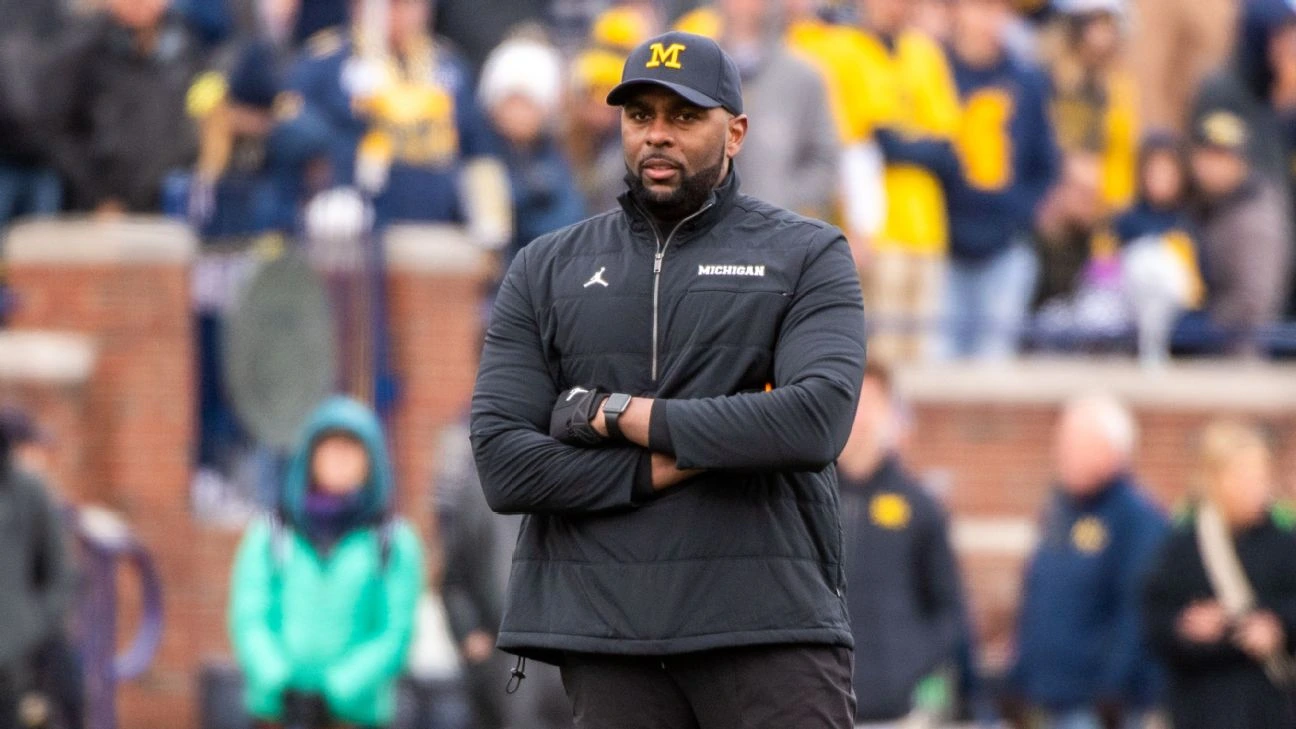
Former Michigan coach Sherrone Moore received 18 months probation Tuesday in Washtenaw County, avoiding jail after pleading no contest in a misdemeanor case tied to personal conduct violations.
SUMMARY
- Court imposes probation, fines and strict behavioral conditions without incarceration.
- Case underscores rising institutional scrutiny of coach conduct in US college athletics.
- Legal outcome may influence compliance policies across NCAA programs.
The sentencing of Sherrone Moore comes as US college athletics faces intensified oversight on staff behavior, workplace relationships and institutional accountability.
Universities globally are monitoring governance frameworks as reputational risk becomes a financial and regulatory concern.
Moore’s legal issues began in December 2025 following allegations tied to an inappropriate relationship with a staff member. University of Michigan terminated him with cause days later.
In March 2026, Moore accepted a plea agreement, reducing earlier felony charges to misdemeanors including malicious use of a telecommunications device and trespass.
On April 14, J. Cedric Simpson sentenced Moore to probation, citing mitigating personal factors and testimony from Moore’s wife. A review hearing is scheduled for October 2027.
“This case reflects a broader compliance shift,” said Richard Southall, noting increased institutional liability tied to employee conduct.
He added that misconduct cases now carry “direct financial implications through donor confidence and media rights pressure.” Karen Weaver said enforcement trends align with stricter Title IX interpretations.
“Universities are acting faster to limit exposure,” she said, citing governance reforms across Power Five programs.
Tony Garcia reported courtroom remarks emphasized personal accountability. Washtenaw County prosecutor Eli Savit said in a statement the resolution “balances accountability with proportional sentencing.”
A former Michigan athletics staff member, speaking on condition of anonymity due to employment restrictions, said internal culture reviews began immediately after Moore’s dismissal.
Over the next six to twelve months, compliance audits across NCAA programs are expected to increase.
Athletic departments may expand behavioral clauses in contracts and invest in workplace conduct monitoring systems, according to governance analysts.
The Sherrone Moore case signals a durable shift in collegiate sports governance, where legal accountability, institutional reputation and financial stability are increasingly interconnected across global higher education systems.
NOTE! This article was generated with the support of AI and compiled by professionals from multiple reliable sources, including official statements, press releases, and verified media coverage. For more information, please see our T&C.


