
SUMMARY
- Appeals court blocks contempt inquiry, limiting judicial reach into executive national security decisions.
- Split ruling highlights deep legal divide over deportation authority and due process.
- Case may advance to full appellate review or the Supreme Court within months.
The Boasberg contempt ruling dispute arrives at a moment of heightened scrutiny over executive immigration powers and judicial enforcement authority.
As deportation policies increasingly intersect with national security claims, the case carries implications beyond US borders, especially for countries hosting deportees and for international human rights frameworks.
The legal conflict traces to March 2025, when the Department of Homeland Security deported more than one hundred Venezuelan nationals to El Salvador under the Alien Enemies Act.
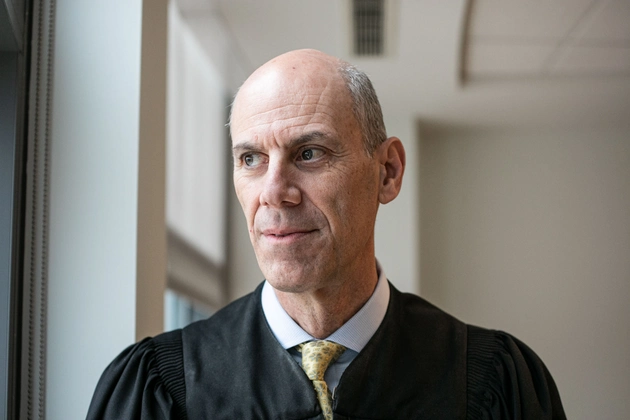
US District Judge James Boasberg issued an emergency order to halt the removals. Flights continued despite the directive. Administration officials argued the order did not apply once aircraft left US airspace.
The Boasberg contempt ruling inquiry began after concerns that federal officials knowingly defied judicial authority. An earlier appellate intervention paused the probe, but the case returned to district court before being blocked again this week.
Neomi Rao, a judge on the US Court of Appeals for the D.C. Circuit, wrote that the district court risked intruding into executive deliberations involving diplomacy and security. Her opinion emphasized constitutional separation of powers.
Michelle Childs, dissenting, warned the decision could weaken courts’ ability to enforce compliance with lawful orders. She argued that halting the inquiry prematurely disrupts established judicial processes.
Stephen Vladeck, a constitutional law professor at the University of Texas School of Law, said the ruling signals growing judicial caution in cases involving executive claims of national security.
“Courts are increasingly reluctant to compel disclosures that could expose internal decision making at the highest levels,” he said. Sarah Pierce, policy director at the Migration Policy Institute, noted broader immigration implications.
“The Boasberg contempt ruling reflects a tension between rapid enforcement actions and procedural safeguards,” she said. “That tension is likely to intensify as migration pressures rise globally.”
An under reported dimension involves diplomatic coordination. El Salvador’s acceptance of deportees under long term detention agreements introduces new bilateral dynamics, raising questions about accountability and oversight.
Carlos Vecchio, a Venezuelan opposition figure based in Washington, said families remain uncertain about detainees’ status. “There is no transparency about conditions or legal recourse,” he said.
Ruth López, a human rights attorney with Cristosal in El Salvador, described challenges monitoring detainees. “Access to facilities is limited, which complicates independent verification of treatment,” she said.
A senior US immigration official, speaking on record during prior proceedings, maintained that actions followed legal guidance. “Operational decisions were made under urgent national security considerations,” the official said.
Legal analysts expect the Boasberg contempt ruling dispute to continue through appellate channels over the next six to twelve months. A full DC Circuit review remains possible, followed by potential Supreme Court intervention.
Policy shifts may hinge on judicial clarification of when executive actions intersect with enforceable court orders. Migration enforcement strategies could also evolve, particularly regarding offshore detention agreements and expedited removals.
The Boasberg contempt ruling case underscores a defining institutional question: how courts enforce compliance when executive actions invoke national security.
Its outcome will shape legal boundaries governing deportation authority, judicial oversight, and international cooperation frameworks.
NOTE! This article was generated with the support of AI and compiled by professionals from multiple reliable sources, including official statements, press releases, and verified media coverage. For more information, please see our T&C.


