
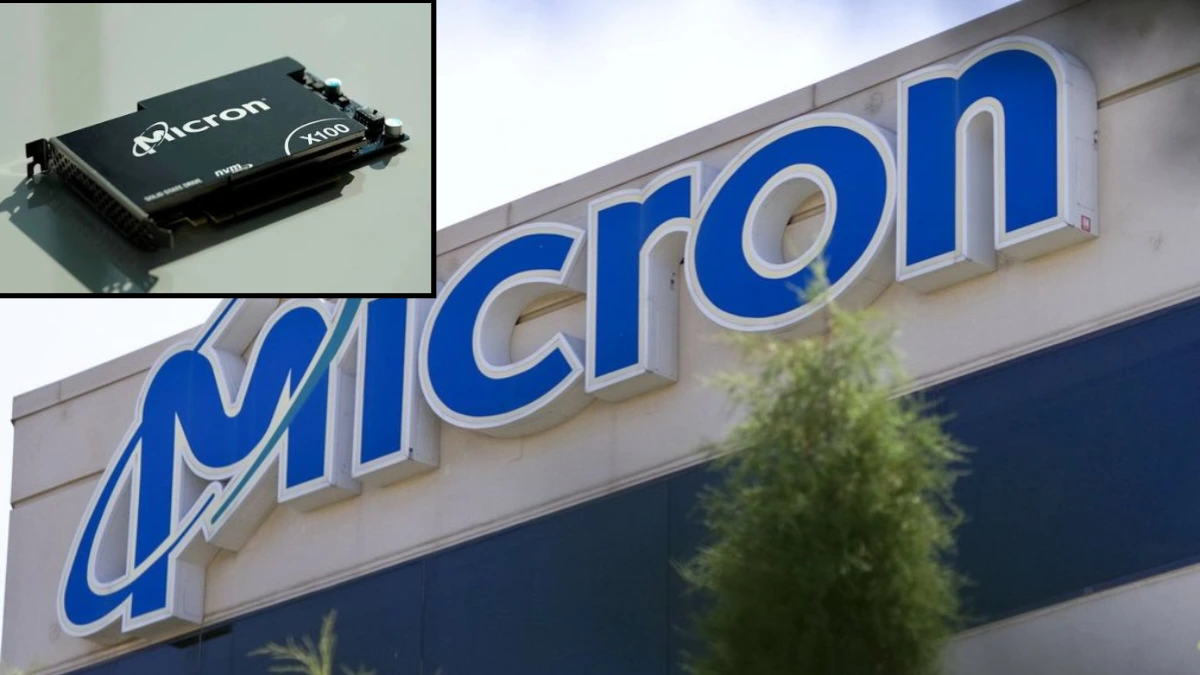
Micron Technology, Inc. one of the world’s leading semiconductor manufacturers, plans to halt the supply of server chips to data centers in China after failing to regain market momentum following a government ban on its products.
The move underscores the continuing fallout from escalating US China tech tensions that have disrupted global semiconductor supply chains.
The Idaho based company confirmed that it would maintain sales to select Chinese customers with global operations and continue supplying chips for automotive and mobile sectors within China.
However, the decision to withdraw from the country’s vast data center market marks a major strategic shift as the firm seeks to consolidate resources amid mounting geopolitical and competitive pressures.
Micron Technology, a major producer of DRAM and NAND flash memory chips, was the first US semiconductor firm targeted by Beijing in 2023 after Washington introduced export restrictions on advanced chips and equipment bound for China.
The Chinese government subsequently barred operators of critical infrastructure from purchasing Micron’s products, citing national security concerns.
The ban significantly reduced Micron’s share of China’s memory chip market, once accounting for more than 10 percent of its global revenue.
The company has since struggled to recover, facing increased competition from South Korea’s Samsung Electronics and SK Hynix, both of which have expanded their market presence in China.
“Micron’s decision reflects the long term impact of geopolitical fragmentation in the semiconductor ecosystem,” said Peter Lang, a semiconductor analyst at Boston based Global Insights Research.
China remains a crucial consumer market for memory chips, but the regulatory and political environment has made sustained operations increasingly difficult for US firms.”
Industry experts view Micron’s withdrawal as a signal that geopolitical pressures may continue to reshape the global tech landscape.
According to analysts, the decision aligns with a broader de-risking trend among US companies seeking to diversify production and reduce reliance on Chinese demand.
“Micron’s pivot away from China’s data center segment is part of a calculated strategy to focus on markets where it faces fewer regulatory headwinds,” said Ling Chen, a senior fellow at the Asia Tech Policy Institute in Singapore.
“At the same time, it exposes how intertwined and fragile the US China semiconductor relationship has become.” Micron’s global restructuring comes amid a sluggish recovery in the memory chip market following a severe downturn in 2023.
Despite signs of stabilization, demand for server memory remains uneven, particularly in regions affected by government restrictions and export controls.
“The company is doubling down on emerging sectors such as automotive, mobile, and artificial intelligence applications,” Chen added. “These areas offer higher margins and align better with US policy incentives like the CHIPS and Science Act.”
Micron’s fiscal 2024 earnings showed a 12 percent year over year decline in revenue from Asia, largely attributed to lower sales in mainland China. Analysts estimate the company’s lost data center contracts could account for nearly $1 billion annually.
By contrast, competitors such as Samsung Electronics and SK Hynix have maintained strong footholds in China’s growing cloud computing sector, benefiting from domestic demand and less stringent scrutiny by Beijing.
According to a report by the Semiconductor Industry Association (SIA), China accounted for approximately 31 percent of global semiconductor consumption in 2024.
While U.S. suppliers continue to play a leading role in chip design and innovation, their overall market share in China has fallen sharply since 2022 due to tightening export rules and reciprocal restrictions.
Industry professionals in both countries have expressed concern about the long-term consequences of Micron’s move.
“This is a tough break for local data centers that relied on Micron’s high performance memory,” said Li Wei, a Shenzhen based cloud infrastructure engineer.
“We’ll likely see costs rise as suppliers shift to new partners, and that could slow deployment for smaller firms.” In Boise, Idaho, where Micron’s headquarters and primary research facilities are located, employees and community leaders have voiced cautious optimism.
“We understand this decision wasn’t easy,” said Michelle Torres, spokesperson for the Boise Chamber of Commerce. “But it also reflects Micron’s commitment to strengthening its domestic base and exploring new global markets.”
Despite near term challenges, Micron’s broader outlook remains resilient as global demand for AI related memory solutions accelerates.
The company has increased investment in US based manufacturing plants and continues to expand its footprint in Japan and India, aligning with efforts to build more secure supply chains.
“Micron’s exit from China’s server segment doesn’t mean it’s stepping away from Asia altogether,” said Lang of Global Insights Research.
“It’s redirecting resources toward more stable and strategic regions, which could pay off in the long run if US incentives and trade policies remain supportive.”
However, analysts caution that the company’s profitability may remain under pressure through 2025 as it transitions operations and navigates lingering trade frictions.
Micron Technology’s decision to stop supplying server chips to China marks another chapter in the unfolding semiconductor decoupling between the world’s two largest economies.
While the company continues to invest in next generation memory for AI, 5G, and automotive applications, its retreat from China underscores the enduring impact of geopolitical uncertainty on global technology trade.
As Washington and Beijing continue to vie for dominance in critical technologies, firms like Micron are left to balance commercial opportunity against national security imperatives a tension that will likely define the semiconductor industry for years to come.


