
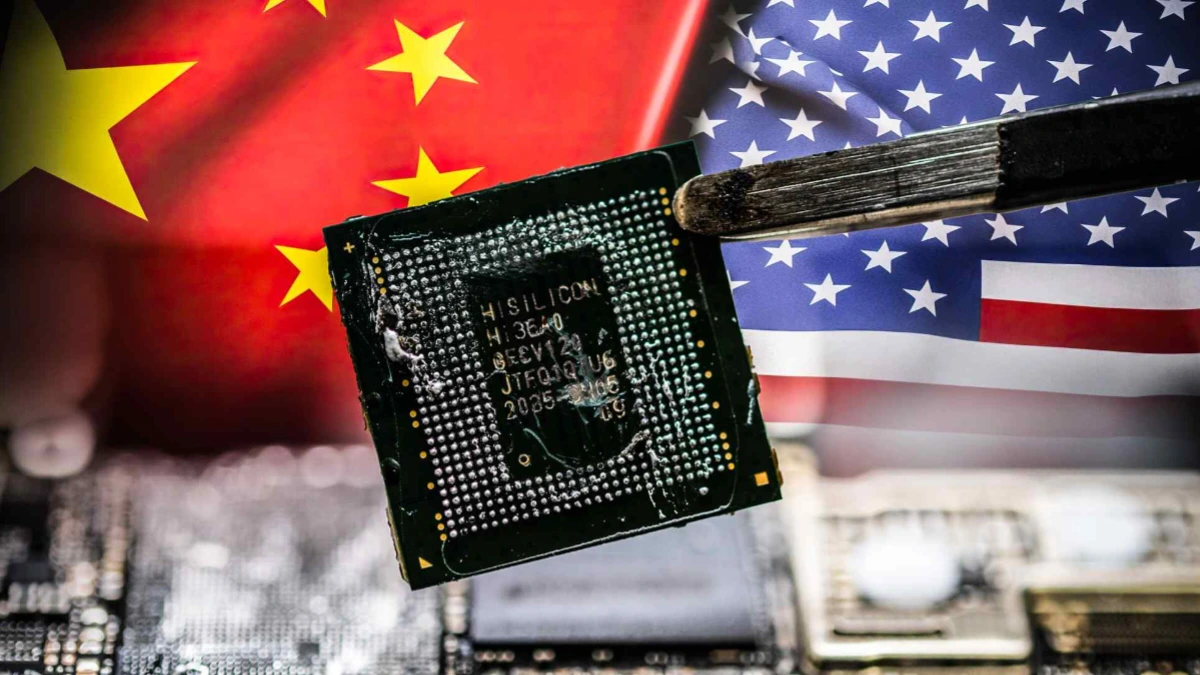
WASHINGTON — China will begin easing an export ban on automotive computer chips critical to vehicle manufacturing worldwide as part of a new trade agreement with the United States, the White House said Sunday.
The announcement followed a meeting between President Donald Trump and Chinese President Xi Jinping in South Korea earlier this week.
The deal also includes provisions on US soybean exports, rare earth minerals, and the production materials used in synthetic opioids such as fentanyl.
The White House described the deal as a “constructive step” toward stabilizing economic relations between the world’s two largest economies, which have been strained by months of retaliatory tariffs and export restrictions.
The easing of China’s chip export ban comes after months of tension sparked by Washington’s imposition of tariffs on Chinese goods earlier this year.
Beijing had responded with restrictions on a range of U.S. imports, including high tech components vital to car manufacturing.
Automotive computer chips, many of which are produced by Nexperia a Dutch based but Chinese owned company became a focal point in the dispute.
Around 70% of Nexperia’s chips made in Europe are sent to China for completion before being re-exported.
In recent weeks, global automakers including Volvo, Volkswagen, and Jaguar Land Rover have warned that chip shortages could disrupt production and threaten thousands of jobs.
The White House fact sheet released Saturday said Beijing will “take appropriate measures to ensure the resumption of trade from Nexperia’s facilities in China, allowing production of critical legacy chips to flow to the rest of the world.”
Trade analysts say the move could help stabilize manufacturing supply chains already under pressure from the lingering effects of the COVID-19 pandemic and ongoing geopolitical competition.
“Restoring the flow of legacy chips is essential for keeping automotive production on track,” said Dr. Elaine Foster, a senior fellow at the Center for Strategic Trade Studies in Washington.
This deal doesn’t resolve all trade tensions, but it signals both governments are willing to return to pragmatic negotiations. Chinese officials emphasized the mutual benefits of the agreement.
A spokesperson for the Chinese Embassy in Washington said “China US economic and trade relations are mutually beneficial in nature,” adding that President Xi “believes the business relationship should remain an anchor, not a point of friction.”
US Treasury Secretary Scott Bessent told CNN that Washington did not seek to “decouple” from China but noted that “they’ve shown themselves to be an unreliable partner.”
Automotive chips, though less advanced than those used in smartphones, are essential for vehicle safety and automation systems.
According to data from the European Automobile Manufacturers’ Association, nearly 80% of global automotive chip production relies on supply chains that pass through East Asia.
Global chip shortages in 2021 and 2022 caused automakers to lose an estimated $210 billion in revenue, according to research firm AlixPartners.
While production had largely recovered by late 2024, renewed export restrictions from China this year had reignited fears of another disruption.
The new trade agreement also pauses Beijing’s recently imposed export controls on rare earth minerals materials vital for producing electric vehicles, aircraft, and weapons systems for one year.
Meanwhile, the US agreed to lower tariffs that had targeted the import of chemicals used in the production of fentanyl, in exchange for China pledging to take “significant measures” to combat illegal synthetic drug manufacturing. Industry leaders welcomed the move but urged clarity on implementation.
“The Chinese authorities have said they would start exporting eligible chips again, but the scope and conditions remain unclear,” said Sigrid De Vries, director general of the European Automobile Manufacturers’ Association.
“This is positive news, but supply shortages are still looming.” At a Volvo plant in Sweden, production manager Johan Andersson said the news brought “some relief” to workers worried about layoffs.
We’ve been running tight schedules because of chip delays, Andersson said. “If China really opens up exports again, it will help us stabilize output.”
However, others remain cautious. “We’ve seen announcements before that didn’t materialize quickly,” said Maya Patel, a semiconductor supply analyst based in London.
“Until shipments resume, automakers will continue to operate in uncertainty.” Analysts believe the agreement could pave the way for broader negotiations on trade and technology, though many obstacles remain.
“Both sides want economic stability ahead of next year’s elections,” said Foster. “But structural issues from intellectual property rights to subsidies remain unresolved. This is a temporary pause, not a full reset.”
Chinese state media called the agreement a “win-win cooperation,” while U.S. officials described it as “a step toward fairer trade.”
The deal also comes as both countries seek to reassure global markets. Investors have closely watched the US China relationship, with each announcement influencing stock prices in industries from automotive to energy.
Still, experts warn that the resumption of chip exports could take several weeks to materialize. Firms will need to verify licensing conditions, export approvals, and logistics coordination before shipments resume at full scale.
The agreement between Washington and Beijing marks a rare moment of cooperation in a year defined by economic friction and geopolitical rivalry.
By easing its chip export ban, China is signaling readiness to de-escalate at least temporarily one of the most disruptive fronts of the global trade war.
Whether the deal leads to lasting stability or serves merely as a tactical truce remains uncertain.
For now, automakers and global markets are watching closely, hoping this breakthrough translates into smoother supply chains and steadier growth.


