
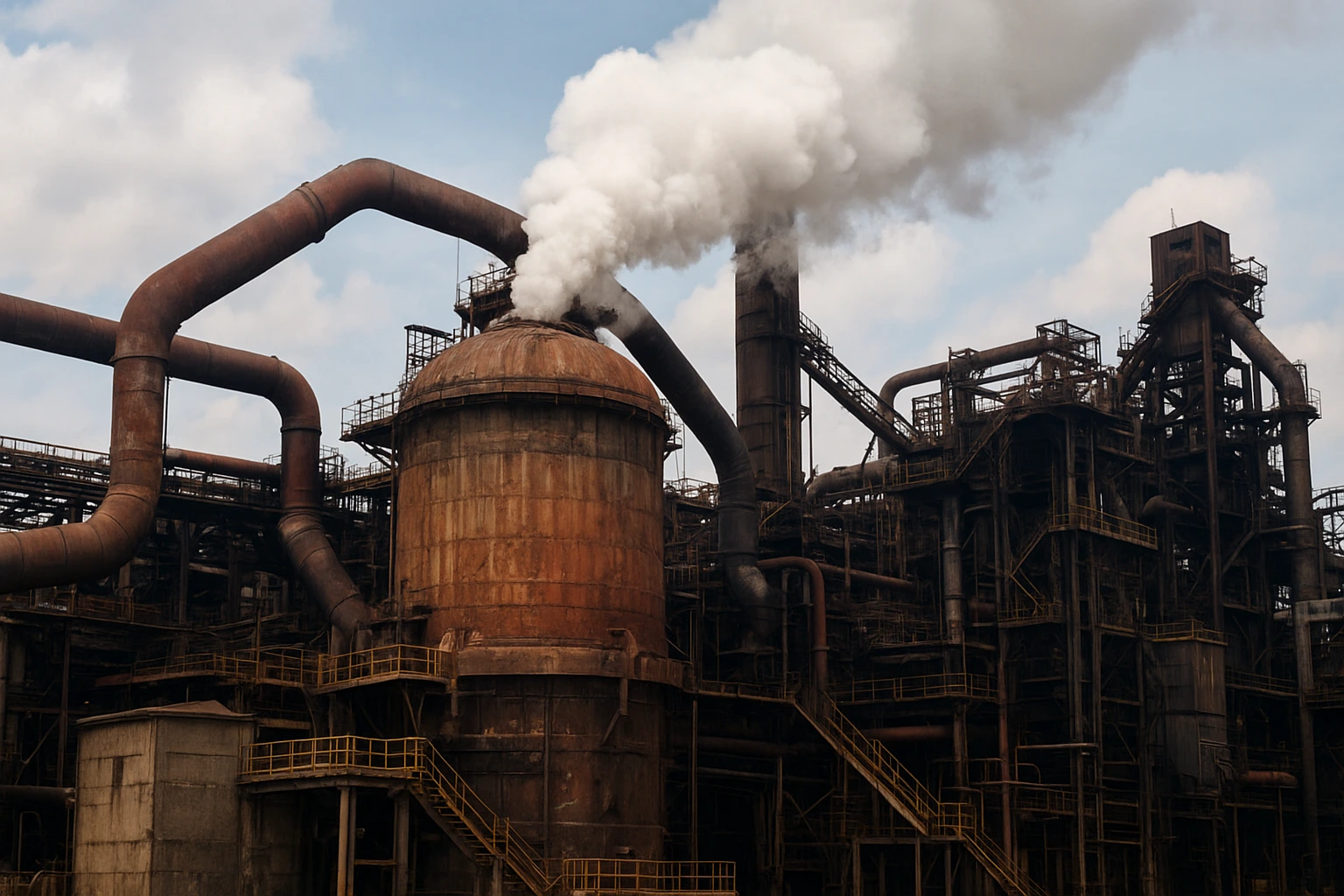
LONDON/QUEBEC — Global miner Glencore Plc is preparing to shut down Canada’s largest copper smelter, the Horne facility in Quebec, due to mounting environmental concerns and the high costs required to modernize aging operations, according to two people familiar with the matter.
The potential closure could ripple through the global copper market, already strained by supply disruptions in major producing countries.
The London listed commodities giant employs more than 1,000 workers across the Horne smelter and its Canadian Copper Refinery (CCR), both located in Quebec.
Industry sources estimate the Horne plant produces more than 300,000 metric tons of refined copper annually, making it one of North America’s key suppliers.
The Horne smelter, a cornerstone of Canada’s copper industry, has operated for nearly a century in the city of Rouyn Noranda. But the facility’s future has grown uncertain amid rising regulatory scrutiny and public pressure over arsenic emissions.
Earlier this year, residents filed a lawsuit in Quebec’s Superior Court alleging long-term exposure to the smelter’s arsenic emissions had endangered public health.
The court ruled that damages dating back to 2020 could be claimed, though Glencore maintains that any decision to close or modernize the smelter would not be related to the case.
In a statement to Reuters, Glencore said it is “not currently considering the closure of the Horne smelter or CCR,” adding that both assets “play an important role in the supply of critical raw materials for the North American market and abroad.”
The company acknowledged, however, that smelters worldwide face “significant financial, regulatory, and operational pressures.”
Industry analysts say the possible shutdown underscores the mounting cost of maintaining aging industrial infrastructure in an era of stricter environmental standards.
“Copper smelting is an energy intensive process that’s becoming harder to sustain under new emissions frameworks,” said Daniel Morrissey, a mining analyst at Wood Mackenzie.
“For Glencore, investing over $200 million in upgrades may not be economically viable given current margins.” The potential loss of Horne’s output would tighten global copper supply, particularly as production in Chile and Indonesia has slowed due to accidents and lower ore grades.
“Copper demand is expected to surge with the energy transition, yet supply is increasingly constrained,” said Elena Ruiz, a commodities strategist at RBC Capital Markets. “The closure of a facility like Horne would exacerbate fears of a shortfall in the next few years.”
Copper prices reached a record $11,200 per metric ton on October 29, driven by forecasts of future deficits and increased consumption in renewable energy and electric vehicles.
Analysts predict the market could face a shortfall of nearly one million tons annually by 2028 if new refining capacity does not come online. Canada ranks among the top ten copper producing nations globally, contributing about 3 percent of world supply.
Quebec’s Horne smelter plays a crucial role in converting mined concentrate into refined copper, feeding manufacturers in both Canada and the United States.
By comparison, Indonesia’s Grasberg mine and Chile’s Escondida two of the world’s largest have both faced disruptions this year, amplifying concerns about global supply security.
In Rouyn Noranda, residents expressed mixed emotions about the news. For many, the smelter has been both a vital employer and a source of health concern.
“It’s hard to imagine our town without the Horne,” said local resident and teacher Louise Bergeron. “My father worked there for 30 years. But people here also want clean air and a safe future for our children.”
Union representatives say they have received no formal notice of closure but are pressing Glencore for transparency.
“Our members are anxious,” said Marc Andre Labelle, president of the local United Steelworkers chapter. “We need clarity from the company. Workers deserve to know whether they’ll have jobs next year or not.”
Local officials have urged Glencore and the Quebec government to find a compromise that preserves employment while meeting environmental goals.
“We can’t lose both our livelihoods and our health,” said Rouyn Noranda Mayor Diane Dallaire. “The solution must protect our community on both fronts.”
Glencore said it continues to “implement an emissions reduction plan” and is working with stakeholders to “map a path forward that preserves ongoing smelting operations.”
Industry insiders, however, note that any large scale modernization could take years and require significant government backing.
Smelters like Horne are strategically important for North America’s supply chain, said economist Vincent Paquette of the Canadian Institute for Industrial Sustainability.
If Glencore withdraws, the continent could become even more dependent on imports from Asia. For now, no official closure date has been set, but two sources close to the company said both the Horne and CCR sites may face shutdown within the next few years if no viable investment plan emerges.
Glencore’s deliberations over the Horne smelter come at a critical juncture for the global copper industry, where the tension between environmental compliance and supply security continues to grow.
Whether the miner chooses to modernize or close the facility, the decision is likely to shape Canada’s role in the future of global metals production and the fate of hundreds of workers in Quebec’s mining heartland.


