
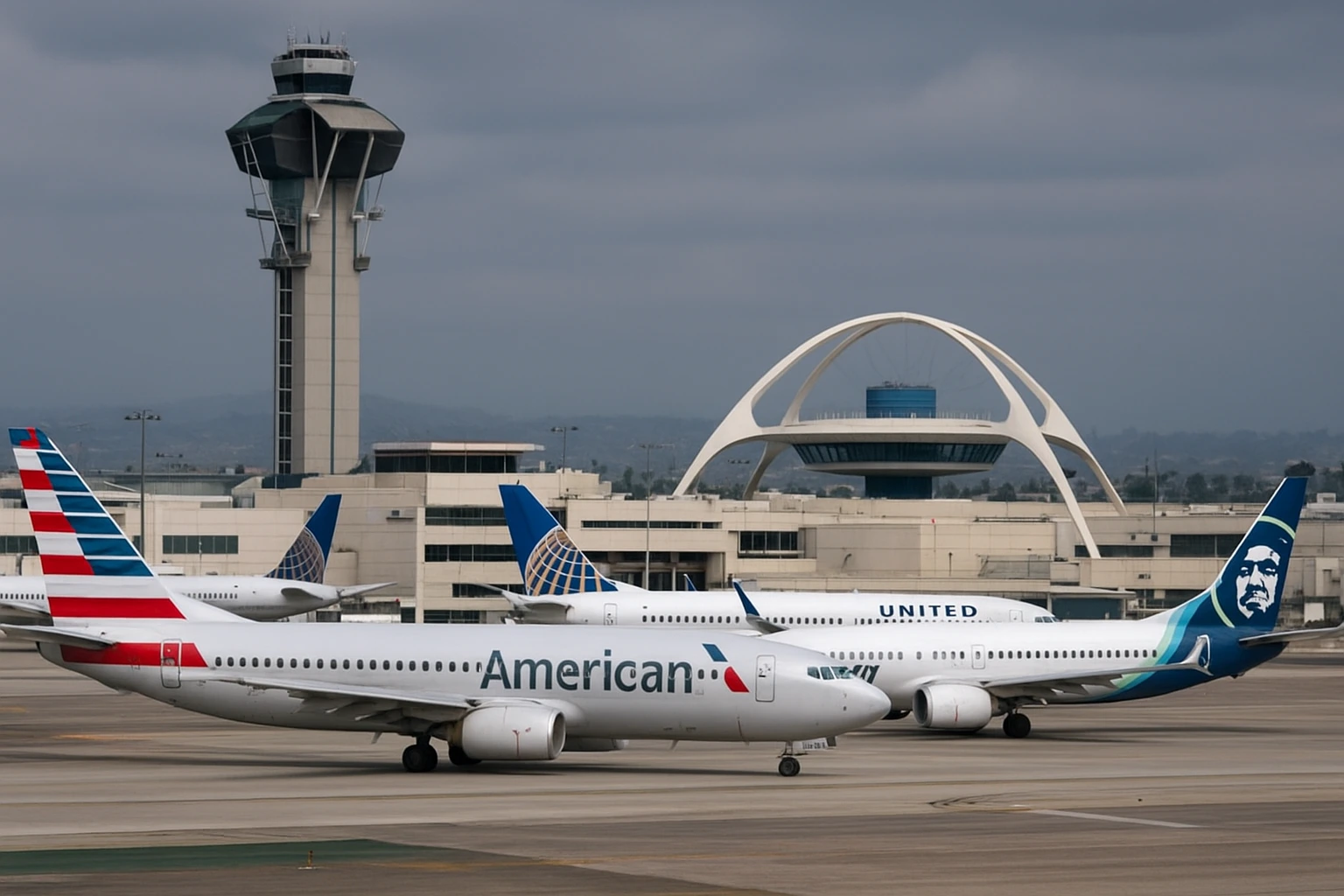
A wave of flight cancellations swept across the United States on Friday as the federal government shutdown began to ripple through the nation’s air travel network.
The Federal Aviation Administration (FAA) directed airlines to scale back flights at major airports, citing the impact of staffing shortages among air traffic controllers now working without pay.
While most major airports remained functional, travelers faced growing uncertainty as airlines trimmed routes and adjusted schedules to meet new FAA limits.
The FAA announced earlier this week that airlines must cut 4 percent of flights at 40 of the country’s busiest airports starting Friday. Those reductions will increase to 6 percent on Tuesday, 8 percent on Thursday and 10 percent next Friday, according to the agency.
The directive comes as the government shutdown, the longest in U.S. history, continues without a resolution in Washington.
Essential federal workers, including air traffic controllers, remain on duty but unpaid. The FAA said the cuts were necessary to maintain safety standards and reduce strain on critical operations.
Major carriers including United Airlines, Delta Air Lines and American Airlines confirmed compliance with the FAA order but stressed that they would prioritize minimizing disruptions.
United said the impact would be “comparable to a mid size winter storm,” while Delta described its cancellations as “strategic and temporary.” International flights have been largely unaffected so far.
Aviation experts said the FAA’s decision reflected a cautious attempt to preserve safety amid mounting personnel and budget challenges.
“Controllers are already under immense stress,” said Robert Keegan, an aviation policy analyst at the Center for Air Transport Studies.
“These are highly skilled professionals managing some of the world’s busiest air corridors without pay. The FAA had little choice but to slow things down before safety margins were compromised.”
Analysts noted that the timing could worsen the impact. The weeks leading up to Thanksgiving typically see lower flight volumes, offering airlines flexibility.
But if the shutdown extends into late November, the busiest travel period of the year could be severely disrupted.
“Thanksgiving week will be the real test,” said Keegan. “If this continues, we could see cascading delays and cancellations similar to severe weather events.”
According to Cirium, an aviation data firm, airlines canceled about 748 flights Friday morning roughly 3 percent of the 25,000 scheduled nationwide.
That would make it the 72nd worst day for cancellations since early last year, a level analysts described as “noticeable but manageable.”
The FAA’s mandate covers airports in major metropolitan areas including Atlanta, Chicago, Los Angeles, and New York. About one in five canceled flights were intrastate routes, primarily in California and Texas.
Only ten cancellations involved international destinations, including Canada, Jamaica, Germany, New Zealand and Switzerland.
United expected to cancel fewer than 200 flights per day through the weekend, while Delta planned about 170 on Friday. American Airlines forecasted around 220 daily cancellations. Together, those three carriers operate more than 15,000 daily flights.
At Chicago O’Hare International Airport, passengers described mixed experiences. “I was expecting chaos, but it’s surprisingly calm,” said Jennifer Morales, a teacher from Milwaukee waiting for a morning flight to Dallas.
“The staff are doing their best, but everyone’s anxious about next week.” Airline employees echoed that uncertainty. “We’re managing it like a storm,” said David Kinzelman, United’s chief customer officer. “It’s sudden, but not chaotic. We’ve had to adjust our schedules with precision.”
At Hartsfield Jackson Atlanta International Airport, ground crew supervisor Michael Turner said staffing morale remained high despite the pressures.
“Everyone knows the controllers are heroes right now,” he said. “They’re showing up every day without a paycheck. That takes dedication.”
The FAA indicated that further reductions could be implemented if the shutdown continues, potentially extending disruptions through the Thanksgiving and winter travel seasons. Airlines warned that extended constraints could force more aggressive route adjustments.
“If this shutdown stretches into December, smaller regional airports will feel the squeeze first,” said aviation consultant Lydia Grant. “Major hubs can absorb some pressure, but rural connections may face weeks of reduced service.”
Lawmakers in Washington remain at an impasse. Negotiations between Republicans and Democrats over budget priorities have stalled, leaving federal agencies and contractors in limbo.
Industry groups have urged Congress to prioritize reopening the government, warning that prolonged instability could affect not only travelers but also the broader economy.
The Air Line Pilots Association, representing more than 60,000 pilots, said in a statement that “safety and stability must remain the cornerstone of America’s aviation system. The current shutdown threatens both.”
For now, the immediate impact of the FAA’s flight cuts remains limited, but the situation is evolving rapidly.
Airlines are operating with measured caution, passengers are adjusting plans, and air traffic controllers continue to guide planes through one of the busiest airspaces in the world unpaid but undeterred.
As the shutdown enters another week with no resolution in sight, the nation’s skies remain a reflection of Washington’s gridlock orderly for now, but with turbulence on the horizon.


