
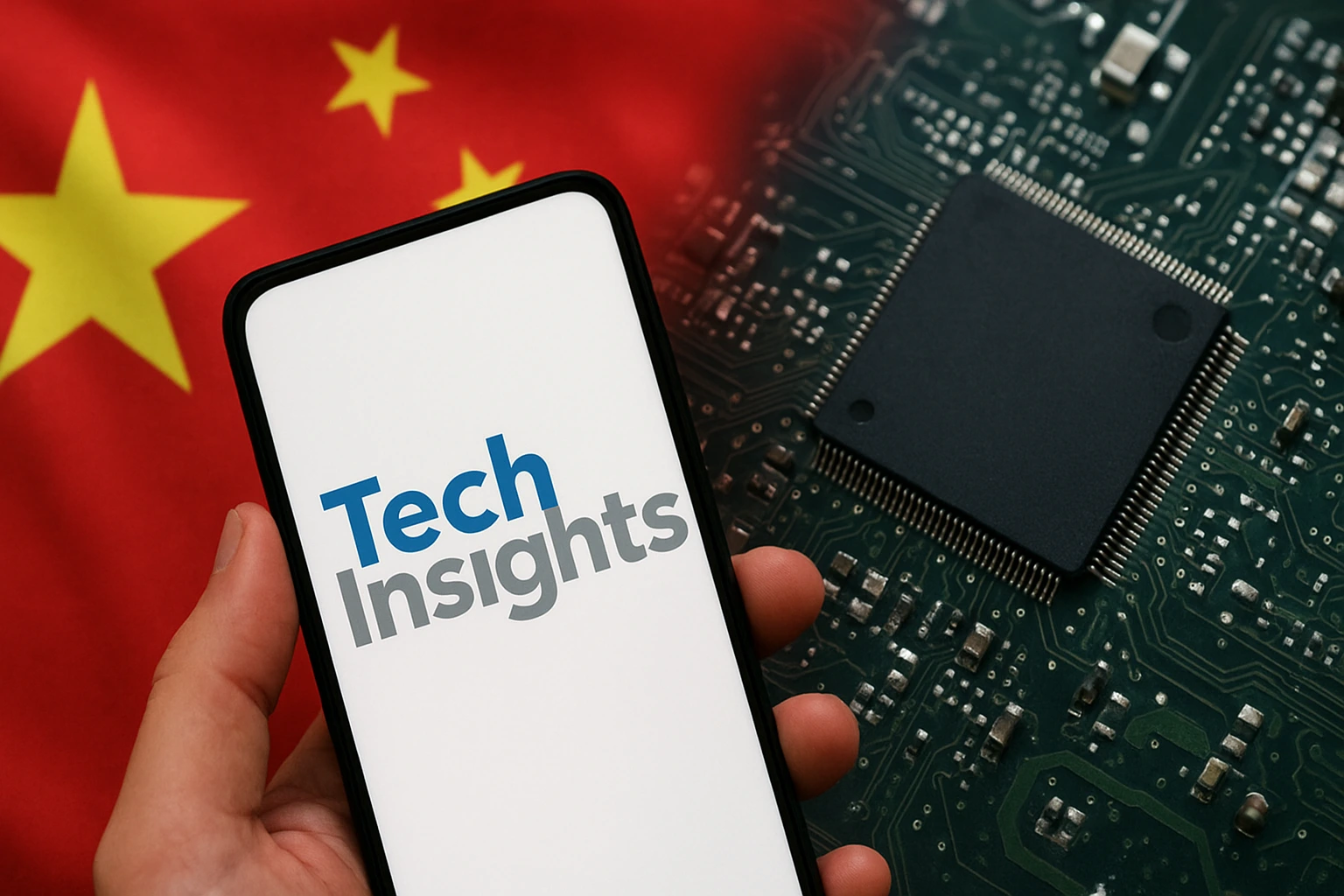
BEIJING— China has blacklisted Canadian semiconductor research firm TechInsights, barring the company from working with or obtaining data from Chinese entities in a move that underscores Beijing’s tightening control over information related to its chip industry.
The Ministry of Commerce announced Thursday that TechInsights and several of its subsidiaries were added to China’s “unreliable entity list,” citing national security concerns. The designation prohibits Chinese companies and individuals from conducting business or sharing technological information with the firm.
The decision follows closely on the heels of a teardown report by TechInsights that revealed Huawei’s newest artificial intelligence chips contained components believed to be sourced from suppliers outside mainland China.
In its statement, the Commerce Ministry said the move was aimed at safeguarding “national sovereignty, security, and development interests.” However, it did not specify which aspects of TechInsights’ operations were deemed a threat.
TechInsights, based in Ottawa, is known globally for dismantling and analyzing semiconductors to identify their design, origin, and technology level.
The firm has long been recognized for uncovering critical details about chips produced by Chinese companies such as Huawei Technologies, often serving as one of the few independent sources on China’s technological progress.
Industry experts say the blacklist reflects Beijing’s growing discomfort with foreign scrutiny of its semiconductor ecosystem.
“China is trying to project confidence in its ability to produce advanced chips, but reports like TechInsights’ reveal just how dependent it still is on foreign technology,” said Li Wei, a semiconductor policy researcher in Beijing.
“By cutting off such firms, China hopes to reduce outside visibility into what’s really happening.” Another analyst, Jessica Zhang of Shanghai’s Institute for Tech Studies, said the decision signals “a new phase of information control in China’s tech industry.”
She noted that while the ban could help protect sensitive industrial data, it could also reduce transparency.
“Without external audits or teardowns, international trust in Chinese chipmaking claims may decline,” Zhang said. “That could make it harder for Chinese firms to attract global investors or partners.”
The Commerce Ministry’s latest announcement added 14 foreign organizations to the unreliable entity list, including TechInsights and its subsidiary Strategy Analytics.
The measure effectively prevents any form of cooperation, data sharing, or technology transfer between these firms and Chinese entities.
TechInsights’ recent teardown of Huawei’s Ascend AI processor found traces of materials and design patterns linked to foreign suppliers, including Taiwan Semiconductor Manufacturing Co. and Samsung Electronics.
Other research groups, such as SemiAnalysis, have made similar observations, suggesting that despite US export controls, Huawei continues to rely on imported components to produce its most advanced chips.
Since 2019, Huawei has been under US trade restrictions that bar American companies and foreign firms using US technology from selling certain high end components to the Chinese tech giant.
Inside China’s semiconductor community, the ban has sparked mixed reactions. A Shenzhen based chip designer, who requested anonymity due to the sensitivity of the issue, said the decision was expected but still disruptive.
TechInsights’ reports helped us understand where global competitors stand, he said. “Now that door has closed.” Meanwhile, Liu Qiang, an industry consultant in Shanghai, argued that the move could accelerate domestic research efforts.
“Beijing wants to encourage local teardown labs to do the same kind of analysis internally,” he said. “It’s part of the push for self-reliance.”
In Canada, TechInsights did not immediately respond to requests for comment. Huawei also remained silent regarding the report and the subsequent Chinese government action.
Analysts believe China’s blacklisting of TechInsights could further complicate the already tense global semiconductor environment.
It may discourage other independent research groups or consultancies from publishing findings about Chinese-made chips for fear of retaliation.
“This decision adds another layer of opacity to an already secretive sector,” said Marcus Chen, a technology researcher based in Taipei. “Foreign analysts may think twice before publishing details that could upset Beijing.”
The ban also underscores China’s broader ambition to achieve semiconductor self sufficiency amid increasing U.S. export curbs and geopolitical competition.
By limiting external exposure, Beijing aims to shield its domestic chipmakers such as Huawei and SMIC (Semiconductor Manufacturing International Corp.) from external pressure and criticism.
Still, the lack of independent verification could make it difficult for the international community to assess how much progress Chinese firms are making toward producing high-end chips comparable to those made by Nvidia or TSMC.
China’s move to blacklist TechInsights highlights the growing tension between national security and transparency in the global technology landscape.
As Beijing doubles down on its effort to control narratives around its semiconductor industry, the world may find it harder to separate political messaging from genuine technological advancement.
The ban also marks another escalation in the tech rivalry between China and the West, with information itself becoming a strategic battleground.


