

Key Takeaways
- Apple TV down is part of a larger multi service disruption affecting millions of users globally.
- Outages are concentrated in metropolitan areas such as New York, Los Angeles, and Washington DC.
- Apple continues to monitor affected systems and advises users to follow its System Status page for updates.
Apple TV down and related Apple services are experiencing widespread outages, impacting users across major cities including New York, Washington, Los Angeles, Chicago, and Seattle.
On Jan. 20, after 8 p.m ET, Downdetector recorded over 1,000 outage reports. Apple confirmed issues with the App Store, iTunes, Apple Music, Maps Traffic, and several developer tools but has not provided a timeline for restoration.
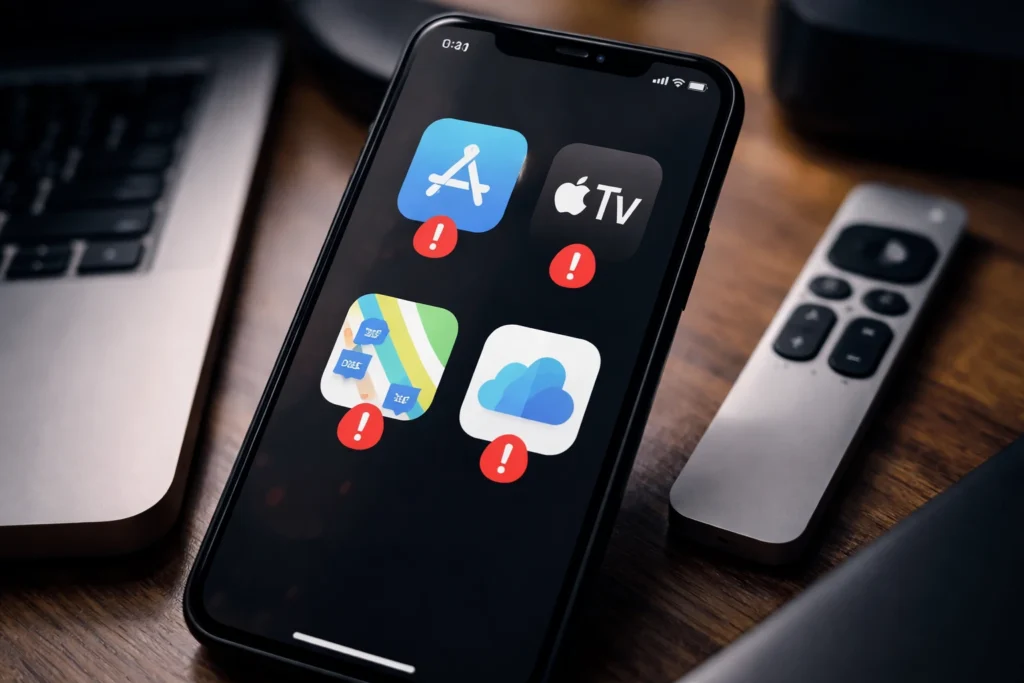
On Jan. 20, 2026, Apple users reported issues accessing Apple TV, streaming content, and using other Apple services.
The disruptions affected both consumer facing services like Apple Music and iTunes, as well as developer tools such as TestFlight and Xcode Cloud.
Apple’s System Status page confirmed outages for 29 services, though Apple TV down incidents were not listed as officially resolved.
Apple TV, a key part of Apple’s streaming ecosystem, serves millions of users worldwide.
Outages impacting Apple TV often coincide with interruptions in interconnected services such as iTunes Store and Apple Music, creating widespread operational and entertainment disruptions.
Past multi service outages in 2023 and 2024 highlighted the cascading effects on app updates, media purchases, and cloud based services.
Technology analyst Priya Nair said, “When Apple TV and associated services go down, it demonstrates how interconnected Apple’s ecosystem has become. Even partial outages ripple across millions of users and developers.”
Infrastructure expert Robert Chang added, “The scope of this outage suggests a central server or cloud management problem. Restoring Apple TV fully will require coordinated fixes across multiple systems.”
| Service Affected | Outage Start (ET) | Impacted Users / Reports | Status |
|---|---|---|---|
| Apple TV / Channels | 6:48 p.m. | Streaming & purchases affected | Partial outage |
| Apple Music | 6:48 p.m. | 1,000+ reports | Ongoing |
| App Store | 6:48 p.m. | Downloads & updates affected | Ongoing |
| iTunes Store | 6:48 p.m. | Purchases & downloads affected | Ongoing |
| Maps Traffic | 6:48 p.m. | Live traffic updates affected | Ongoing |
| iWork for iCloud | 6:48 p.m. | Collaboration & syncing affected | Ongoing |
Outages heavily reported in New York, Washington DC, Los Angeles, Chicago, Seattle.
Developer services like App Store Connect and Xcode Cloud also affected
Apple has not disclosed cause or estimated restoration time.
Apple continues monitoring the affected services. Users are advised to track the System Status page for updates.
Full restoration is expected once underlying server issues are resolved, though no specific timeline has been provided.
The Apple TV down outage, part of a broader multi service disruption, has impacted millions of users globally.
It highlights the benefits and vulnerabilities of cloud dependent ecosystems and emphasizes the need for ongoing infrastructure monitoring and contingency planning.
FAQS
Q1: Is Apple TV down?
Yes, users reported interruptions in streaming, content access, and app functionality on Jan. 20, 2026.
Q2: Which Apple services are affected besides Apple TV?
Apple Music, App Store, iTunes Store, Maps Traffic, iWork for iCloud, and developer tools like TestFlight and Xcode Cloud.
Q3: Why is Apple TV not working?
Outages appear to be caused by central server or cloud infrastructure issues affecting multiple Apple services.
Q4: Is Apple Music down?
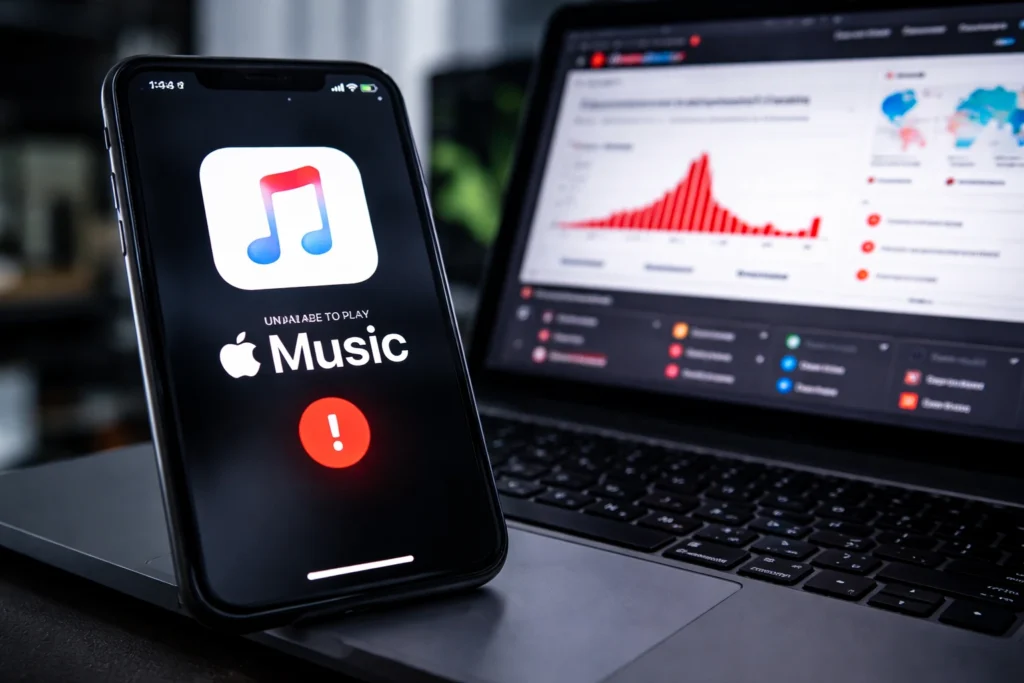
Yes, Apple Music experienced simultaneous disruptions, including streaming and playlist access issues.
Q5: When will Apple TV be back up?
Apple has not provided a timeline. Users should monitor the System Status page for updates.
Author’s Perspective
In my analysis, the Apple TV down incident highlights the growing interdependence of cloud based entertainment and developer ecosystems, revealing systemic vulnerabilities in real time media delivery.
From a strategic perspective, reliance on centralized infrastructure amplifies both operational risk and user friction during outages.
I predict that Apple and other streaming providers will implement regionally distributed failover architectures to ensure uninterrupted service.
For consumers and business users, monitoring system status pages and diversifying content access can mitigate downtime impact.
NOTE! This report was compiled from multiple reliable sources, including official statements, press releases, and verified media coverage.


