
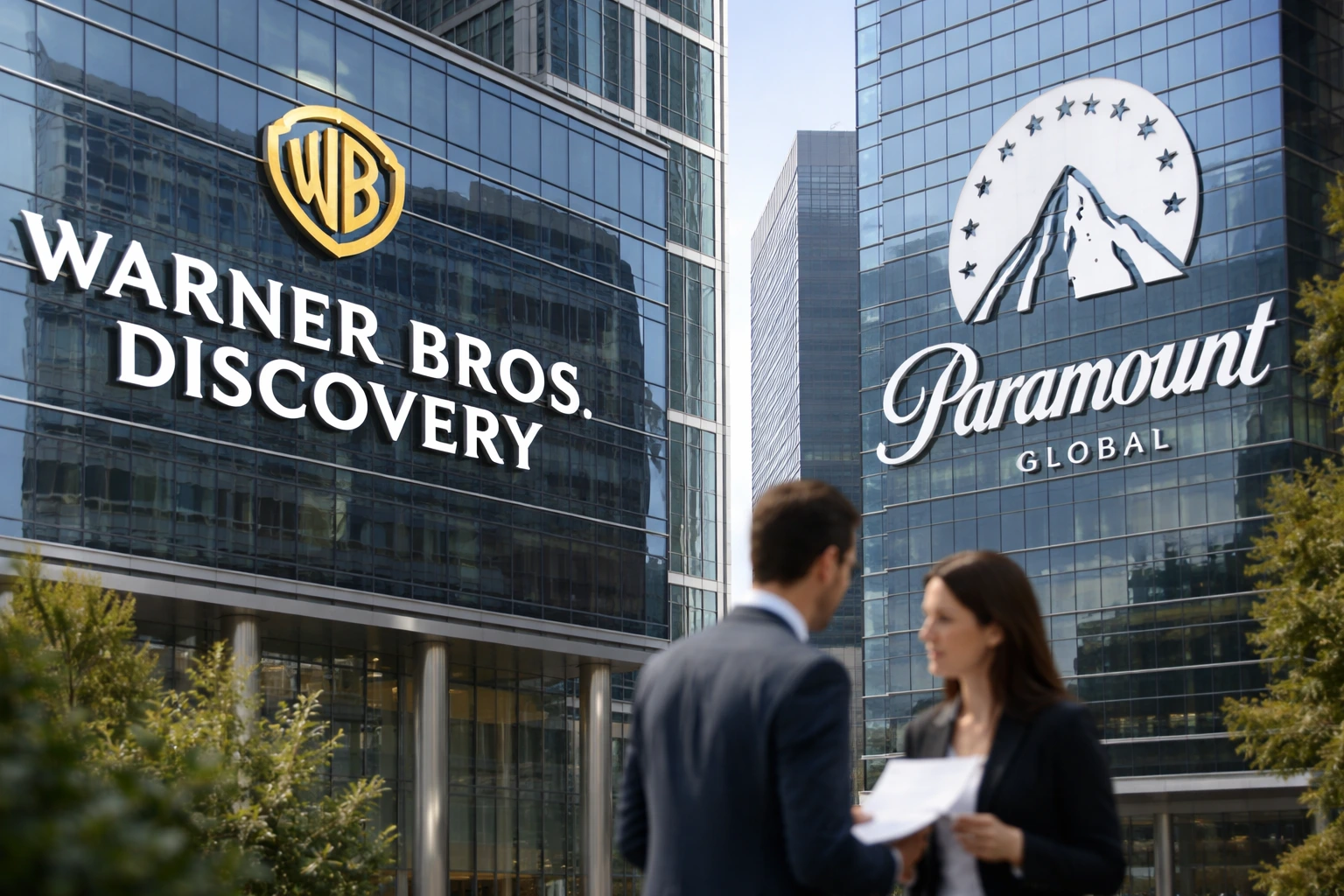
Warner Bros Discovery is expected to reject Paramount Skydance’s amended $108.4 billion hostile bid, a move that could reshape the future of the US media landscape and sharpen debate over consolidation in Hollywood.
CNBC reported Tuesday that Warner Bros’ board is leaning against the offer despite billionaire Larry Ellison’s personal guarantee backing the bid.
The decision matters beyond a single deal, highlighting how valuation, financing certainty and regulatory scrutiny are increasingly shaping the fate of legacy media companies.
The Warner Bros Paramount hostile bid emerged as traditional media companies face pressure from streaming rivals, declining cable subscriptions and rising content costs.
Paramount Skydance made its initial offer earlier this year, positioning the deal as a chance to create a media giant capable of competing with streaming leaders and global studios.
Warner Bros, however, has publicly raised concerns about financing certainty and deal structure. In response, Paramount amended its proposal, keeping the $30 per share all cash value while increasing its regulatory reverse termination fee and extending its tender offer deadline.
Paramount also said Ellison was willing to personally guarantee equity financing, an attempt to address doubts surrounding the earlier bid.
Warner Bros and Paramount Skydance declined to comment on the report. The board had previously urged shareholders to reject the offer, citing the lack of a full family guarantee and uncertainty over execution.
Analysts said the expected rejection reflects broader caution across the industry. “Boards are far more focused on certainty than headline price,” said Marissa Feldman, a media finance professor at Columbia Business School.
“The Warner Bros Paramount hostile bid offers scale, but scale alone does not resolve integration risk or regulatory exposure.”
Another factor is Warner Bros’ parallel talks with Netflix. Netflix’s $82.7 billion cash and stock proposal is lower in nominal value but offers what analysts describe as clearer financing and fewer execution hurdles.
Under that agreement, Warner Bros would owe a $2.8 billion breakup fee if it walks away, adding financial pressure to stay the course.
Media consolidation has accelerated over the past decade. According to data from MoffettNathanson, the number of major US film and television studios has fallen from eight in two thousand ten to five today.
Previous megadeals, including Disney’s acquisition of Twenty First Century Fox for $71.3 billion, faced lengthy regulatory reviews but ultimately cleared after asset divestitures.
Paramount has argued that a combined Paramount Warner Bros entity would face fewer regulatory obstacles than a Netflix tie-up, creating a studio larger than Disney while merging two major television operators.
Critics counter that such scale could raise concerns over market concentration in content production and distribution. Industry workers and investors offered mixed reactions.
“Every merger promise talks about stability, but employees remember layoffs that followed past deals,” said Daniel Ruiz, a Los Angeles-based production manager who has worked on Warner Bros projects for more than a decade.
From an investor perspective, Sarah Klein, a portfolio manager at a New York media focused fund, said certainty matters most. “Markets tend to discount deals that look complicated.
That is why the Warner Bros Paramount hostile bid has struggled to gain traction despite its size,” she said.
If Warner Bros formally rejects the Paramount offer, attention is expected to shift back to negotiations with Netflix, though no final decision has been announced.
Paramount could still appeal directly to shareholders, while regulators and lawmakers continue to scrutinize large media mergers.
Lawmakers from both parties have raised concerns about further consolidation, and President Donald Trump has said he plans to weigh in on the acquisition. Any deal is likely to face antitrust review, potential concessions and extended timelines.
The expected rejection of the Warner Bros Paramount hostile bid underscores the shifting priorities of media dealmaking, where certainty, structure and regulatory risk increasingly outweigh headline valuations.
As streaming competition intensifies and consolidation draws political attention, the outcome will help define how legacy studios adapt to a rapidly changing industry.


