
SUMMARY
- Retailers are reducing self checkout in high loss locations to curb theft and improve staffing efficiency.
- Lawmakers across multiple US states are advancing limits on automated checkout systems.
- Hybrid and app based checkout models are emerging as the next phase of retail automation.
The rollback reflects a pivotal recalibration for global retailers balancing automation with operational risk. As inflationary pressure lingers into 2026, shrinkage losses tied to self service technology are forcing companies to rethink cost saving assumptions.
Self checkout expanded rapidly after 2018, with adoption surging during the COVID-19 pandemic as contactless shopping became a priority.
By 2023, major chains including Dollar General and Costco had widely deployed kiosks. However, by 2024 and 2025, internal audits and rising shrink data triggered reversals in several high risk markets.
Matt Schulz, chief consumer finance analyst at LendingTree, said self checkout systems “lower perceived oversight, which alters consumer behavior during financial stress.”
His firm’s December 2025 survey found widespread admission of both intentional and accidental non scanning.
Neil Saunders, managing director at GlobalData Retail, said theft is only part of the equation. “Retailers miscalculated the labor shift.
Customers became unpaid workers while shrink increased, eroding the margin gains automation promised,” he said. Bryan Gildenberg, managing director at Retail Cities, added that the rollback is targeted rather than systemic.
“High theft urban stores are being prioritized. This is data driven retrenchment, not a wholesale rejection of automation,” he said.
Maria Hernandez, a cashier at a South Philadelphia location, said staffing changes are noticeable. “We’re seeing more customers return to regular lanes. It feels more controlled,” she said.
Council Member Amanda Farías said her proposal reflects safety concerns. “Retail environments require accountability. Fully automated checkout removes critical oversight,” she said.
James Carter, a retail loss prevention manager in Ohio, said theft patterns shifted with technology. “Self-checkout created blind spots. Organized retail crime adapted quickly,” he said.
Over the next six to twelve months, retailers are expected to expand hybrid models combining human oversight with digital tools. Sam’s Club is scaling app based checkout, while competitors test AI assisted scanning.
Legislative outcomes in states like New York and California could establish compliance benchmarks influencing global retail standards.
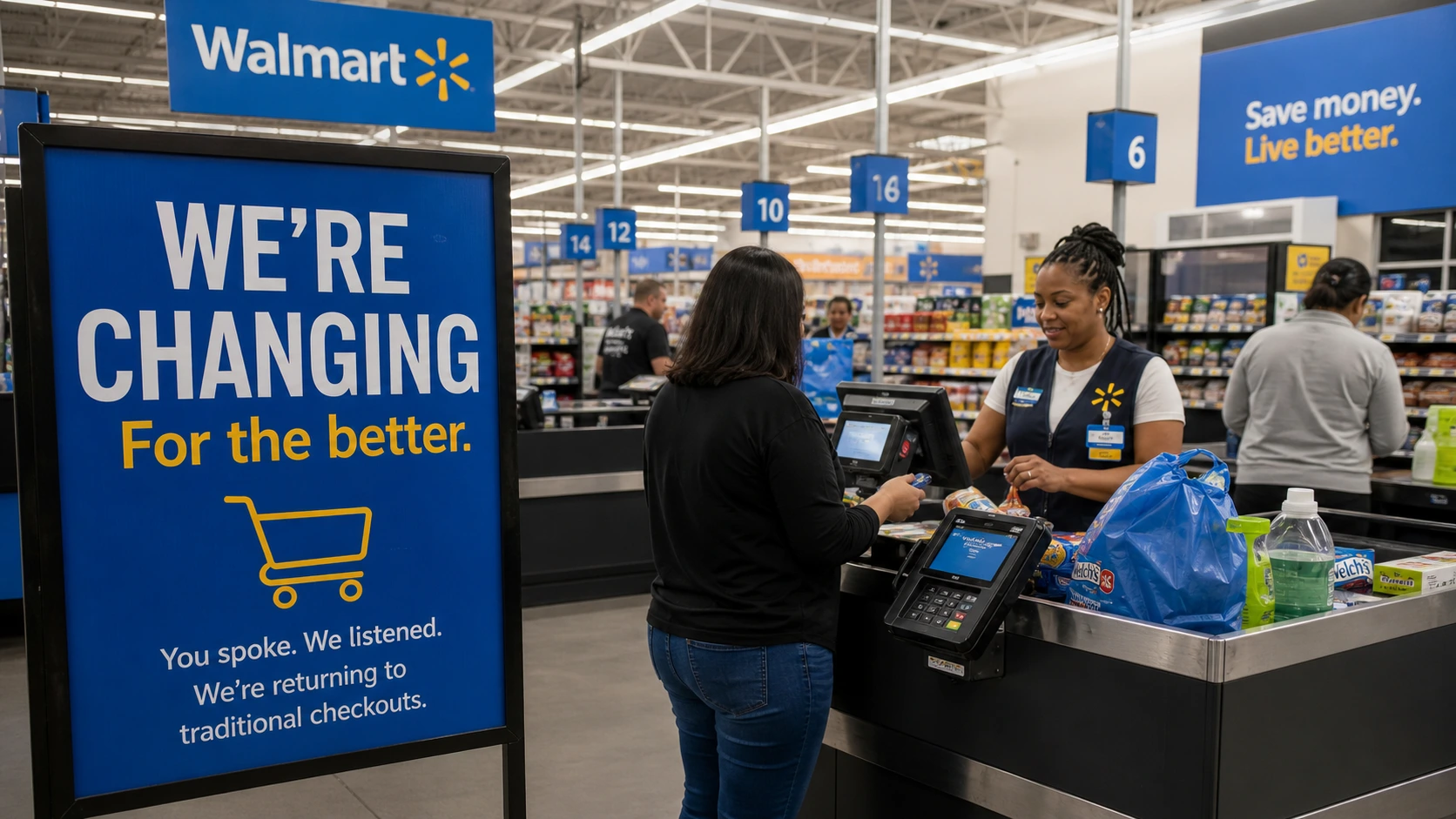
The Walmart self checkout rollback underscores a broader recalibration of automation strategy.
As theft, labor economics and regulatory scrutiny converge, the future of checkout systems is shifting toward controlled, hybrid models with measurable accountability.
NOTE! This article was generated with the support of AI and compiled by professionals from multiple reliable sources, including official statements, press releases, and verified media coverage. For more information, please see our T&C.


