
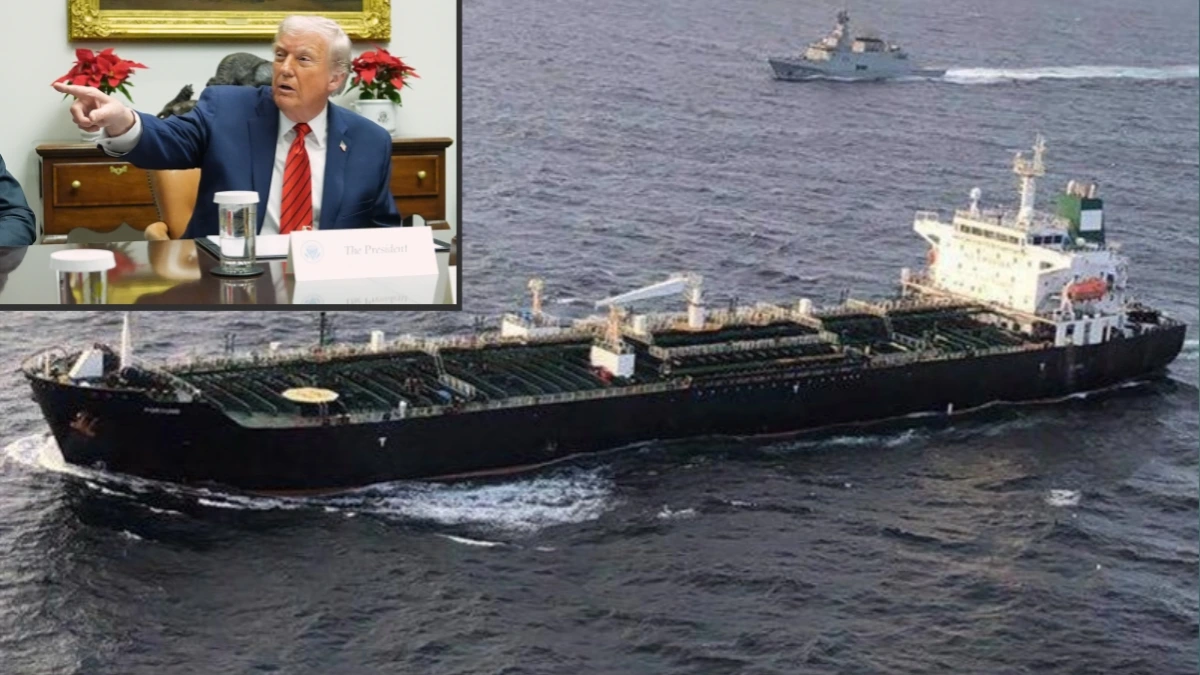
Washington – The United States seized a sanctioned Venezuelan oil tanker off the coast of Venezuela on Wednesday, President Donald Trump said, marking a significant escalation in US Venezuelan tensions and sending global oil prices higher.
“We’ve just seized a tanker on the coast of Venezuela, large tanker, very large, largest one ever, actually, and other things are happening,” Trump said during a press briefing. When asked about the fate of the oil, he added, “We keep it, I guess.”
The Venezuelan government condemned the action, calling it “blatant theft” and an “act of international piracy.” Caracas said it would defend its sovereignty and natural resources and bring the matter before international bodies.
The tanker, believed to be the Skipper, was reportedly seized with support from the FBI, Homeland Security, the US Coast Guard, and the military. Authorities said the vessel had been used to transport sanctioned oil from Venezuela and Iran.
A 45 second video posted by US Attorney General Pam Bondi showed helicopters approaching the tanker, with armed personnel in camouflage rappelling onto the deck.
Satellite and shipping data indicate the vessel left Venezuela’s main oil port of Jose between December 4 and 5 after loading approximately 1.1 million barrels of Venezuela’s Merey heavy crude.
This marks the first known US action against a Venezuelan oil tanker since the administration initiated a military build up in the region. The US has previously carried out strikes against vessels suspected of trafficking drugs, raising legal concerns among experts and lawmakers.
Analysts said the seizure could affect oil supply perceptions but may not have an immediate impact on global markets.
“This is just another geopolitical and sanctions headwind impacting spot supply,” said Rory Johnston, analyst with Commodity Context.
“Seizing this tanker inflames supply concerns but does not fundamentally change the situation since these barrels would have been floating for some time.”
Energy economist Dr. Elena Ramirez said, “The US move highlights increasing pressure on Venezuelan exports, particularly as Caracas competes with sanctioned oil from Russia and Iran.”
Chevron, which partners with Venezuela’s state oil company PDVSA, said its operations were continuing normally, and crude exports to the United States increased to 150,000 barrels per day in November from 128,000 barrels in October.
Following news of the seizure, Brent crude futures rose 27 cents, or 0.4 percent, to settle at $62.21 a barrel. US West Texas Intermediate crude futures gained 21 cents, also 0.4 percent, closing at $58.46 per barrel.
Venezuela exported more than 900,000 barrels per day last month, its third highest monthly average this year. Analysts note that while Washington has increased pressure on President Nicolas Maduro, the US had not previously interfered with Venezuelan oil flows.
Local residents in the Venezuelan port city of Jose expressed concern over escalating tensions. “We rely on the oil industry for jobs and stability,” said Carlos Mendoza, a port worker. “Actions like this make the future uncertain for everyone here.”
A maritime industry official in Caracas, who spoke on condition of anonymity, said the seizure could complicate contracts and shipping schedules, affecting both domestic and international oil markets.
The incident adds to existing geopolitical tensions in the Caribbean region. Maduro has repeatedly claimed US military activity is aimed at ousting him and seizing Venezuela’s oil reserves.
Since September, US operations have targeted more than 20 suspected drug vessels, with casualties exceeding 80. Some strikes have faced scrutiny over legality and proportionality.
Experts warn that further US actions could intensify diplomatic disputes and potentially disrupt global oil trade. “This sets a precedent that could influence how sanctions are enforced on maritime oil shipments worldwide,” said Ramirez.
The seizure of the Venezuelan oil tanker underscores growing friction between Washington and Caracas amid US sanctions and military posturing.
While global oil markets reacted with modest increases, the broader implications for international maritime law, energy security, and Venezuelan sovereignty remain uncertain.


