
KEY POINTS
- Dr. Robby Robinavitch’s helmetless motorcycle ride reflects narrative intent and the thrill seeking tendencies of ER professionals.
- New character Dr. Baran Al Hashimi introduces AI driven medical practices, creating tension with the veteran team.
- Season two highlights evolving character arcs, real life medical pressures, and systemic healthcare challenges in the Pittsburgh Trauma Medical Center.
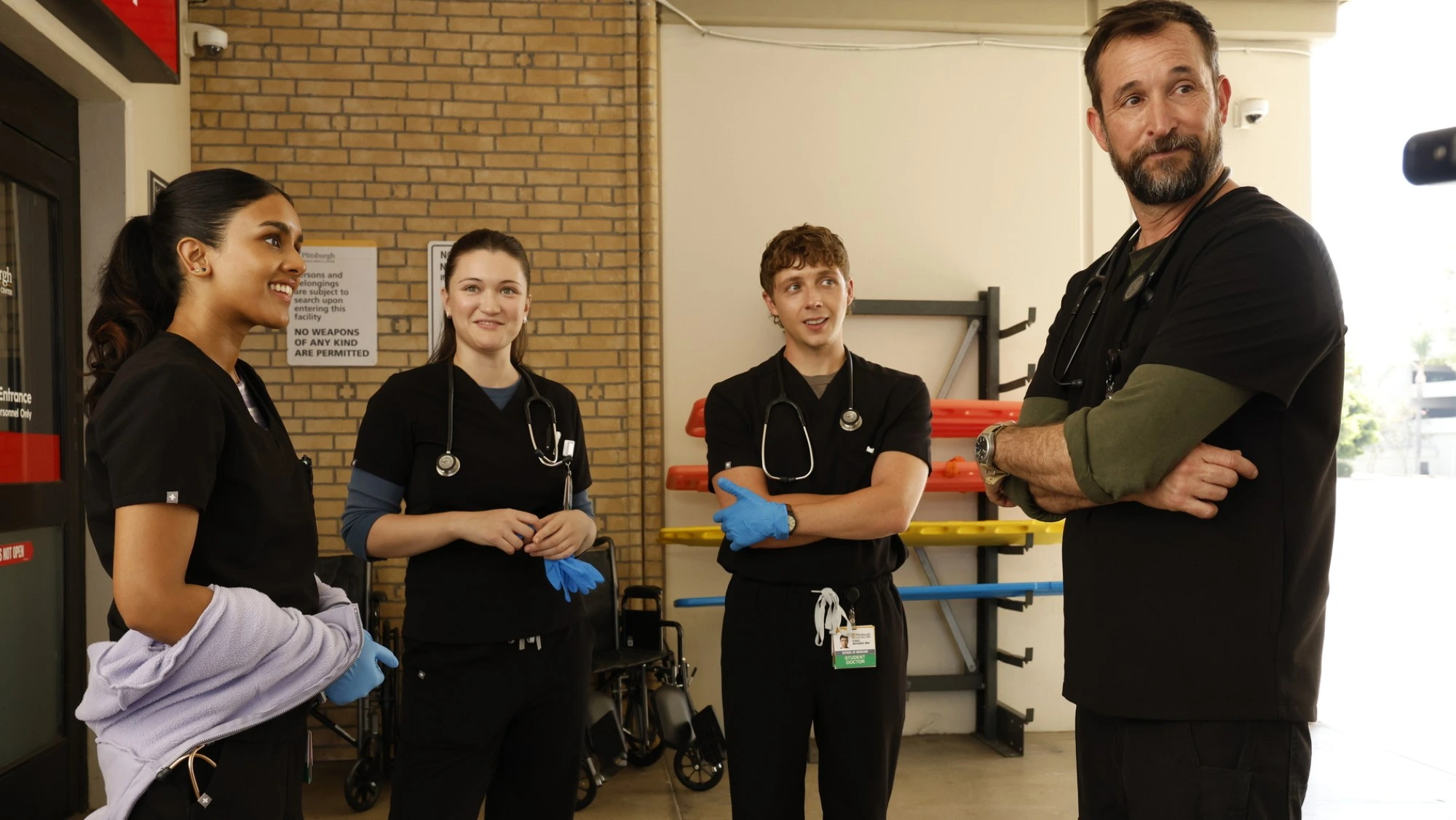
PITTSBURGH — The second season of the Emmy winning medical drama The Pitt premiered with a striking scene of Dr. Michael “Robby” Robinavitch, portrayed by Noah Wyle, riding a motorcycle without a helmet, sparking widespread discussion among viewers and medical professionals.
Showrunners R. Scott Gemmill and John Wells confirmed that the risky portrayal was intentional, reflecting the character’s mindset and the adrenaline driven culture of emergency medicine.
The opening scene of The Pitt Season Two sets a bold tone for the series, blending high-stakes medical scenarios with personal and professional conflict.
Robby’s helmet free motorcycle ride, while legal in Pennsylvania, was deliberately designed to show his disregard for conventional rules, mirroring his complex personality.
The season also introduces Dr. Al Hashimi, an AI focused attending, whose presence challenges Robby’s traditional approach to emergency care.
The Pitt, produced by Warner Bros. Television and streaming on HBO Max, follows the intense lives of trauma doctors in Pittsburgh.
The series gained acclaim in its first season for realistic depictions of emergency medicine, partly due to consultation with medical experts and its attention to operational accuracy.
Season two expands on character development established in the first season. Young physicians, including Samira Mohan, Mel King, and newly promoted Dr. Whitaker, gain confidence while navigating the high pressure environment of the trauma center.
Meanwhile, real world healthcare pressures such as Medicaid changes, staffing cuts, and administrative burdens continue to influence the narrative.
Medical professionals often display high risk behaviors off duty, mirroring the adrenaline driven decision making in the ER. Dr. Robby’s motorcycle scene aligns with research showing that emergency physicians frequently engage in extreme sports or thrill seeking activities.
“The ER environment naturally attracts individuals who thrive on adrenaline,” Wells said.
“Many ER physicians engage in activities such as climbing, skydiving, or extreme sports, reflecting the same energy they bring to patient care.”
The introduction of Dr. Al Hashimi addresses an emerging healthcare debate: the role of AI in clinical practice.
According to Sepideh Moafi, who plays Al Hashimi, delegating administrative tasks to AI could allow physicians to spend more time at the bedside, potentially improving patient outcomes and physician well being.
“Twenty eight percent of a physician’s time is spent with patients the rest is administration,” Moafi said.
“AI can help doctors focus on care and mental health without sacrificing clinical quality.”
Physicians who consulted with the series praised its attention to realistic challenges. Dr. Angela Fisher, an ER physician in Philadelphia, noted.
“The show captures the intensity of trauma care and the way personalities clash in high stakes environments.
The introduction of AI feels authentic because hospitals are increasingly adopting technology to improve workflow.”
Actor Gerran Howell, portraying Dr. Whitaker, emphasized character growth, “Season two lets us explore how these young doctors gain confidence and authority while facing the chaos of the ER.”
| Metric | Season One | Season Two | Change |
|---|---|---|---|
| On screen ER patient cases per episode | 5-7 | 6-8 | +1 case average |
| Time depicted at bedside (%) | 25 | 28 | +3% |
| AI integration in episodes | 0 | 2 main arcs | +2 |
| Main character conflicts | 2 | 4 | +2 |
Season two positions The Pitt to explore ongoing healthcare challenges, including administrative overload, staffing cuts, and technological adoption.
Showrunners aim to depict systemic pressures realistically while maintaining compelling character driven narratives.
The evolving dynamic between Robby and Al Hashimi may foreshadow future shifts in the trauma center’s approach to medicine, reflecting broader industry debates about AI adoption.
The HBO Max weekly release model supports viewer engagement and discussion, contrasting with full season drops common on streaming platforms.
This pacing allows the audience to track character evolution and respond to emergent plotlines in real time.
The Pitt Season Two combines medical realism with deep character exploration, highlighting both the thrill seeking tendencies of ER professionals and the ethical, operational, and technological pressures shaping modern healthcare.
Through its portrayal of risk, innovation, and interpersonal conflict, the series continues to provide an authoritative lens on trauma medicine while maintaining a compelling dramatic narrative for global audiences.
Author’s Perspective
In my analysis, The Pitt Season Two captures the tension between human risk taking and AI integration in emergency medicine.
Reflecting how frontline healthcare is evolving under technological and psychological pressures.
I predict that AI will handle up to 50 percent of administrative and diagnostic tasks in trauma centers, easing physician burnout and reshaping ER workflows.
Patients may experience faster, more accurate care, while healthcare workers navigate new ethical and operational challenges.
Medical leaders should track AI performance metrics accuracy, time saved, and adoption rates to optimize care and staff well being
NOTE! This report was compiled from multiple reliable sources, including official statements, press releases, and verified media coverage.


