
KEY POINTS
- Scott Adams, creator of “Dilbert,” died at 68 after aggressive prostate cancer.
- The comic, once syndicated in roughly 2,000 newspapers, faced widespread removal after Adams’ controversial remarks on race.
- “Dilbert” remains accessible through subscription platforms, reflecting ongoing interest in workplace satire.
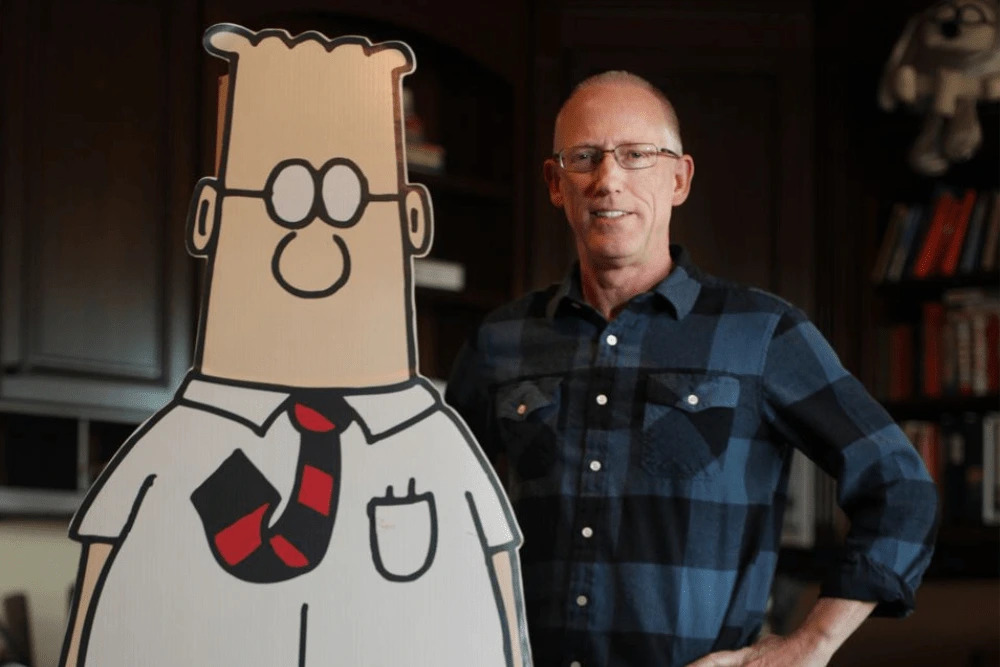
PLEASANTON, Calif. — Scott Adams, the cartoonist and author who created the widely syndicated comic strip “Dilbert,” died Tuesday at his home in Pleasanton, California. He was 68.
His former wife, Shelly Adams, confirmed his death, noting that he had been under hospice care following a May 2023 diagnosis of aggressive prostate cancer.
Adams, whose career as a middle manager in banking and telecommunications inspired the office satire.
Announced in November 2023 that his health was “declining fast” and sought assistance from public figures.
Including former President Donald Trump, highlighting challenges patients face navigating complex medical and insurance systems.
Adams’ “Dilbert” captured the frustrations of office life, depicting cubicle workers navigating inefficient management and corporate bureaucracy.
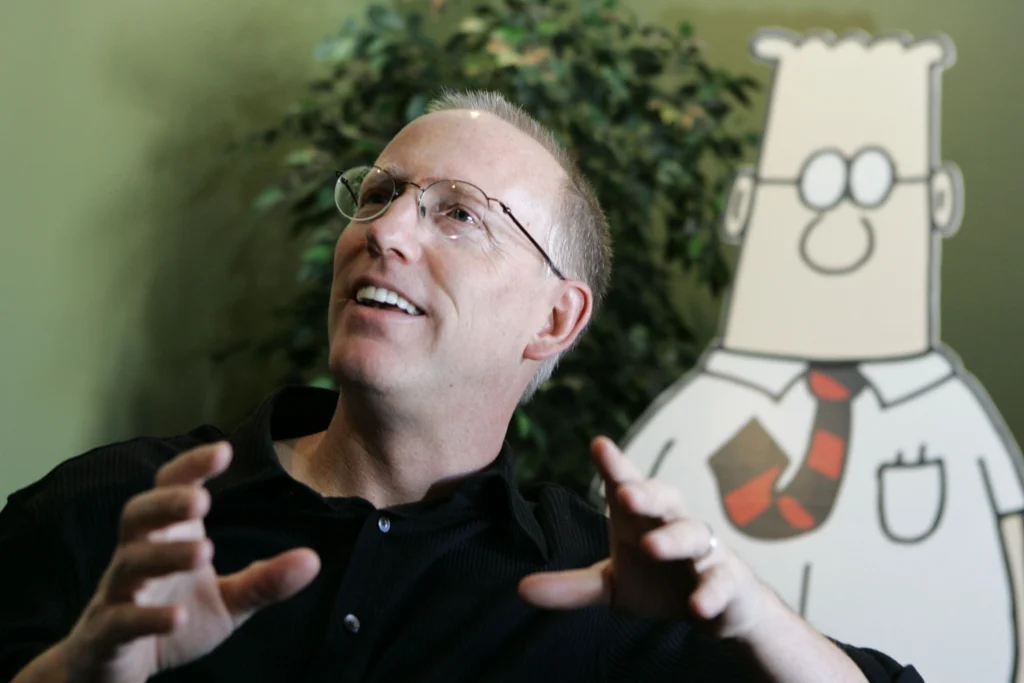
The strip became a cultural touchstone for millions of professionals worldwide. Its popularity extended into books, an animated TV series, merchandise, and advertising campaigns.
However, Adams’ public statements on race and gender, particularly during a 2023 podcast, led to a near total withdrawal of syndication, profoundly impacting his career and financial standing.
Born June 8, 1957, in Windham, New York, Adams grew up in a household that combined working class values with sharp humor.
After earning a degree in economics from Hartwick College in 1979, he began a banking career at Crocker National Bank in San Francisco.
Dyslexia complicated his early work, but he rose to management positions while earning an MBA from the University of California, Berkeley.
“Dilbert” originated as sketches during dull meetings, evolving into a syndicated comic strip in 1989.
It humorously critiqued corporate hierarchies, with characters such as the Pointy Haired Boss, the ambitious yet cynical Dogbert, and the underappreciated engineer Alice, resonating with office workers globally.
At its peak, “Dilbert” appeared in approximately 2,000 newspapers, rivaling iconic strips like “Garfield” and “Peanuts.”
Adams authored several books, including The Dilbert Principle, which examined organizational inefficiencies, and Win Bigly, exploring political persuasion and Donald Trump’s influence.
Adam’ work highlighted systemic corporate inefficiencies, offering social commentary on management culture.
Dr. Linda McCarthy, a workplace sociologist at Stanford University, said, “Dilbert gave voice to employees often marginalized within hierarchical systems. Its appeal lay in humor that also reflected real organizational frustrations.”
However, Adams’ commentary outside the comic world, including racially charged remarks on his podcast, prompted widespread backlash.
Major syndicates, including Andrews McMeel Universal, withdrew “Dilbert” from circulation, illustrating how creators’ personal conduct can affect global media distribution.
John Gentry, editor of The Daily Cartoonist, said, “The removal of ‘Dilbert’ from over 1,000 newspapers demonstrates the fragility of syndicated content in the era of social media amplification.
Adams’ career trajectory reflects a complex intersection of cultural influence and accountability.”
| Metric | Peak Circulation | Circulation After 2023 Controversy | Notes |
|---|---|---|---|
| Newspapers | ~2,000 globally | ~0 in major U.S. papers | Syndication ended after controversial remarks |
| Books Published | 15+ | N/A | Includes The Dilbert Principle and Win Bigly |
| TV / Media Adaptations | 1 animated series, advertising campaigns | Ended in mid-2000s | Dilbert dolls and Dilberito merchandise discontinued |
| Online Access | Subscription-based via Locals | Active | “Dilbert Reborn” continued after syndication drop |
Employees and fans expressed mixed reactions following Adams’ death. Maria Lopez, a software engineer in Silicon Valley, said, “Dilbert captured exactly what office life feels like the frustration, the absurdity.
It was sad when the strip disappeared from papers, but its humor is timeless.”
Conversely, social media commentator David Klein noted, “Adams’ remarks outside of his comics created real consequences.
It’s a reminder that influence comes with responsibility, especially in a global media landscape.”
“Dilbert Reborn,” available via subscription platforms, indicates that Adams’ intellectual property and the workplace satire genre retain value.
Analysts suggest that similar strips and digital comics may explore themes of office culture while navigating creator accountability and audience sensitivities.
The shift toward subscription based access also reflects broader trends in media monetization and content resilience amid controversy.
Scott Adams’ passing marks the end of a significant chapter in comic and workplace commentary.
While his career was marked by both acclaim and controversy, the cultural impact of “Dilbert” on global corporate discourse is enduring.
The strip’s depiction of managerial absurdities and employee frustrations continues to resonate with audiences navigating modern office environments.
Author’s Perspective
In my analysis, Scott Adams’ career shows how cultural influence and creator accountability now collide in real time, reshaping the value and distribution of intellectual property like Dilbert.
I predict subscription based digital syndication will dominate, allowing creators to monetize loyal audiences directly while insulating themselves from reputational risk.
For professionals, this means workplace insights and satire will increasingly move online, where engagement and authenticity drive impact.
Audit your brand across platforms and explore alternative distribution channels to safeguard against public backlash.
NOTE! This report was compiled from multiple reliable sources, including official statements, press releases, and verified media coverage.


