
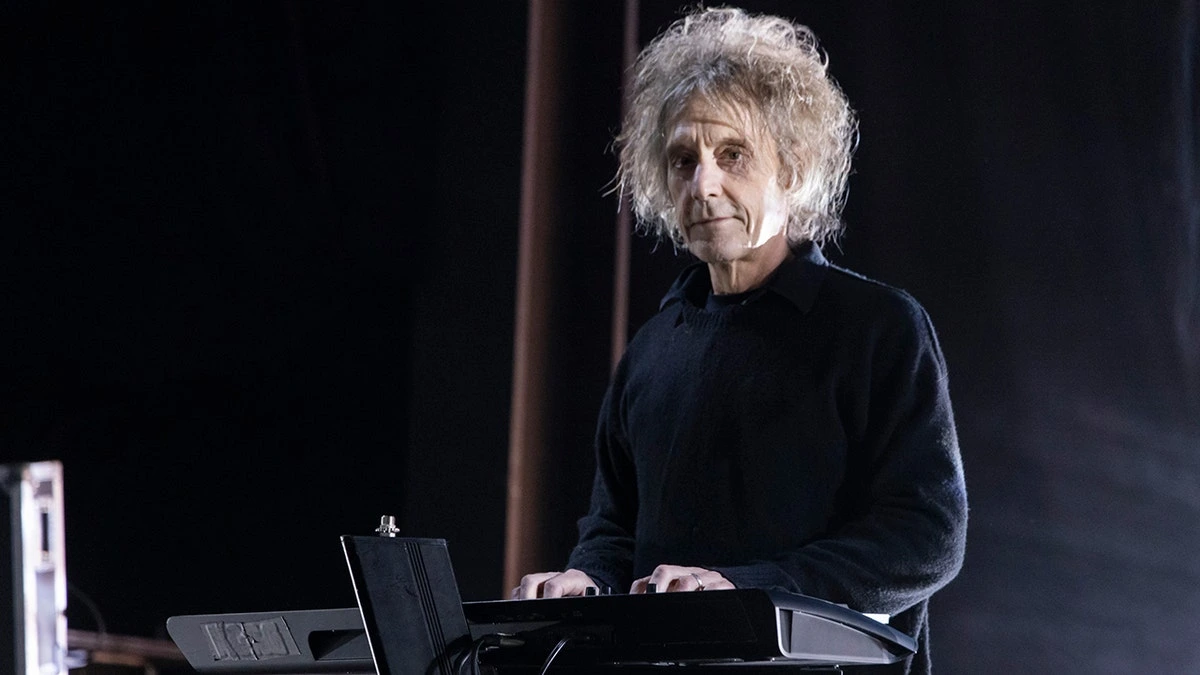
Perry Bamonte, a longtime guitarist and keyboardist for the British rock band The Cure, has died at sixty five after a short illness, the band confirmed on its official website.
Perry Bamonte’s death occurred at his home over the Christmas holiday, according to the statement, ending a career that spanned more than four decades in alternative and post punk music.
“It is with enormous sadness that we confirm the death of our great friend and bandmate Perry Bamonte,” the band said. “Quiet, intense, intuitive, constant and hugely creative, ‘Teddy’ was a warm hearted and vital part of The Cure story.”
The announcement of Perry Bamonte’s death prompted tributes from musicians, fans and industry figures across the United Kingdom and beyond.
Born in London in nineteen sixty, Bamonte first joined The Cure’s extended circle in nineteen eighty four as part of the road crew.
His transition from behind the scenes work to full time band member came in nineteen ninety, after keyboardist Roger O’Donnell departed.
Over the next fourteen years, Bamonte became a central creative force within the band, contributing guitar, keyboards and six string bass on five studio albums, including “Wish,” “Wild Mood Swings” and “Bloodflowers.”
During that period, he performed at more than four hundred live shows as The Cure expanded its global audience. Bamonte was let go from the band in two thousand five during a lineup restructuring.
Despite the departure, he continued working in music, later joining British rock supergroup Love Amongst Ruin in two thousand twelve and appearing on its two thousand fifteen album, “Lose Your Way.”
Music historians say Perry Bamonte’s death marks the loss of a musician whose influence extended beyond commercial success.
“Bamonte was not a front-facing star, but his textural work helped The Cure evolve during a critical period,” said James Holloway, a lecturer in popular music studies at the University of Leeds.
“His layered approach to guitar and keyboards allowed the band to move between intimacy and scale without losing emotional coherence.”
Industry analysts also note his adaptability, particularly during the band’s transition from the early nineteen nineties alternative boom into later experimental phases.
The Cure, formed in nineteen seventy six by school friends Robert Smith, Michael Dempsey and Lol Tolhurst, released thirteen studio albums over nearly five decades.
Five of those albums included Bamonte as a core member. During his tenure, the band toured extensively across Europe, North America and Asia.
According to industry touring records, the band averaged nearly thirty shows per year between nineteen ninety and two thousand four, reflecting one of its most active live periods.
The band has received four Grammy Award nominations and was inducted into the Rock and Roll Hall of Fame in two thousand nineteen, where Bamonte reunited with the group for a performance of songs including “Boys Don’t Cry,” “Just Like Heaven” and “A Forest.”
Fans gathered outside music venues and online forums following news of Perry Bamonte’s death.
“He was never trying to be the loudest presence, but his playing stayed with you,” said Mark Ellis, a longtime fan who attended multiple Cure concerts in London. “You could feel his contribution without it being obvious.”
A former tour technician who worked with Bamonte in the nineteen nineties described him as deeply committed. “He was meticulous but kind,” said the technician, who requested anonymity. “He cared about the sound and the people around him.”
Bamonte rejoined The Cure in two thousand twenty two, playing another ninety shows, which the band described as among the strongest performances of its later years.
His final appearance came in November two thousand twenty four at a London concert launching the band’s first album in sixteen years, “Songs of a Lost World.”
That performance was recorded for the concert film “The Cure: The Show of a Lost World,” released in theaters earlier this month.
Music publishers say the film and album are likely to renew interest in Bamonte’s body of work following Perry Bamonte’s death.
Perry Bamonte’s death closes a significant chapter in The Cure’s long history, reflecting the passing of a musician who helped shape the band’s sound during some of its most formative years.
While not always in the spotlight, his contributions remain embedded in recordings and performances that continue to reach new audiences.
As tributes continue, Perry Bamonte’s death is being marked across the music world as the loss of a dedicated artist whose quiet presence left a lasting imprint on modern alternative music.


