
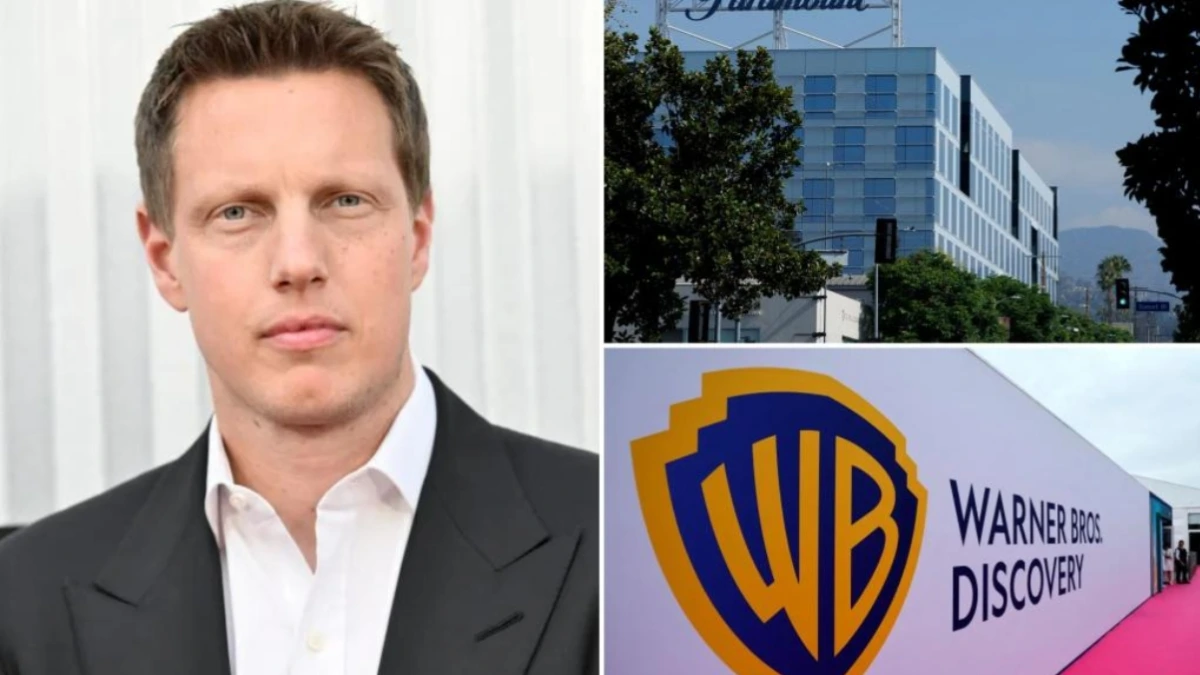
Paramount Skydance on Monday moved to strengthen its hostile takeover bid for Warner Bros. Discovery by formally guaranteeing the financial backing of billionaire Larry Ellison, responding directly to doubts raised by WBD’s board about whether the deal could close.
In a news release, Paramount said Ellison agreed to provide an irrevocable personal guarantee covering $40.4 billion in equity financing tied to the offer, as well as any damages claims that could arise from the transaction.
The move marks a significant escalation in the Paramount Skydance WBD bid, which is competing against a previously announced agreement between WBD and Netflix.
Shares of Warner Bros. Discovery rose four percent in premarket trading, while Paramount shares gained about two percent.
Paramount Skydance, led by Chief Executive Officer David Ellison, is offering $30 per share in cash to acquire all of Warner Bros. Discovery.
The proposal values WBD at an enterprise value of $108.4 billion, according to Paramount, and includes its studio operations, streaming platforms and traditional television networks.
Earlier this month, Warner Bros. Discovery agreed to sell its studio and streaming assets to Netflix in a transaction valued at roughly $83 billion on an enterprise basis.
That deal does not include WBD’s cable networks, a point Paramount has emphasized in arguing that its offer provides broader value.
The Paramount Skydance WBD bid became contentious after WBD’s board questioned whether Ellison, one of the world’s wealthiest individuals and co-founder of Oracle, was firmly committed to backing the deal through closing.
“The guarantee is clearly designed to remove any doubt about financing certainty,” said Mark Feldman, a media mergers analyst at Brighton Advisory Group.
“Boards are less concerned with headline price than with whether the money will actually be there when the transaction closes.”
Last week, Warner Bros. Discovery Chairman Samuel Di Piazza voiced skepticism in an interview with CNBC, saying the board was not confident Ellison would remain committed through the end of the process.
“Doing a deal is great closing a deal is better,” Di Piazza said. Paramount said Ellison also agreed not to revoke the Ellison family trust or transfer its assets in a way that could undermine the transaction while negotiations are ongoing.
While Paramount did not raise its $30 per share offer, it increased its proposed reverse breakup fee to match the size of the fee included in Netflix’s agreement with WBD.
Reverse breakup fees are designed to compensate sellers if a buyer fails to close due to financing or regulatory issues.
According to filings reviewed by analysts, Paramount argues its bid delivers approximately twenty five billion dollars more in enterprise value than the Netflix transaction.
Netflix’s deal focuses on WBD’s growth assets, particularly streaming and film studios, while leaving legacy networks outside the transaction.
“The comparison is not apples to apples,” said Laura Chen, a professor of media economics at Northwestern University.
“Netflix is buying the crown jewels. Paramount is proposing to buy the entire castle, including parts the market values less.”
Industry employees and investors are watching closely as the competing offers raise questions about the future of WBD’s workforce and content strategy.
“At this point, everyone just wants clarity,” said a senior production manager at a Warner Bros. studio lot in Burbank, Calif., who requested anonymity due to employer restrictions.
“Different owners mean very different futures for jobs and creative decisions.”
A long time Paramount shareholder, Robert Mills of San Diego, said the Ellison guarantee could help stabilize investor confidence.
“If you’re going to make a bold move like this, you need to remove uncertainty. Money talks in deals like these,” he said.
The Warner Bros. Discovery board is expected to continue evaluating both proposals under its fiduciary duties to shareholders. Analysts said regulatory scrutiny could also play a role, particularly if Paramount’s bid advances.
The Paramount Skydance WBD bid may face antitrust review given the scale of the combined media assets, though experts said traditional television networks have lost influence in recent years, potentially reducing regulatory resistance.
Netflix’s agreement, while narrower in scope, is seen as cleaner from a regulatory standpoint and may appeal to directors seeking certainty and speed.
Paramount’s decision to secure an irrevocable guarantee from Larry Ellison underscores the high stakes surrounding Warner Bros. Discovery’s future.
As competing bids highlight differing visions for the company’s assets, WBD’s board faces a complex choice balancing price, certainty and long term strategy.
The outcome could reshape the global media landscape at a time of rapid consolidation and shifting viewer habits.


