
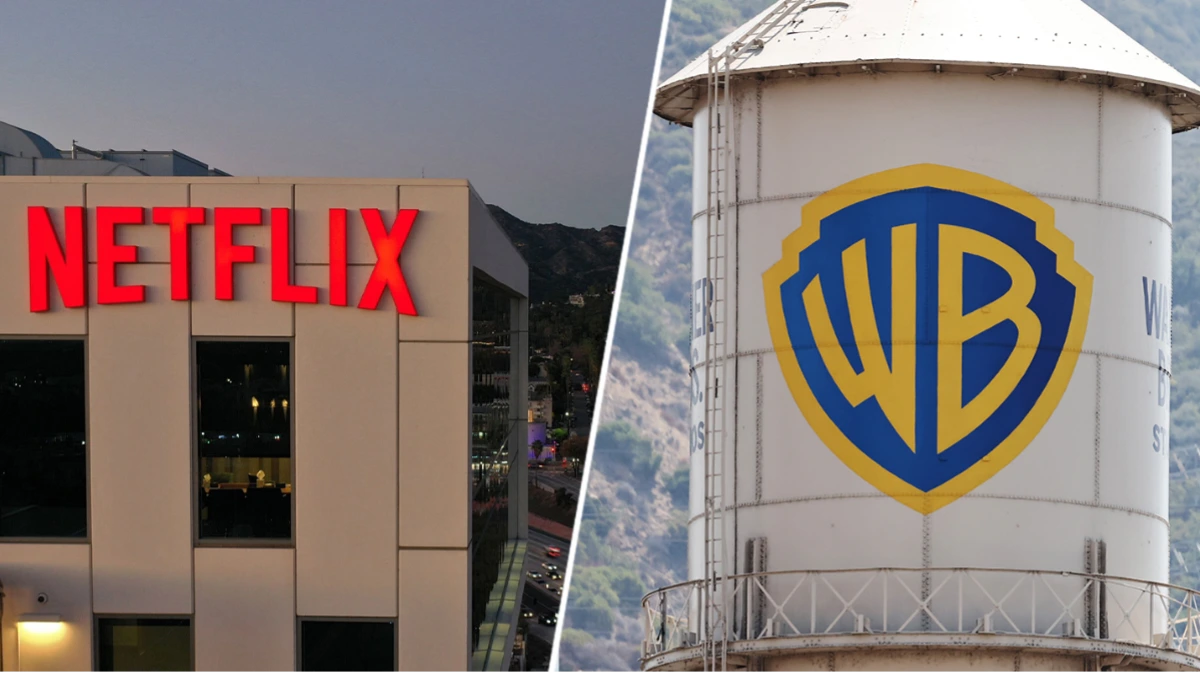
Netflix Inc. has refinanced a significant portion of the massive bridge loan backing its bid for Warner Bros. Discovery Inc., securing cheaper and longer term financing as it moves forward with one of the largest media transactions in recent history.
The company disclosed in a regulatory filing Monday that it replaced part of a $59 billion bridge facility with new credit arrangements totaling $25 billion.
The move is designed to strengthen the financial structure supporting the proposed acquisition and reduce near term refinancing pressure, according to people familiar with the matter.
The refinancing centers on a bridge loan Netflix arranged earlier this year to support its bid for Warner Bros. Discovery, the parent company of HBO, CNN and Warner Bros. Pictures.
Bridge loans are short term financing tools often used in large mergers, allowing buyers to secure funding quickly before replacing it with longer term debt.
Under the new structure, Netflix obtained a $5 billion revolving credit facility and two delayed draw term loans of $10 billion each. The remaining $34 billion of the original bridge loan is expected to be syndicated to lenders or refinanced later, according to the filing.
Netflix refinances Warner Bros. loan financing at a time when borrowing costs remain elevated but have stabilized compared with last year’s peaks.
The company has not disclosed the exact interest rates on the new facilities but said they carry lower costs and longer maturities than the original bridge loan.
Analysts said the refinancing signals confidence from lenders and a deliberate effort by Netflix to manage risk while pursuing the acquisition.
“This is a classic step in a large takeover,” said Mark Feldman, a media finance analyst at Horizon Markets. “By refinancing early, Netflix reduces exposure to short term rate volatility and shows creditors it has a credible plan to absorb a deal of this size.”
Netflix refinances Warner Bros. loan obligations while maintaining flexibility through delayed draw term loans, which allow the company to access funds only when needed. That structure can help limit interest expenses if the deal timeline extends.
A Netflix spokesperson declined to comment beyond the filing, while Warner Bros. Discovery has previously said it continues to evaluate the proposal.
The scale of the financing places the deal among the largest leveraged transactions ever attempted in the media sector. By comparison, Disney’s acquisition of most of 21st Century Fox in 2019 involved roughly $35 billion in debt.
Netflix ended its most recent quarter with more than $14 billion in long term debt and reported annual revenue exceeding $33 billion.
If completed, the Warner Bros. Discovery deal would significantly increase Netflix’s leverage but also expand its content library and global production footprint.
Netflix refinances Warner Bros. loan exposure at a moment when several media companies are seeking consolidation to offset slowing subscriber growth and rising production costs.
Industry workers and investors are watching closely for how the transaction could affect jobs and creative output.
“Any time there’s a merger this big, people get nervous,” said Carla Mendes, a post production supervisor based in Los Angeles who has worked on streaming projects for both companies.
“But there’s also hope that deeper pockets mean more stable funding for shows.”
On Wall Street, some investors expressed cautious optimism.
“The refinancing lowers immediate financial stress,” said James Liu, a portfolio manager at a New York based investment firm that holds Netflix shares. “But execution risk remains high until there’s clarity on regulatory approval and integration.”
Regulatory scrutiny is expected to be intense, particularly in the United States and Europe, where competition authorities have taken a closer look at consolidation in media and technology.
Financing arrangements could continue to evolve as Netflix refinances Warner Bros. loan commitments further or taps bond markets once conditions allow.
Executives have said the company remains committed to preserving creative independence across studios if the deal proceeds.
Netflix refinances Warner Bros. loan financing as part of a broader effort to solidify the financial foundation of its proposed acquisition.
By replacing a portion of short term bridge debt with longer term facilities, the company has reduced near term risk while leaving a substantial amount still to be syndicated.
The refinancing marks another step in a complex and closely watched transaction that could reshape the global media landscape.


