
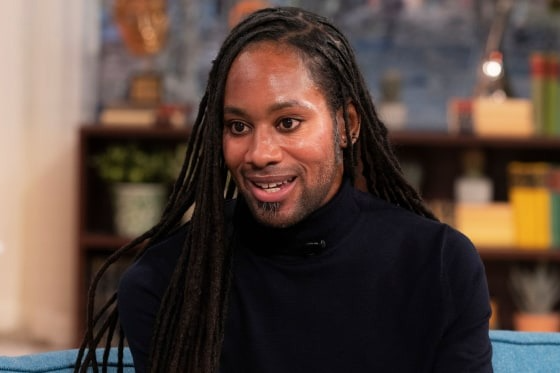
Jason Arday, who became one of the most prominent Black academics in British higher education, died Friday after emergency services were called to a residence in Battersea, south London.
The Metropolitan Police said officers responded following a report that a man had been found unresponsive.
He was pronounced dead at the scene, with authorities describing the death as unexpected but saying it was not believed to be suspicious.
Arday’s family said they were devastated by the loss of a father, partner, brother, uncle and son.
They also said the sustained abuse and misinformation directed toward him following his Cambridge appointment had become overwhelming.
Cambridge Vice-Chancellor Professor Deborah Prentice said the university was deeply saddened by the news and extended its sympathies to Arday’s family and friends.
Education Secretary Lucy Powell also described herself as deeply shocked and emphasized the human impact of the controversy surrounding him.
An Unusual Academic Journey
Arday was raised in a working class part of south London by parents who had immigrated from Ghana. As a child, he was identified as having learning difficulties.
According to his memoir, Arday did not speak until he was 11 and remained unable to read until he was 18.
His subsequent academic progress eventually took him from physical education teaching to doctoral study and university professorships.
Liverpool John Moores University awarded him his Ph.D. in 2015. He later held academic positions at Durham University and the University of Glasgow before joining Cambridge.
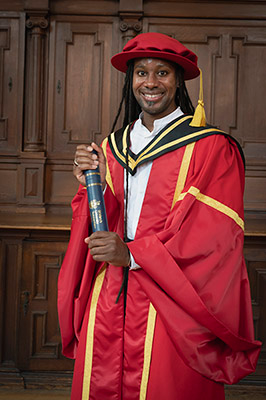
In 2023, Cambridge appointed Arday to an established chair of education at Jesus College.
At 37, he was described at the time as the university’s youngest Black professor, an appointment viewed against a UK academic landscape in which Black professors represented about 1% of university professors.
How the Academic Controversy Began
Questions surrounding Arday’s academic work became public after Nathan Cofnas, an academic who described himself as a “race realist” and was dismissed from a Cambridge position in 2024, alleged that Arday’s work contained multiple examples of plagiarism.
The allegations extended beyond his thesis and prompted renewed examination of some of his publications and claims about his background.
Arday rejected accusations of plagiarism but acknowledged errors in his earlier academic work. He said some mistakes were connected to his autism and explained that mimicry had been one method he used to understand information.
Liverpool John Moores University, which awarded his doctorate, had previously investigated claims relating to his thesis and concluded that he had not plagiarized it.
Cambridge also said that allegations concerning his thesis and journal publications had been examined by the relevant institutions and journals.
His Final Weeks at Cambridge
The controversy intensified as journalists examined inconsistencies in aspects of Arday’s personal and professional story, coinciding with the publication of his memoir in the United States.
Arday announced his resignation from Cambridge the previous week. He said the level of public attention had gone far beyond ordinary scholarly disagreement and that the personal cost had become too great.
In comments reported earlier this month, Arday also rejected the portrayal of him as a liar or fantasist, arguing that the response to the academic dispute had been excessively cruel.
Cambridge Faces an Independent Review
Cambridge subsequently announced an independent investigation into the circumstances surrounding Arday’s appointment.
Prentice acknowledged concerns across the university and beyond, saying the review would be thorough and transparent and would involve senior academics from both inside and outside Cambridge. The case had already prompted debate among Cambridge academics.
Some supported Arday, while others signed an open letter questioning how the university had handled the allegations and criticizing what they considered an emphasis on his age, race and potential.
Retraction Watch reported that concerns about possible duplication in Arday’s work had circulated within Cambridge for years and that warnings had not led to action before the recent controversy.
Reactions From Former Colleagues
Arday’s former colleagues remembered a different side of his public profile. Nick Clark, who had known him since childhood, previously described him as a caring person who made an effort to help others feel comfortable.
Durham University said Arday was kind and warm and had actively worked to create opportunities for doctoral students.
The University of Glasgow said it was shocked and saddened by his death and announced its own review of his previous academic work.
Campaigner Jolyon Maugham called the death a tragedy and questioned whether continued public scrutiny after Arday’s resignation had been in the public interest.
Arday’s career brought together several important questions about British higher education: how universities assess academic records, how allegations are investigated, and how institutions respond when concerns emerge about prominent appointments.
His appointment had been celebrated as an important development for racial representation in academia. The controversy that followed instead placed Cambridge’s recruitment and oversight processes under significant scrutiny.
Arday’s memoir, Great and Unfortunate Things, was released in the United States earlier this week. Simon & Schuster had scheduled its UK publication for Aug. 27.
Cambridge’s investigation into his appointment and Glasgow’s review of his previous work were both announced before his death. The supplied reports contain no findings from either process.


