
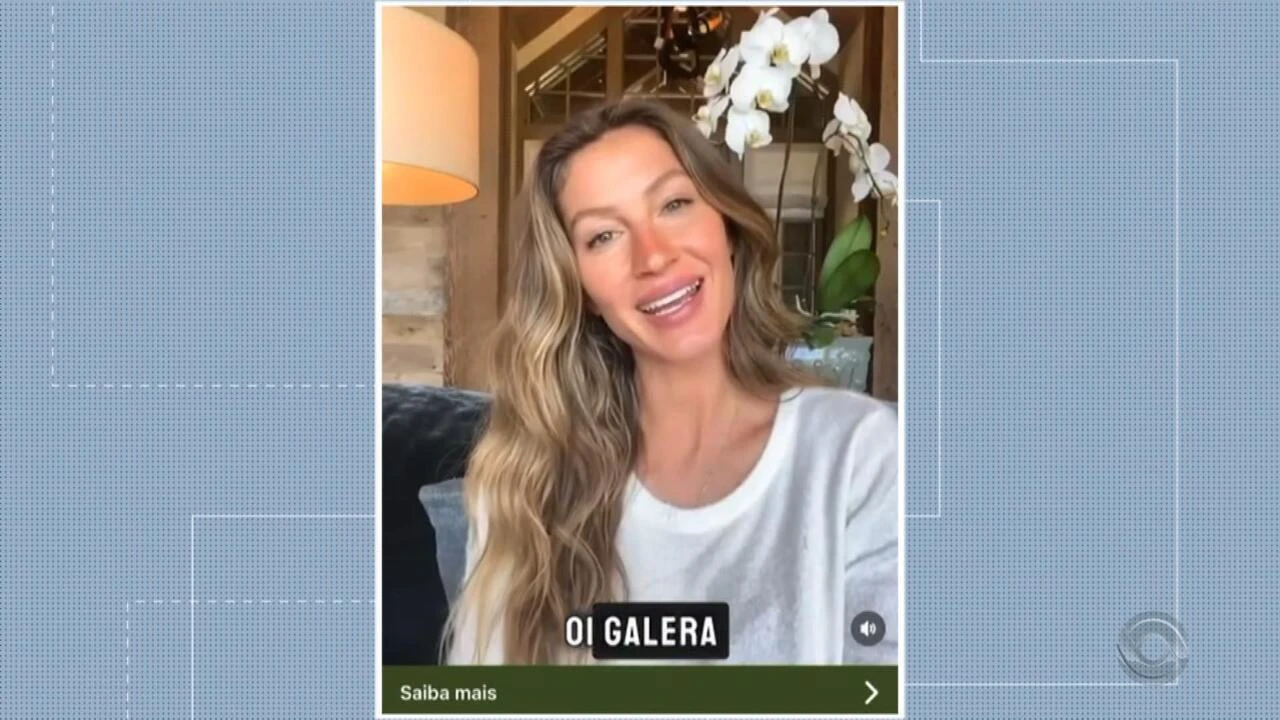
PORTO ALEGRE, Brazil — Authorities in Brazil have dismantled an online fraud ring accused of using deepfake videos of supermodel Gisele Bundchen and other celebrities in deceptive Instagram ads that lured victims into paying for fake products and giveaways.
Police said the operation, which allegedly generated more than 20 million reais ($3.9 million), marks one of the country’s first major crackdowns on artificial intelligence driven scams.
Investigators in the southern state of Rio Grande do Sul arrested four suspects this week and froze assets across five states. The case has drawn national attention as Brazilian regulators and courts weigh the responsibilities of tech platforms in curbing AI powered fraud.
The investigation began in August 2024 after a victim reported being misled by an Instagram ad featuring an altered video of Bundchen promoting a skincare product, according to the state’s cybercrime unit.
Another fake ad used the supermodel’s likeness to advertise a supposed suitcase giveaway, requiring buyers to pay shipping fees for items that never arrived.
Police uncovered a web of operations spanning multiple states, involving manipulated images and videos of other Brazilian and international celebrities.
The suspects allegedly created fraudulent betting platforms and e-commerce schemes to funnel money from victims who were often unaware they had been deceived by deepfakes.
Brazil’s federal anti money laundering agency, COAF, identified over 20 million reais in suspicious transactions linked to the network. Investigators are pursuing charges of money laundering and online fraud.
Most victims lost small amounts typically under 100 reais ($19) and many did not report the crimes, creating what officials described as a “statistical immunity” for scammers.
They knew that people would not take the time to file reports for minor losses, said Isadora Galian, a spokesperson for Rio Grande do Sul’s cybercrime unit. “By spreading the scam across thousands of victims, they accumulated millions while staying under the radar.”
Experts say the case highlights a growing challenge as deepfake technology becomes more accessible. “AI tools have reached a level where realistic synthetic videos can be made with minimal technical skill,” said Carlos Mendonça, a digital forensics analyst at the University of São Paulo.
That lowers the barrier for scammers and raises the urgency for stronger digital literacy and platform accountability. Brazil’s Supreme Court ruled in June that social media companies can be held liable for criminal ads posted by users if they fail to remove them promptly, even without a court order.
The decision is part of a broader effort to adapt existing laws to emerging AI related threats. “Platforms must act quickly to remove deceptive ads that exploit celebrity images,” said legal expert Ana Luiza Prado. “The court’s ruling sends a signal that passive moderation is no longer enough.”
According to a 2024 report by cybersecurity firm Kaspersky, Brazil ranked among the top five countries globally for online fraud incidents involving manipulated media.
The firm reported a 63 percent year over year increase in cases using AI generated visuals, often tied to fraudulent investment schemes and counterfeit products.
Globally, regulators are grappling with similar challenges. In the United States, the Federal Trade Commission has proposed new rules to combat AI powered deception in advertising.
The European Union’s AI Act, expected to take effect in 2026, will impose strict transparency requirements for synthetic media used in commercial contexts.
Brazil’s experience mirrors global trends, said cybersecurity consultant Fernanda Ribeiro. “As scammers adopt deepfake tools, law enforcement must evolve with better detection, cross border collaboration, and public awareness campaigns.”
Local residents and consumers expressed concern over the growing sophistication of scams. “I saw one of those ads with Gisele Bundchen offering a discount on beauty products,” said Daniela Castro, a 32 year old from São Paulo. “It looked so real that I almost bought it. Now I check everything twice.”
A spokesperson for Bundchen’s team urged consumers to remain vigilant. “We advise the public to verify any offers that appear too good to be true through official brand or celebrity channels,” the spokesperson said. “Deepfakes are making it harder to distinguish truth from fraud.”
Meta, the parent company of Instagram, said its policies prohibit deceptive ads using public figures. “We remove such ads when detected and invest heavily in trained review teams and AI systems to identify potential scams,” the company said in a statement.
Still, experts argue that detection systems remain imperfect. “Automated tools can miss subtle manipulations,” Mendonça noted. “Human oversight remains essential.”
Authorities say the crackdown is just the beginning. Police in Rio Grande do Sul plan to expand investigations to other regions and pursue additional suspects believed to be connected to the operation.
Officials are also calling for more public education on digital fraud. “We need to equip people with the knowledge to recognize deepfakes,” said cybercrime head Eibert Moreira Neto. “That means teaching skepticism online and encouraging reports, no matter how small the loss.”
Brazil’s Ministry of Justice is considering new regulations to compel platforms to label AI generated content and improve response times for scam reports. Lawmakers are debating whether existing consumer protection laws are sufficient to cover emerging AI risks.
The Gisele Bundchen deepfake scam underscores Brazil’s struggle to keep pace with the rapid evolution of artificial intelligence in the digital fraud landscape.
With courts tightening accountability standards and law enforcement pursuing large scale investigations, the case serves as a test for how the country and the world will confront the next generation of online deception.


