
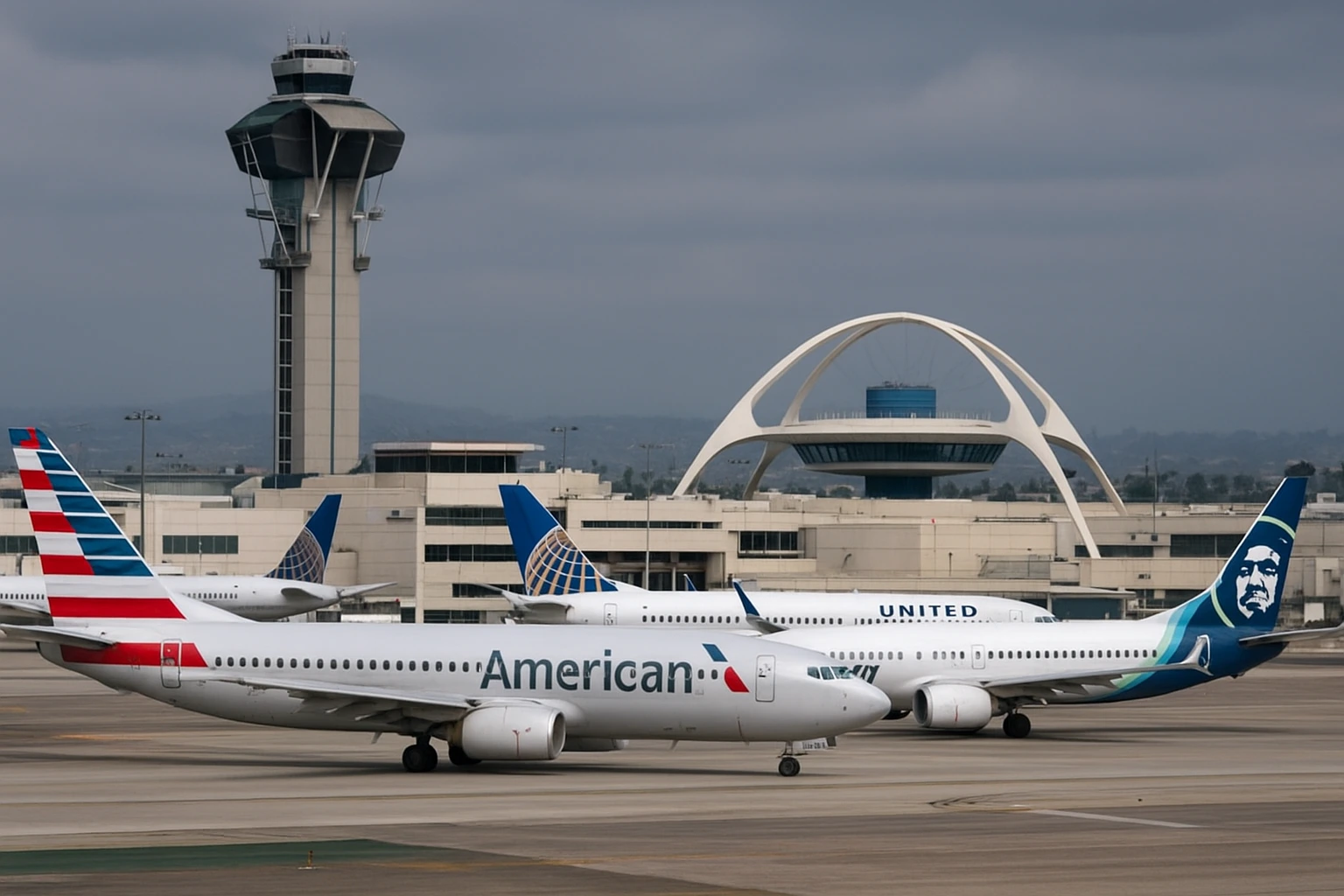
LOS ANGELES — California’s busiest airports are preparing for significant disruptions as the Federal Aviation Administration announced plans to cut air traffic by 10 percent at 40 major airports nationwide to preserve safety during the ongoing federal government shutdown.
Five California airports Los Angeles International (LAX), San Diego International, Ontario International, Oakland International and San Francisco International will be among those most affected.
Aviation data firm Cirium estimated nearly 10 percent of all canceled flights will occur in the state, potentially grounding about 180 flights daily.
FAA Administrator Bryan Bedford said Wednesday that the unprecedented move aims to prevent fatigue related risks among unpaid air traffic controllers, now entering their second month without pay.
“I’m not aware in my 35 years in aviation of a situation like this,” Bedford said at a Washington news conference. “We’re in new territory in terms of shutdowns.”
The shutdown, which began Oct. 1, has left nearly 13,000 FAA controllers working without pay. Transportation Secretary Sean Duffy said the agency could no longer risk safety as staffing pressures mounted.
“Our air traffic controllers are exhausted and financially stretched,” Duffy said. “They’re taking side jobs just to pay bills and put food on the table. We cannot wait until that fatigue compromises safety.”
According to FAA officials, the decision to reduce flights was based on staffing data, not airline schedules. Areas showing the most strain in voluntary safety-disclosure reports from pilots were prioritized for reductions.
“This is about where pressure exists and how we relieve it,” Duffy said. The FAA’s Air Traffic Organization oversees roughly 44,000 daily flights, including commercial, cargo and private aircraft, serving more than three million passengers.
Aviation experts described the move as drastic but necessary to maintain operational safety standards.
“Cutting air traffic by 10 percent will have economic consequences, but it’s a calculated safety decision,” said Dr. Karen Albright, a professor of aviation management at Embry Riddle Aeronautical University.
“Controller fatigue is one of the most serious risks in the airspace system. The FAA is prioritizing human safety over schedule reliability.”
However, others criticized the timing and lack of congressional coordination. “This is a symptom of political paralysis,” said former FAA regional director James Hanley. “Air safety shouldn’t depend on who’s winning a budget fight in Washington.”
In Congress, the move sparked partisan disagreement. Republicans blamed Democrats for refusing to approve a budget unless GOP leaders renewed Affordable Care Act subsidies, while Democrats questioned whether safety was the sole reason for the cuts.
Rep. Rick Larsen of Washington, the top Democrat on the House Transportation and Infrastructure Committee, called for transparency.
“Shutting down parts of our National Airspace System is unprecedented and demands full disclosure,” Larsen said. “The FAA must provide Congress with the safety assessments guiding this decision.”
According to Cirium data, about 1,800 flights nationwide affecting an estimated 268,000 passengers could be canceled each day under the FAA’s plan.
In California, roughly 72 flights could be cut daily at LAX alone, affecting about 12,000 passengers. San Francisco, San Diego, Oakland and Ontario airports may lose another 105 combined.
International flights are expected to be spared, but connecting passengers traveling through affected hubs could face delays or missed flights.
Nationwide, other busy airports including Atlanta, Denver, Dallas, Orlando and Miami will see similar reductions.
Compared to previous shutdowns, the scale of this reduction is unprecedented. During the 2018 & 2019 government shutdown, delays were widespread but no flight cuts were implemented.
“This is the first time we’ve seen the FAA deliberately curtail air traffic volume to manage safety risks,” Albright said. Travelers and airline staff across California expressed frustration but also concern for controller welfare.
At Los Angeles International Airport, traveler Maria Lopez said she supported the decision despite expected delays. “If it keeps people safe, I can handle a late flight,” she said while waiting for a rescheduled trip to Chicago.
In San Diego, pilot union representative Tom Ricci said members had long warned of staffing fatigue. “Controllers are pulling double shifts with no pay.
That’s not sustainable,” Ricci said. “Cutting flights may be the only way to keep the system safe until funding is restored.”
Oakland based small business owner Jordan Ng, who relies on regional flights for work, said the cuts could hurt his operations.
“I understand the need for safety, but cancellations cost us time and money,” he said. “We just need Washington to do its job.”
With Congress still gridlocked, there is no clear timeline for when full flight operations will resume. FAA officials said flight schedules will be reassessed weekly based on staffing levels and fatigue reports.
National Transportation Safety Board Chair Jennifer Homendy praised the FAA’s caution, calling it “safety management in action.”
“Pressures are building in the system,” Homendy wrote on X. “Acting before safety is compromised is the right move.”
Industry analysts warn that prolonged cuts could ripple through the travel economy, affecting airlines, tourism and logistics operations across the country.
“Airports like LAX and SFO are global gateways,” said aviation consultant Raj Mehta. “A 10 percent reduction may sound small, but when it’s sustained, it can strain airlines, raise costs and frustrate travelers.”
As the government shutdown stretches into its second month, the FAA’s unprecedented flight cuts mark a critical inflection point in balancing safety and continuity within the US aviation system.
While California’s airports brace for turbulence ahead, the broader question remains when and how lawmakers in Washington will resolve the stalemate that has grounded more than just planes.


