
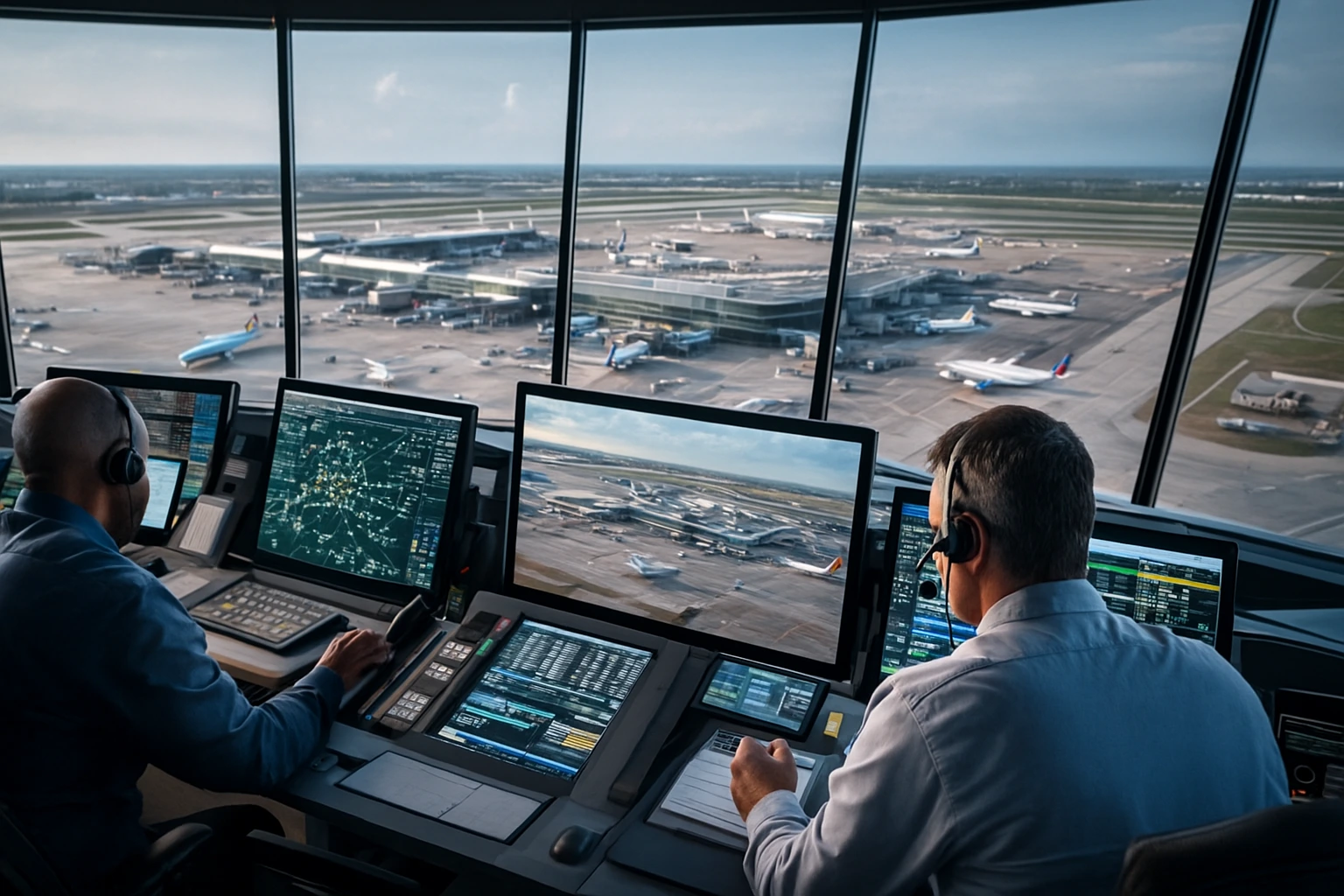
WASHINGTON — The Federal Aviation Administration said Thursday it has chosen Peraton, a national security company owned by Veritas Capital, as the lead project manager for a $12.5 billion effort to modernize the nation’s air traffic control system.
The selection follows congressional approval in July of a comprehensive plan to revamp the aging air traffic infrastructure and expand controller hiring, addressing long standing concerns over airport congestion, outdated technology, and frequent flight delays.
Peraton will serve as the single integrator responsible for managing the overhaul and ensuring its completion without disruption to air traffic, the FAA said. The company was selected over a joint bid by Parsons and IBM.
FAA Administrator Bryan Bedford called the move “bold action to ensure our air traffic system is the envy of the world” and said he would testify before congressional committees this month on progress and next steps.
The US air traffic control system relies on 138 telecommunications systems, of which a 2024 FAA report identified 51 as unsustainable.
The planned modernization includes replacing antiquated copper wiring and paper based systems with digital fiber optic infrastructure and a new command center.
“The system we have today was designed decades ago. It’s past time to bring it into the twenty first century,” Bedford said.
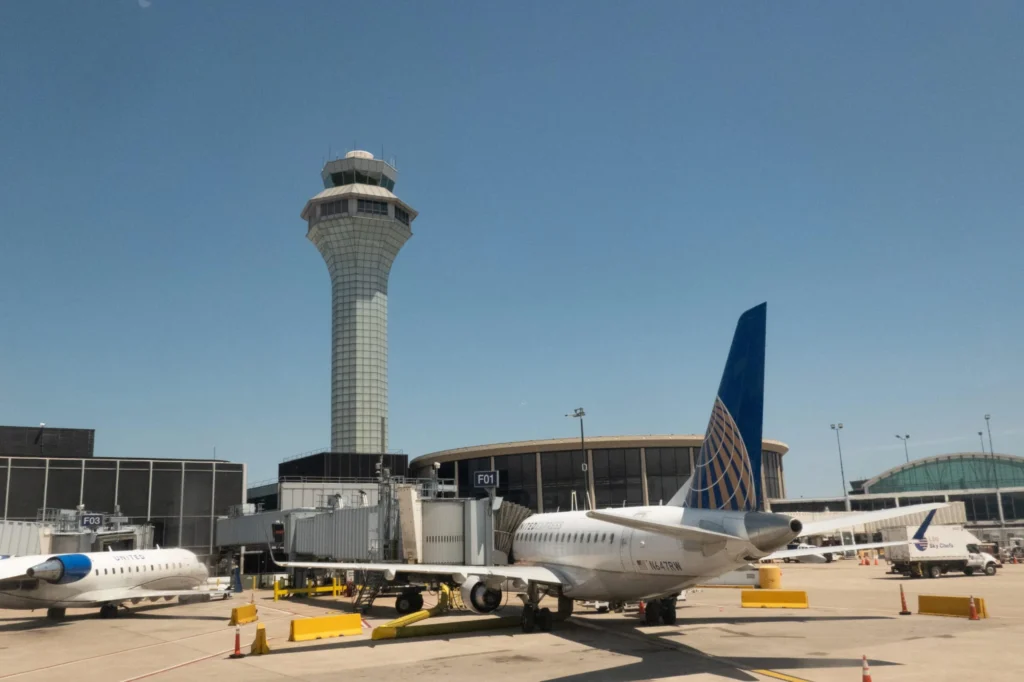
The FAA’s modernization effort builds on the $15 billion Next Gen project, which began over two decades ago but has faced multiple delays, cost overruns, and scaled back goals, according to a Transportation Department report released in October.
Industry analysts said consolidating project management under Peraton may streamline decision making and reduce risks of further delays.
“Having a single integrator allows for clearer accountability and faster resolution of technical and logistical challenges,” said Dr. Marissa Cole, a transportation infrastructure expert at Georgetown University.
Chris Sununu, CEO of Airlines for America, welcomed the effort. “It is past time to eradicate antiquated floppy disks, copper wires, and paper strips and replace them with smarter, more efficient twenty first century equipment and technology,” he said.
Some experts cautioned that implementation will require careful oversight. “The scale of this project is enormous. Even with a strong contractor, the FAA must maintain strict monitoring to prevent cost overruns and system disruptions,” said Thomas Nguyen, a former FAA systems engineer.
The FAA estimates the modernization will take three years and will focus initially on establishing the digital command center and upgrading legacy telecom systems.
By comparison, the Next Gen project, launched in the early 2000s, has spent more than $15 billion with slower progress, leaving some regions still reliant on paper strips and legacy communications technology.
Air traffic controllers and local aviation professionals expressed cautious optimism. “Upgrading to digital systems will make our jobs safer and more efficient,” said Maria Gonzalez, a controller at Dallas/Fort Worth International Airport.
“But it’s a big change, and we need proper training to ensure there are no mistakes during the transition.” Travelers and airport staff also noted recurring delays linked to outdated systems.
“I’ve had flights delayed multiple times due to technical glitches that could be avoided with modern infrastructure,” said Daniel Harper, frequent flyer based in Chicago.
The FAA and Peraton aim to reduce outages, improve efficiency, reinforce safety, and support future growth of the national airspace.
Officials said the program will be monitored closely to meet the three year target and integrate new technologies without compromising day to day operations.
“Modernizing air traffic control is essential to keeping up with growing passenger demand and evolving technology,” Bedford said. “We are committed to delivering results on time and maintaining the highest safety standards.”
Peraton’s role as project manager represents a critical step in the FAA’s long planned overhaul of the US air traffic control system.
By consolidating management and focusing on digital upgrades, the agency aims to address decades of inefficiencies while preparing the national airspace for future growth.
With oversight from Congress and industry stakeholders, the three year modernization effort will be closely watched as a benchmark for large scale infrastructure projects in aviation.


