
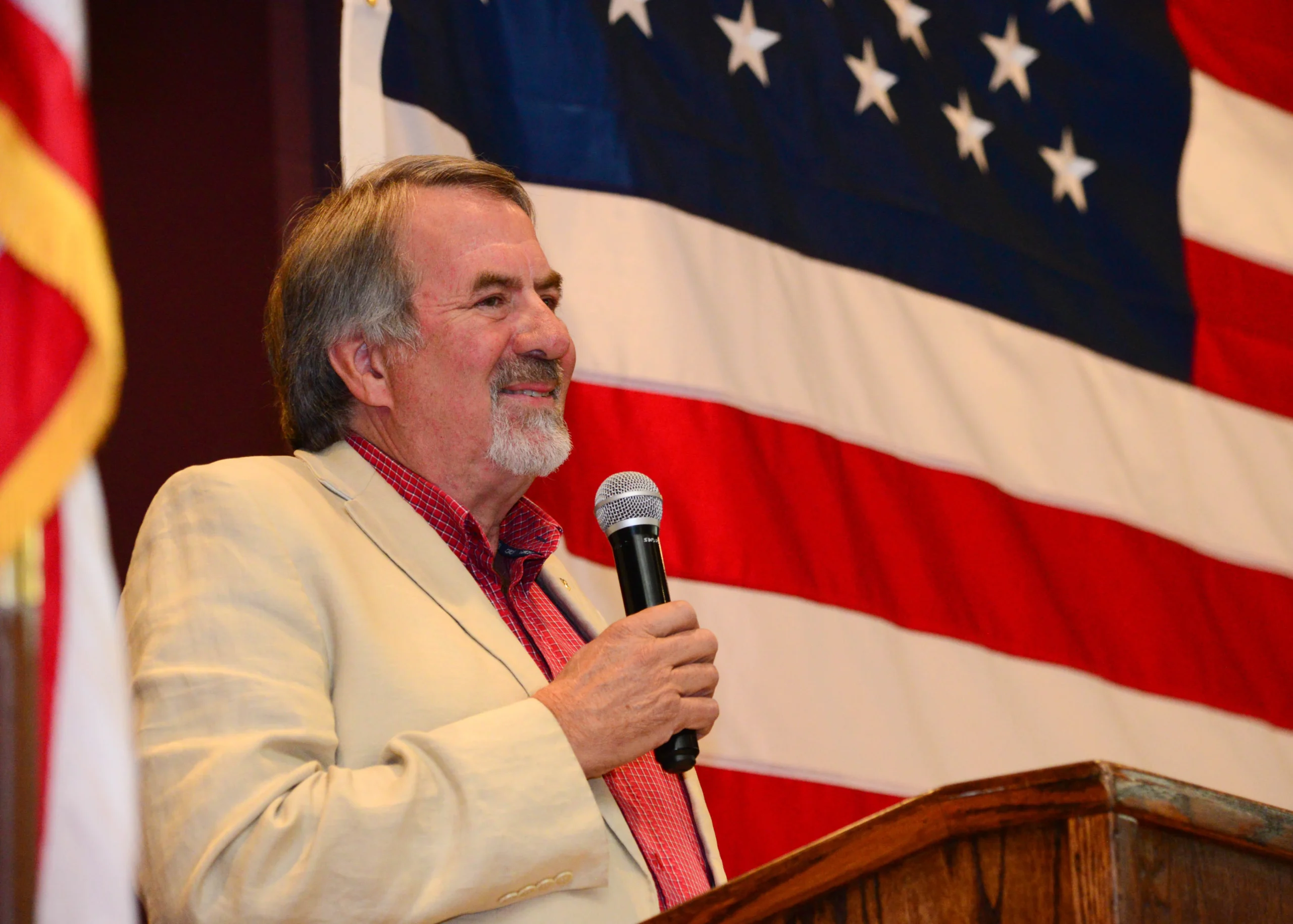
Rep. Doug LaMalfa, a California Republican with deep roots in agriculture and a national profile on water and forestry policy, died at age sixty five.
GOP officials said Tuesday, abruptly ending the seventh term lawmaker’s tenure and further tightening Republicans’ already slim majority in the US House.
KEY POINTS
- Doug LaMalfa dies at sixty-five while serving his seventh term representing rural Northern California.
- His death reduces the Republican House margin to two votes, heightening legislative pressure.
- The vacancy adds uncertainty to California redistricting and upcoming special election dynamics
The death of Rep. Doug LaMalfa removes a senior Republican voice from Congress at a pivotal moment for federal agriculture, water management and wildfire policy.
It also carries immediate institutional consequences for House leadership, where party margins leave little room for defections on closely contested votes.
LaMalfa represented California’s vast and predominantly rural northeastern district, an area stretching from the Sacramento Valley to the Oregon border.
A fourth generation rice farmer, he built his political career around water rights, irrigation access and forest management, issues central to farming communities and wildfire prone regions.
Before his election to Congress in two thousand thirteen, LaMalfa served in the California Assembly and Senate.
Where he gained a reputation as a consistent advocate for agricultural producers facing regulatory and environmental pressures.
In Washington, he sat on the Agriculture Committee, the Natural Resources Committee and the Transportation and Infrastructure Committee.
Positions that allowed him to shape policy affecting Western land use and infrastructure funding.
LaMalfa’s sudden death comes as House Republicans operate with a narrow margin that magnifies the impact of any vacancy.
With a current advantage of two hundred eighteen to two hundred thirteen, party leaders can afford no more than two defections when all members are present.
“Any unexpected loss in the House has outsized effects when margins are this tight”.
Said Sarah Binder, a senior fellow at the Brookings Institution, noting that committee work and floor scheduling can be disrupted even before a replacement is sworn in.
The timing is also notable in California, where Democrats have sought to redraw district lines to counter mid decade redistricting efforts in states such as Texas.
LaMalfa’s seat was among those viewed as competitive under potential new maps, making the vacancy politically consequential beyond Washington.
| Metric | Before LaMalfa’s Death | After Vacancy |
|---|---|---|
| Republican seats | 218 | 217 |
| Democratic seats | 213 | 213 |
| Vacant seats | 0 | 1 |
| Votes GOP can lose | 2 | 1 |
House Majority Whip Tom Emmer of Minnesota said LaMalfa was “a loving father and husband and a staunch advocate for his constituents and rural America” ccording to a statement posted on social media.
California Farm Bureau President Shannon Douglass said LaMalfa’s agricultural background gave him credibility across party lines.
“He understood water policy not as theory but as daily reality for growers,” Douglass said.
Several Republican lawmakers, speaking on the condition of anonymity, said they were unaware of any serious health issues and described widespread shock among colleagues Tuesday morning.
Under California law, the governor must call a special election to fill the vacancy, a process that can take several months.
Until then, Republicans will operate with an even thinner margin, increasing the leverage of small blocs and individual lawmakers in legislative negotiations.
Committee assignments previously held by LaMalfa will be temporarily redistributed, potentially slowing work on agriculture and natural resources legislation during an already compressed election year calendar.
Doug LaMalfa’s death closes a long chapter in California Republican politics and introduces new uncertainty for both state and national lawmakers.
As Congress adjusts to the loss, the immediate effects will be felt in House vote counts, committee dynamics and a district whose representation now hangs in the balance.
Author’s Perspective
In my analysis, Doug LaMalfa’s sudden death highlights how razor thin House majorities can shift influence to key lawmakers on agriculture and rural policy.
I believe his absence will increase the leverage of moderates in tight votes.
I predict that California’s rural districts could face highly competitive elections, reshaping federal agricultural and water policy.
Track special election candidates’ stances on water and land issues to anticipate policy shifts.
NOTE! This report was compiled from multiple reliable sources, including official statements, press releases, and verified media coverage.


