
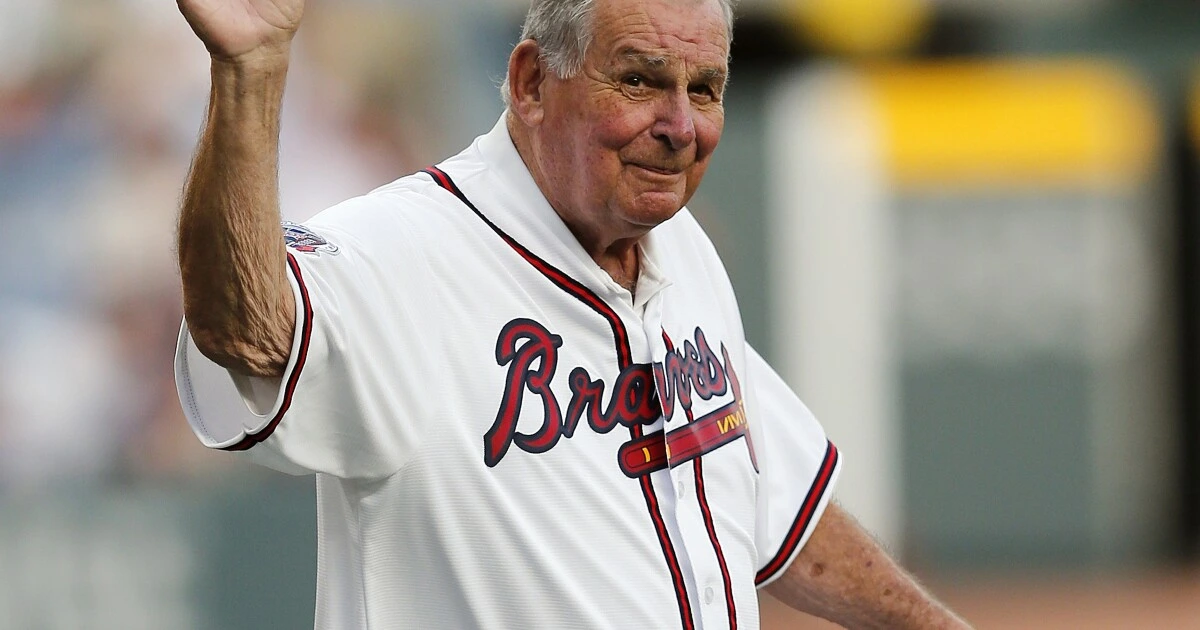
Hall of Fame manager Bobby Cox died Saturday in Atlanta at age 84, ending one of baseball’s most influential leadership careers after guiding the Atlanta Braves to the 1995 World Series title.
SUMMARY
- Bobby Cox transformed the Braves into baseball’s dominant franchise throughout the 1990s.
- His player development model reshaped long term roster construction across Major League Baseball.
- Cox retires as MLB’s fourth winningest manager with 2,504 victories and one World Series championship.
The death of Bobby Cox closes a defining chapter in modern baseball management as franchises increasingly revisit the long.term organizational model he helped pioneer.
His influence stretched beyond championships into scouting, player retention and clubhouse culture, areas now central to front office strategy throughout MLB in March 2026.
Cox’s baseball rise began modestly after a short playing stint with the New York Yankees during the late 1960s. He later managed in Venezuela before joining New York’s coaching system.
His first tenure with Atlanta ended after the strike shortened 1981 season, yet his return as general manager in 1985 altered franchise history.
During that period, Bobby Cox helped assemble a core featuring Tom Glavine, John Smoltz and Chipper Jones.
Sports economist Andrew Zimbalist of Smith College said Cox “institutionalized continuity before continuity became a market advantage,” noting Atlanta’s sustained success reduced volatility in attendance and regional television revenue.
Baseball historian Jane Leavy said Cox’s calm leadership style contrasted sharply with baseball’s increasingly analytical environment.
“Players trusted him because he protected them publicly,” Leavy said. “That built unusually durable clubhouses.” Chipper Jones called Bobby Cox “the backbone of Braves baseball” during a team statement Saturday.
Former Braves executive John Schuerholz said Cox “created stability rare in professional sports.” Atlanta Mayor Andre Dickens described Cox as “a civic figure whose teams shaped the city’s national identity.”
Over the next year, MLB organizations are expected to revisit Cox’s developmental blueprint as payroll pressures increase.
League executives increasingly view sustained internal talent pipelines rather than short term free agent spending as the most financially resilient championship strategy.
Bobby Cox leaves behind a managerial standard that reshaped how professional baseball organizations measure sustained competitive success.
NOTE! This article was generated with the support of AI and compiled by professionals from multiple reliable sources, including official statements, press releases, and verified media coverage. For more information, please see our T&C.


