
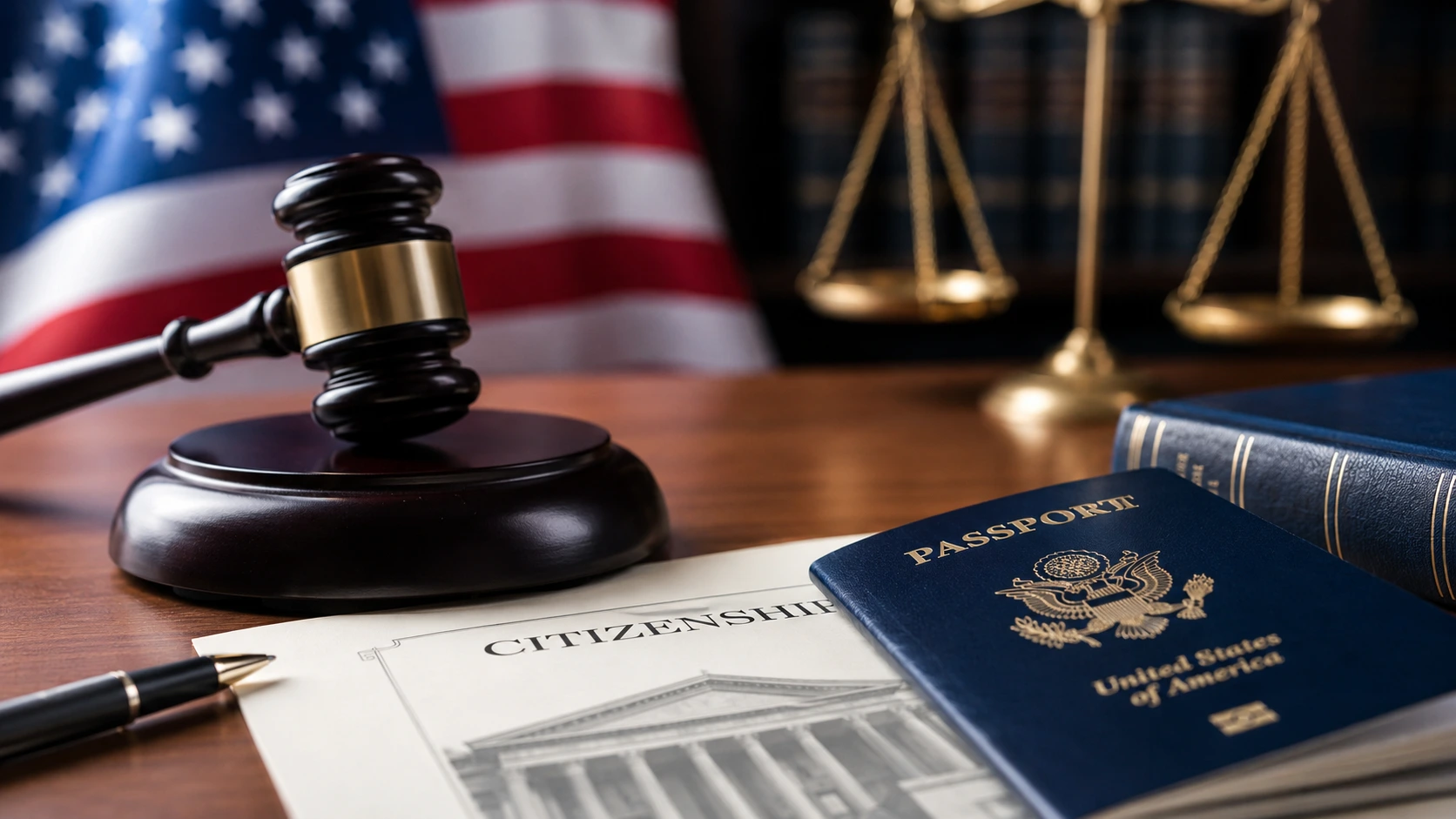
The Trump administration on Friday expanded its denaturalization campaign, filing federal cases against foreign born US citizens accused of fraud, terrorism links or concealed criminal histories, marking the broadest citizenship revocation push in decades.
SUMMARY
- Justice Department targets roughly a dozen naturalized citizens from eleven countries.
- Officials cite terrorism, immigration fraud and war crimes allegations in new denaturalization cases.
- Immigration attorneys warn expanded enforcement could reshape naturalization screening standards globally.
The renewed denaturalization campaign arrives as immigration enforcement again dominates Washington’s policy agenda in March 2026.
Justice Department officials described the initiative as a national security and fraud prevention measure aimed at individuals accused of concealing criminal records or falsifying immigration applications during the citizenship process.
Federal records show denaturalization historically remained rare because of the high legal burden required to revoke citizenship.
The Department of Homeland Security and Justice Department intensified investigations during President Donald Trump’s first administration, particularly through Operation Janus, which identified discrepancies in decades old immigration files.
Acting Attorney General Todd Blanche told CBS News this week that only individuals who “illegally obtained” citizenship should be concerned.
The Justice Department also separately moved to revoke citizenship from former diplomat Manuel Rocha after his Cuban espionage conviction.
Muzaffar Chishti, senior fellow at the Migration Policy Institute, said the administration appears focused on cases involving national security and severe fraud allegations.
However, he noted broader use of civil denaturalization could lower procedural protections because defendants are not automatically entitled to government funded legal counsel.
César Cuauhtémoc García Hernández, immigration law professor at Ohio State University, said expanded citizenship revocation efforts may create “secondary deterrence,” discouraging eligible immigrants from pursuing naturalization despite historically strong approval rates.
Father Eduardo Silva, a Miami based immigration advocate assisting affected families, said fear has spread beyond targeted defendants.
“Naturalized citizens are asking whether decades old paperwork mistakes could now trigger investigations,” he said.
Court filings and policy directives suggest the denaturalization campaign will continue through 2026 as federal agencies expand data sharing systems and historical immigration record reviews.
NOTE! This article was generated with the support of AI and compiled by professionals from multiple reliable sources, including official statements, press releases, and verified media coverage. For more information, please see our T&C.


