
SUMMARY
- Bad Bunny performed a medley of hits including “Tití Me Preguntó,” “Yo Perreo Solo,” and “Safaera,” joined by guest Lady Gaga for a salsa-infused rendition of “Die with a Smile.”
- The performance incorporated cultural symbols, such as miniature bamboo, taco, and jewelry stands, and concluded with international flags to reflect global unity.
- The artist’s selection as halftime headliner sparked debate over language and representation, highlighting ongoing cultural discussions in US sports and media.
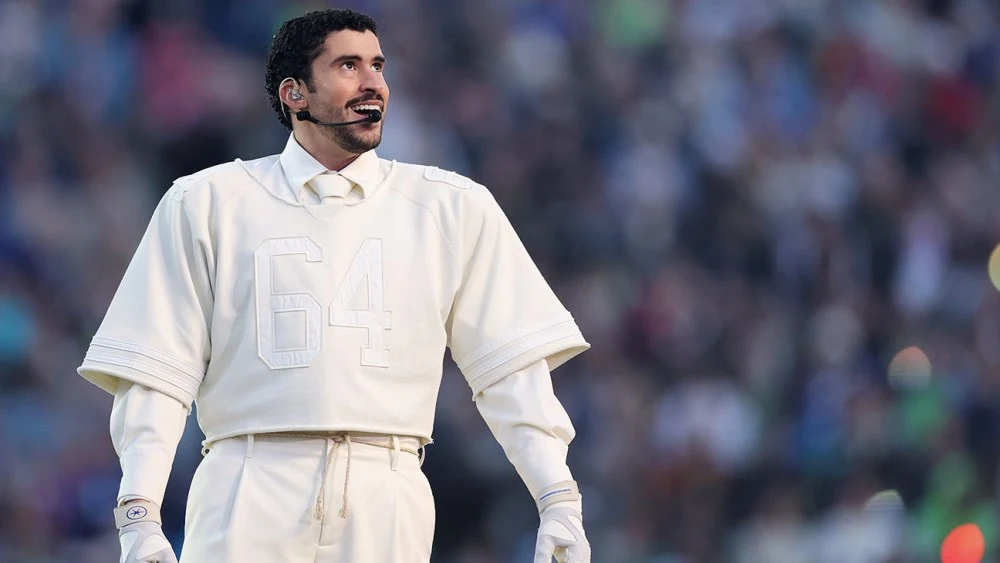
Santa Clara, California – Puerto Rican music superstar Bad Bunny delivered a high energy, culturally rich performance during the Super Bowl LX halftime show at Levi’s Stadium on Sunday, Feb. 8, 2026.
The Apple Music-sponsored event marked the 31 year old artist’s first appearance on the NFL’s most watched stage, blending reggaeton, hip-hop, salsa, and pop in a 13-minute spectacle that drew global attention.
Bad Bunny, born Benito Antonio Martínez Ocasio, commanded the stage with choreography, costume changes, and interactive moments that included handing one of his recent Grammy Awards to a young fan.
The Puerto Rican performer emphasized accessibility, telling reporters last week that audiences “only have to worry about dancing. They don’t even have to learn Spanish.”
The appearance drew worldwide viewership, positioning Bad Bunny at the intersection of music, sports, and cultural representation. Analysts noted the significance of a Spanish language artist headlining one of the NFL’s highest profile broadcasts.
The 2026 halftime show followed the NFL’s tradition of showcasing contemporary music icons to a global audience exceeding 100 million viewers.
Bad Bunny’s appointment in September 2025 generated both praise and criticism. Some commentators celebrated the recognition of Latin music on a mainstream stage, while others questioned the choice of a performer singing primarily in Spanish.
The artist’s outspoken advocacy for Puerto Rico and criticism of former President Donald Trump have further fueled public discussion.
Following Hurricane Maria in 2017, Bad Bunny publicly criticized delayed relief efforts and, in 2024, condemned disparaging remarks about Puerto Rico at a Trump rally.
Cultural analysts argue that Bad Bunny’s performance represents a broader shift in American entertainment toward inclusive, multilingual programming.
Dr. Maria Elena Cepeda, professor of Latin American music at the University of Illinois Urbana Champaign, said, “The halftime show is a platform that communicates cultural legitimacy. Bad Bunny’s presence signals a recognition of Latinx influence in US popular culture.”
Similarly, James Brown, senior fellow at the Center for Sports and Media Studies, noted, “Super Bowl halftime shows historically reflect social trends.
Featuring a Latin trap artist underscores the NFL’s acknowledgment of shifting demographics and audience preferences.”
Fans and attendees praised the show for its energy and cultural representation. Sofia Rivera, 27, a music journalist from Miami, said, “Bad Bunny’s performance was more than entertainment. It celebrated Latin culture on the world’s biggest stage.”
NFL communications director Lisa Hernandez added, “Our goal was to deliver an inclusive, memorable halftime experience.
Bad Bunny exceeded expectations, connecting with fans across generations and cultures.”
Meanwhile, Pedro Morales, a San Jose resident and long time Bad Bunny fan, commented, “It was inspiring to see our music and heritage highlighted. The energy was infectious.”
Bad Bunny’s Super Bowl appearance may influence future programming decisions for major sporting events, especially regarding language diversity and cultural representation.
Analysts expect continued incorporation of international music styles in U.S. broadcasts as networks seek broader global engagement.
The Super Bowl LX halftime show highlighted Bad Bunny’s musical versatility and commitment to Puerto Rican identity, delivering a performance that resonated with fans worldwide.
Beyond entertainment, it reaffirmed the growing influence of Latin music on international platforms, signaling evolving norms in sports, media, and cultural representation.
NOTE! This article was generated with the support of AI and compiled by professionals from multiple reliable sources, including official statements, press releases, and verified media coverage. For more information, please see our T&C.


