
KEY POINTS
- FCC Chairman Brendan Carr highlighted competition concerns but confirmed the agency cannot intervene.
- Department of Justice and Federal Trade Commission will lead antitrust review.
- Paramount’s competing $30 per share bid, backed by foreign investors, adds regulatory complexity.
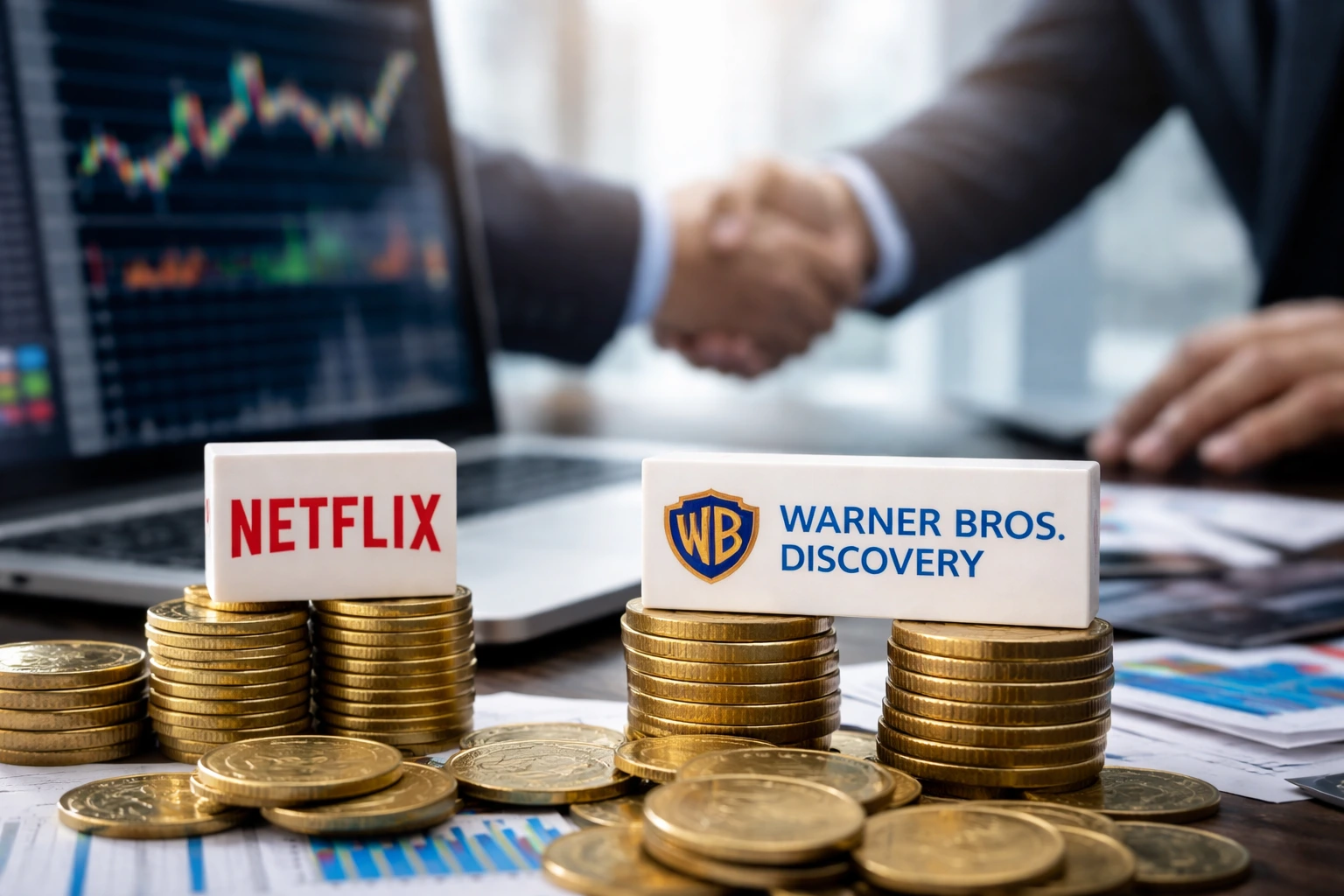
WASHINGTON — Federal Communications Commission Chairman Brendan Carr expressed concerns on Wednesday regarding Netflix’s $83 billion acquisition of Warner Bros. and HBO Max.
Citing potential competition issues, though he acknowledged that the FCC does not have authority to review the deal.
The acquisition, one of the largest in the entertainment sector, has sparked scrutiny from US antitrust regulators and lawmakers.
The proposed Netflix Warner Bros. merger represents a significant consolidation in the streaming and entertainment industry.
The transaction’s scale and its potential effects on market competition have drawn attention from both government officials and industry observers worldwide.
Netflix announced its intent to acquire Warner Bros. and HBO Max earlier this year in a cash and stock offer totaling $83 billion.
The merger would combine Netflix’s global streaming platform with Warner Bros.’ extensive film and television content.
Paramount, led by producer David Ellison, has countered with a $30 per share bid supported by foreign investors, including multibillionaire Larry Ellison and sovereign wealth funds from Saudi Arabia, Qatar, and Abu Dhabi.
Netflix recently shifted to an all cash proposal to strengthen its position. Carr, speaking to Bloomberg, emphasized that while Netflix’s growth has been rapid, the deal raises legitimate concerns about market consolidation.
“The transaction could affect competition across the streaming and content production sectors,” he said.
However, Carr noted that the FCC’s jurisdiction is limited to broadcast license transfers, which Warner Bros. does not hold.
Antitrust oversight falls to the Department of Justice (DOJ) and the Federal Trade Commission (FTC), both reviewing the merger under US competition law.
“We are examining the deal carefully, including its impact on consumers and content creators,” said Jonathan Kanter, Assistant Attorney General for the Antitrust Division.
Industry analysts suggest the acquisition could influence pricing, content distribution, and creator compensation.
Amanda Lotz, Professor of Media Industries at the University of Michigan, noted, “Mergers of this scale can shift bargaining power away from independent producers and theaters, affecting the broader entertainment ecosystem.”
| Company / Bid | Offer Type | Share Price | Foreign Investment | Regulatory Oversight |
|---|---|---|---|---|
| Netflix-Warner Bros. | Cash + Stock | $83B total | None | DOJ & FTC |
| Paramount Skydance | All Cash | $30/share | Larry Ellison + sovereign funds | DOJ, FCC possible due to foreign funds |
Senator Elizabeth Warren called the merger “an anti monopoly nightmare,” while Senator Mike Lee signaled scrutiny ahead of upcoming hearings.
Warner Bros. Discovery Chief Strategy Officer Bryan Johnson stated, “We are committed to a transparent process with regulators to ensure a smooth transition.”
Regulators in the US and Europe continue to review Hart Scott Rodino filings from both companies.
The process may involve hearings with Netflix co-CEO Greg Peters and Warner Bros. executives, focusing on competition, pricing, and content distribution.
Market analysts anticipate extended deliberations given the merger’s scale and international investment considerations.
The Netflix Warner Bros. acquisition illustrates the growing complexity of media consolidation in the streaming era.
While the FCC has limited jurisdiction, antitrust authorities and lawmakers will determine the regulatory path, shaping the future landscape of global entertainment.
In my analysis, the Netflix Warner Bros. deal signals a pivotal shift in global streaming consolidation, intensifying competition across content distribution and digital entertainment.
I predict regulators will enforce stricter antitrust frameworks for cross border media mergers.
Consumers may face higher subscription costs, while creators must negotiate more strategically. Track DOJ filings and international approvals closely.
NOTE! This report was compiled from multiple reliable sources, including official statements, press releases, and verified media coverage.


