
KEY POINTS
- Bob Weir, Grateful Dead co-founder, was a central architect of the band’s improvisational sound and touring culture.
- His influence extended beyond the original group through multiple successor projects that shaped modern jam band performance models.
- Weir’s death marks the close of a major chapter in American countercultural music history.
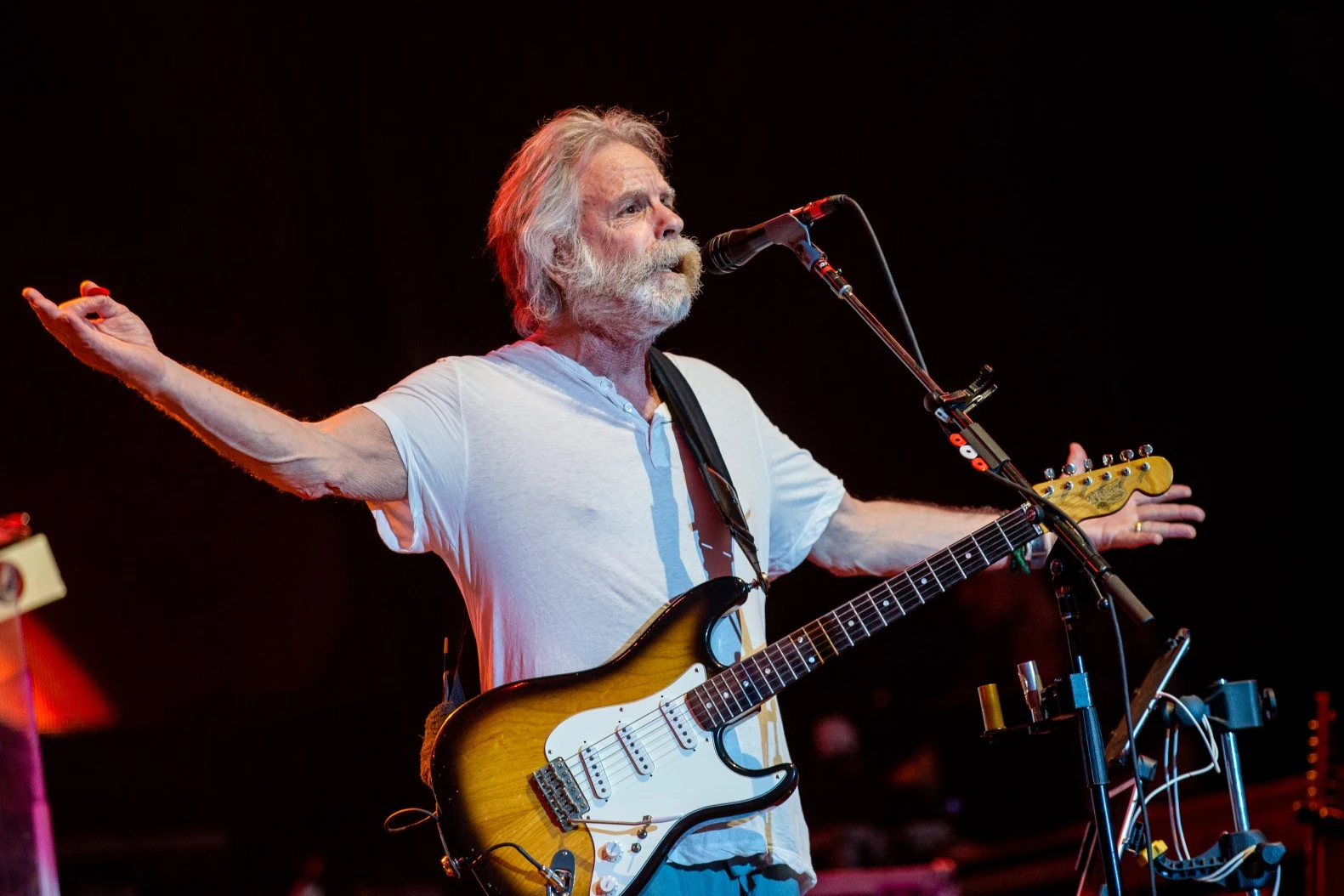
Bob Weir, the understated singer, songwriter and rhythm guitarist who co-founded the Grateful Dead and helped redefine live improvisational rock, has died at age 78, his family announced Saturday on Instagram.
Weir died peacefully, surrounded by loved ones, after complications from underlying lung issues following a recent cancer diagnosis, according to the statement.
He had returned to the stage just weeks earlier for a three night celebration of the band’s sixty year musical legacy in San Francisco.
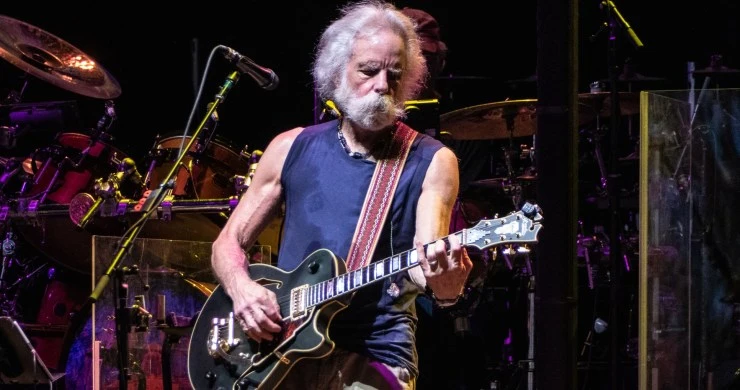
The death of Bob Weir removes one of the last living links to the original Grateful Dead lineup, a group that reshaped not only rock music but also the economics and culture of live performance.
Known for his textured rhythm guitar work and conversational songwriting style, Weir helped create a model of audience centered touring that later influenced festivals, streaming era fandom and independent music distribution.
His career spanned more than six decades, bridging the psychedelic era of the nineteen sixties with the modern global touring industry.
Born Oct. sixteen, nineteen forty seven, in San Francisco and adopted as an infant, Weir grew up in the Palo Alto area.
He struggled academically and was expelled from multiple schools, later learning he had dyslexia. Music became his anchor.
By his early teens, he had immersed himself in folk and blues traditions, influenced by musicians such as Jorma Kaukonen.
On New Year’s Eve nineteen sixty three, Weir met Jerry Garcia outside a music shop in Palo Alto.
The two began jamming, forming what would evolve into the Grateful Dead in nineteen sixty five alongside Ron “Pigpen” McKernan, Phil Lesh and Bill Kreutzmann.
While Garcia often drew attention as the band’s lead guitarist, Weir’s role was structurally essential.
His chord voicings, syncopated rhythms and interlocking patterns created a musical framework that allowed the Dead’s famously long improvisations to function without collapsing.
The group became known for marathon live sets that varied nightly, cultivating a devoted fan base called Deadheads. The Dead’s influence went beyond music.
They pioneered open taping policies, fan run distribution networks and an early version of what would later resemble digital community building.
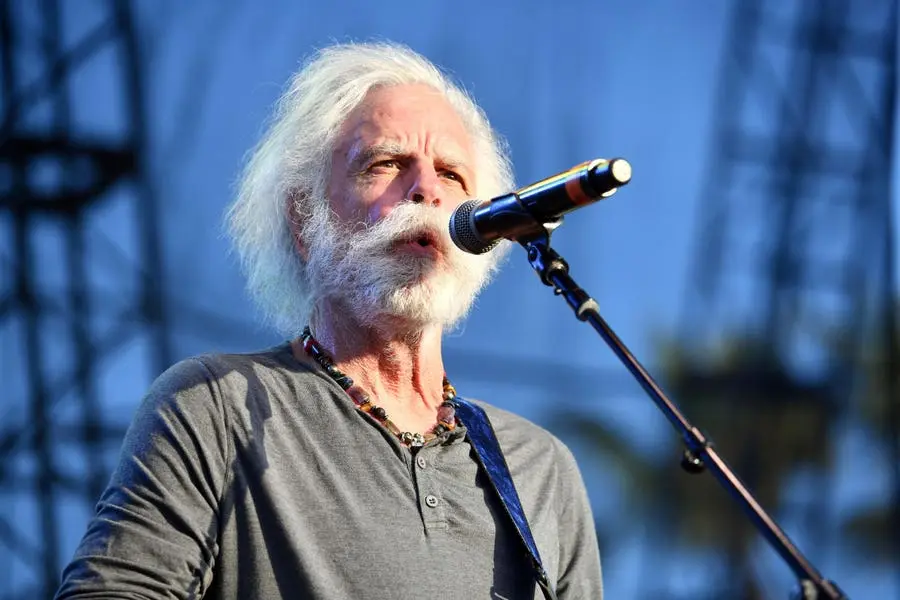
Scholars of popular culture have cited the band as an early example of decentralized fandom, where audiences actively shaped the circulation of art.
Music historians often describe Weir as a rare figure who blurred the line between rhythm and lead guitar roles.
David Malvinni, a musicologist at the University of California, has written that Weir’s playing “functioned more like a second narrative voice than an accompaniment,” allowing the band to pivot between musical ideas without formal structure.
After Garcia’s death in nineteen ninety-five, Weir became one of the main stewards of the Dead’s musical catalog.
Through projects such as RatDog, Furthur and Dead & Company, he preserved the band’s repertoire while adapting it to new generations of listeners.
Dead & Company, featuring John Mayer, sold out stadiums across North America and introduced younger audiences to the Dead’s catalog through a modern production lens.
Weir also contributed to a broader shift in how legacy acts approached touring. Rather than focusing on nostalgia, his projects emphasized reinterpretation.
Industry analysts have credited this approach with helping sustain long term touring viability for heritage artists at a time when album sales declined and live performance became the primary revenue stream.
SHORT DETAILS
Full name: Robert Hall Weir
Born: Oct. sixteen, nineteen forty-seven, San Francisco
Known for: Co-founding the Grateful Dead in nineteen sixty five
Key songs: “Sugar Magnolia,” “Truckin’,” “Playing in the Band,” “Cassidy,” “One More Saturday Night”
Later projects: RatDog, Furthur, Dead & Company, Wolf Bros
Phil Lesh, the band’s bassist and longtime collaborator, once described Weir as “the glue that held our ideas together,” according to a nineteen ninety eight interview archived by the Rock and Roll Hall of Fame.
Music journalist Amanda Petrusich, writing in a twenty twenty three retrospective on jam band culture, noted that Weir’s approach to live performance “treated the audience as collaborators rather than spectators,” a philosophy that influenced modern festival culture.
In the family’s statement announcing his death, they said Weir “reshaped American music” and created a community that felt like family to generations of fans.
Touring and Longevity
While not traditionally chart-focused, Weir’s touring career reflected exceptional longevity.
| Era | Primary Project | Estimated Shows Played |
|---|---|---|
| 1965–1995 | Grateful Dead | Over 2,300 |
| 1995–2010 | RatDog and related projects | Over 1,000 |
| 2015–2023 | Dead & Company | Over 300 |
These figures illustrate how Weir’s career was built on sustained live performance rather than studio output, a model now common among independent touring artists.
Weir often spoke about preserving the Grateful Dead’s songbook for future generations.
His studios in San Rafael, California, became hubs for collaborative experimentation, hosting artists across genres.
Industry observers say these spaces may continue to function as creative centers, supporting archival projects and reinterpretations of the Dead’s music.
Institutions such as the Rock and Roll Hall of Fame and university music programs are expected to expand scholarly work on the band’s influence, particularly its impact on fan driven ecosystems and long form improvisation.
Bob Weir’s death marks the passing of a figure who helped redefine what a rock band could be, not only musically but socially and economically.
As a Grateful Dead co-founder, he shaped a form of live performance that prioritized exploration, community and continuity over commercial formulas.
His influence remains embedded in touring culture, festival models and the enduring idea that music can function as a shared, evolving experience rather than a fixed product.
Author’s Perspective
In my analysis, Bob Weir’s legacy goes beyond music he helped build the blueprint for today’s fan driven, experience-based live entertainment economy.
I predict legacy artists’ catalogs will increasingly be managed as “living assets,” with rotating lineups, immersive concerts and AI restored archives becoming industry standards.
For everyday fans and independent musicians, this shift means deeper participation, not just passive listening.
Watch how major estates license live streams, immersive shows and digital archives this will define the next era of sustainable music monetization.
NOTE! This report was compiled from multiple reliable sources, including official statements, press releases, and verified media coverage.


