
KEY POINTS
- An alleged dataset linked to 17.5 million Instagram accounts appeared on a cybercrime forum shortly before a spike in password reset notifications.
- Security researchers say the Instagram password reset attack relies on behavioral manipulation rather than technical exploits.
- Two factor authentication remains the most effective defense against unauthorized account access.
A surge in unsolicited Instagram password reset notifications has raised alarms among cybersecurity analysts after a threat actor claimed to have published data tied to 17.5 million accounts on an underground forum.
The timing of the two events has intensified scrutiny over whether a coordinated account takeover campaign is underway, even as Instagram has not publicly confirmed any internal breach.
Instagram’s global scale makes it a high value target for cybercriminals. With more than two billion monthly active users, even a small success rate can translate into thousands of compromised accounts.
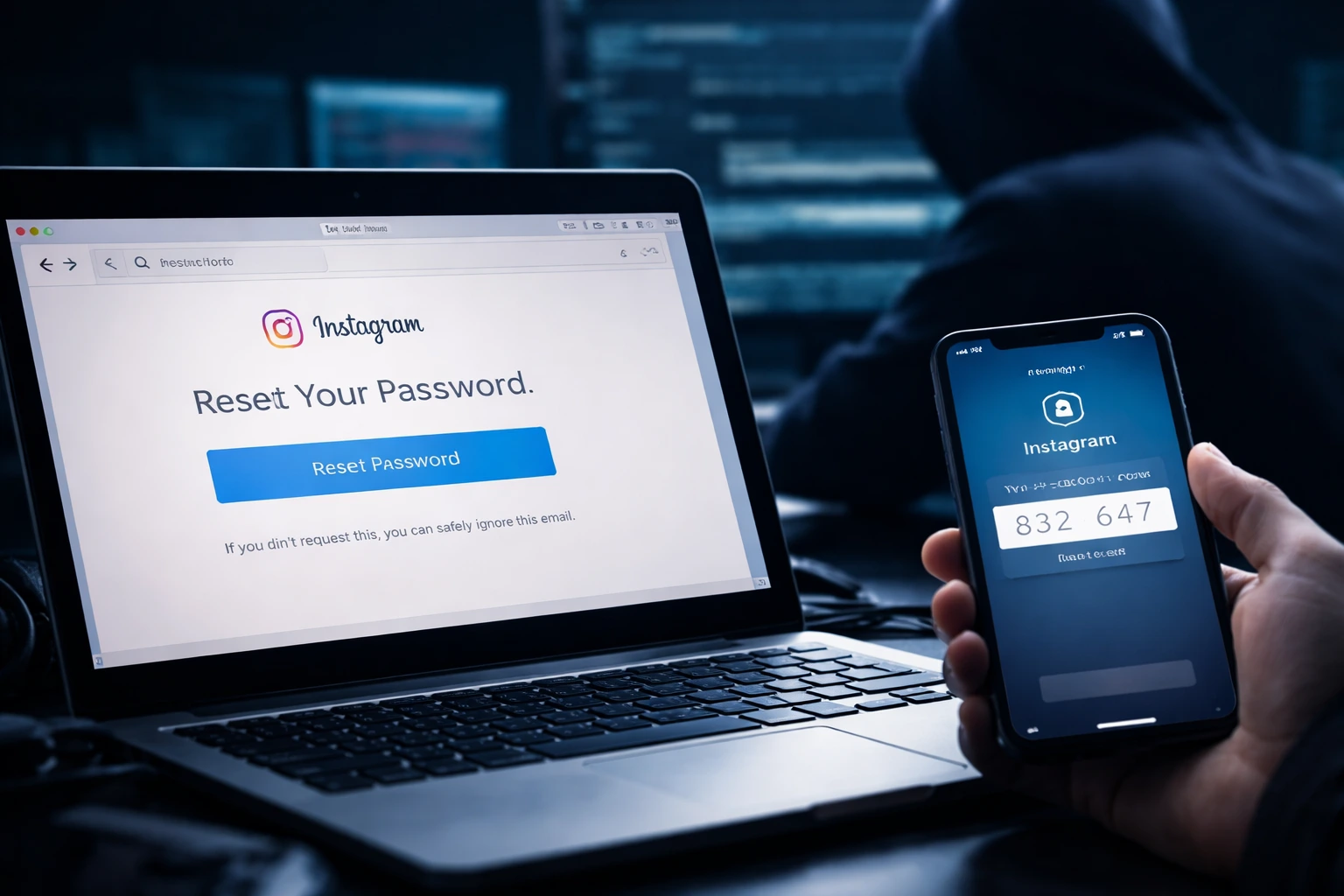
Over the past several days, users across multiple regions have reported receiving legitimate password reset emails they did not request, prompting fears of mass account takeover attempts.
Cybersecurity researchers say the pattern aligns with a tactic known as “reset bombing,” in which attackers flood accounts with recovery requests to provoke panic and hurried decisions.
The latest wave follows claims that a threat actor posted a database associated with 17.5 million Instagram users on BreachForums, a platform frequently used to advertise stolen credentials.
While the authenticity of the dataset has not been independently verified, experts say the overlap in timing warrants attention.
Password reset systems are designed to protect users, not expose them. When a reset is requested, platforms notify the account holder so they can intervene if the activity is suspicious.
However, these same systems can be exploited by attackers seeking to overwhelm or confuse victims.
This method has been observed across social media, financial platforms and enterprise services. Instead of hacking infrastructure, attackers focus on inducing human error.
They rely on fear, urgency and fatigue, hoping a user will click a link without reading the message carefully.
Instagram’s help documentation has long stated that receiving a reset email does not automatically mean an account has been compromised.
Mistyped usernames or email addresses can also trigger notifications. However, security researchers say mass reset attempts often signal automated probing.
The recent claims of a 17.5 million account leak have added another layer of concern.
Breach Forums has previously hosted legitimate datasets, but it has also been used to circulate inflated or recycled material. Verification typically takes days or weeks.
Cybersecurity specialists say the Instagram password reset attack reflects a broader shift in digital crime.
Rather than exploiting vulnerabilities in code, attackers increasingly exploit how people react to stress.
Reset emails often appear legitimate because they are legitimate. They originate from the platform itself. This blurs the line between real security alerts and malicious intent.
The US Federal Bureau of Investigation and other agencies have repeatedly warned that criminals frequently impersonate security systems or abuse official workflows to establish trust.
Once that trust is gained, attackers escalate through phishing pages, fake support chats or social engineering.
Instagram uses anomaly detection, device recognition and risk scoring to flag suspicious logins.
These systems can block access even when a password is correct. However, they cannot stop someone from requesting a reset using publicly available forms.
That is why security professionals consistently emphasize multi-layered defenses.
| Metric | Current Context | Why It Matters |
|---|---|---|
| Monthly active users | Over two billion | Large attack surface |
| Alleged leaked records | 17.5 million | High-value dataset |
| Typical takeover success rate with 2FA | Below one percent | Strong protection |
| Common resale targets | Verified and creator accounts | Higher black market value |
Analysts say creator and verified accounts are often targeted because they can be resold, used for scams or leveraged for disinformation campaigns.
Major platforms, including Instagram, have repeatedly emphasized the importance of multi factor authentication in public safety materials.
The company has stated in its support resources that two factor authentication adds an additional verification step when a login attempt is made from an unrecognized device.
Independent cybersecurity researchers echo that guidance. Analysts at several security firms have documented how attackers increasingly automate reset abuse at scale. They note that panic driven responses remain the primary success factor.
Law enforcement agencies in multiple countries have also warned users not to click recovery links unless they personally initiated the request, advising people to log in directly through official apps instead of email links.
Security experts expect reset based campaigns to continue as long as platforms prioritize ease of access for legitimate users.
Companies are exploring additional safeguards, including rate limiting, behavioral analysis and delayed reset workflows for high risk patterns.
However, these tools can increase friction for users who genuinely need help accessing their accounts.
For now, specialists say education remains critical. Users should treat unexpected security alerts as a signal to pause, not panic
Instagram has encouraged users to review account security settings, confirm recovery contact details and enable two factor authentication wherever available.
The recent spike in password reset notifications highlights how modern cyberattacks increasingly target human behavior rather than technical infrastructure.
Whether or not the alleged dataset of 17.5 million accounts proves authentic, the pattern demonstrates how easily official systems can be repurposed for manipulation.
As digital identities grow more valuable, experts say awareness and layered security will remain the most reliable defense.
The Instagram password reset attack shows that even the strongest platforms can be undermined when urgency replaces caution.
Author’s Perspective
In my analysis, the surge in Instagram password reset attacks shows a shift toward high volume social engineering, exploiting human behavior rather than technical flaws.
I predict platforms will enforce adaptive recovery systems with mandatory multi factor authentication for high risk accounts, becoming a global standard.
For users, a compromised account can mean lost income and reputation.
Enable app based two factor authentication, review recovery settings, and monitor login activity closely.
NOTE! This report was compiled from multiple reliable sources, including official statements, press releases, and verified media coverage.


