
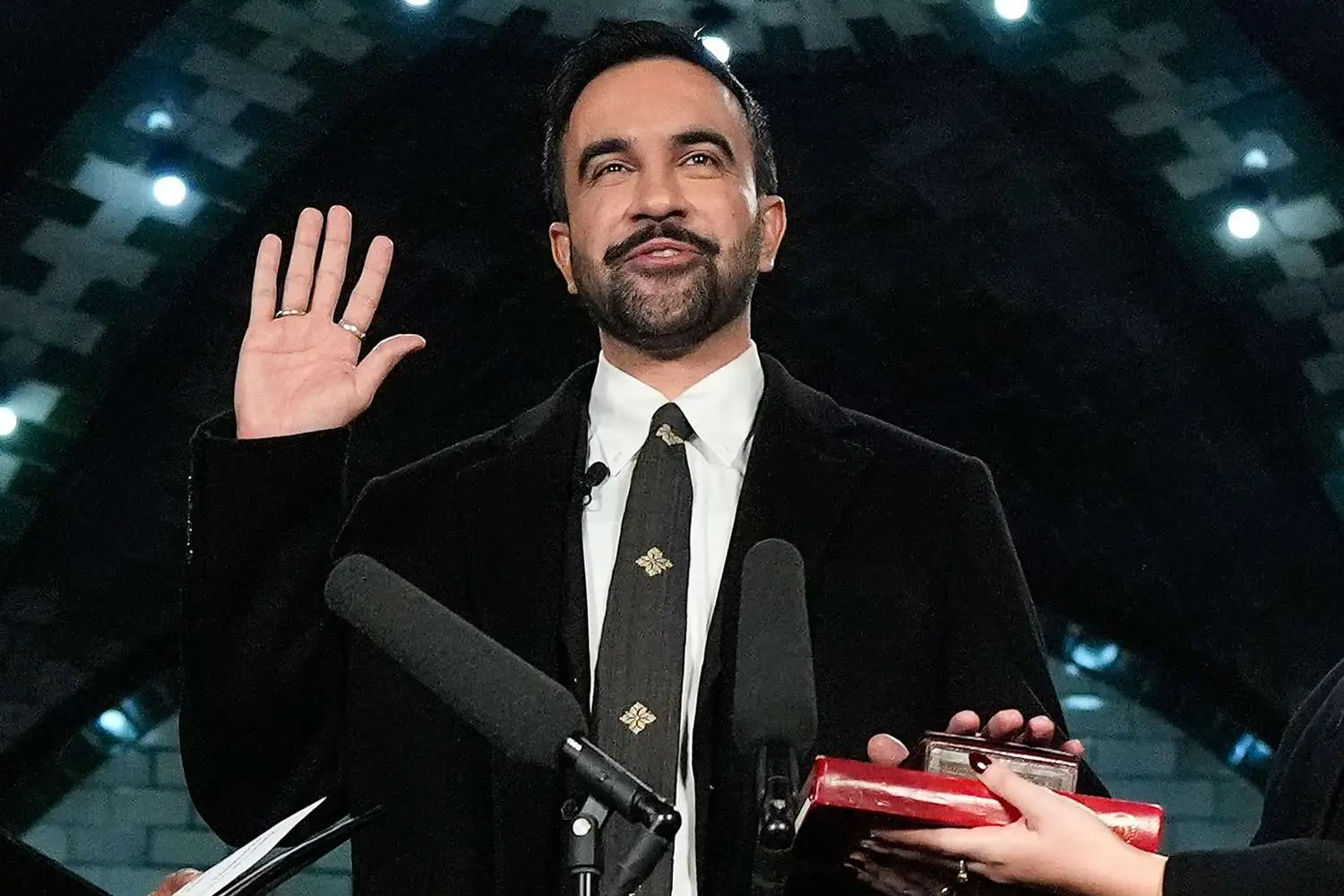
Israel accused New York Mayor Zohran Mamdani of antisemitism after he moved to cancel two executive orders that restricted city agencies from boycotting Israel and formally adopted a broad definition equating some criticism of Israel with antisemitism.
A step that immediately escalated tensions between the new mayor, the Israeli government and major Jewish organizations in the United States.
Key Points
- Israel accuses New York Mayor Zohran Mamdani of antisemitism following the cancellation of two Israel related executive orders.
- The dispute centers on the IHRA definition of antisemitism and a ban on city agency boycotts of Israel.
- Jewish organizations warn of community safety concerns while the mayor pledges expanded hate crime prevention.
The accusation, issued Friday by Israel’s Ministry of Foreign Affairs and echoed by its consul general in New York, placed the newly inaugurated mayor of the largest US city at the center of a rare and highly charged diplomatic confrontation.
New York City is home to the largest Jewish population outside Israel, giving the dispute immediate global resonance and domestic political implications.
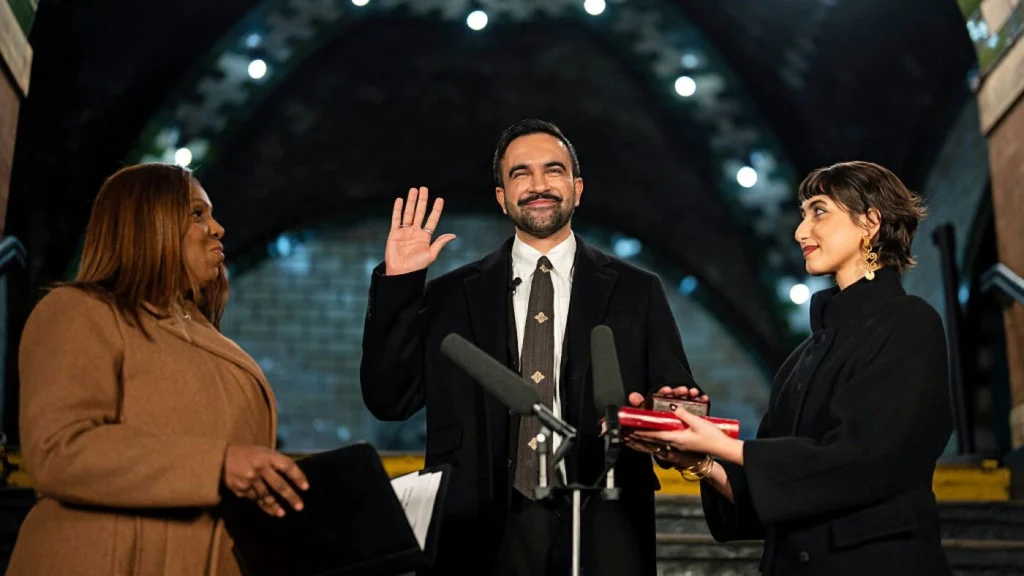
On his first full day in office, Mamdani revoked or amended a package of executive orders signed by his predecessor, Eric Adams.
Among them were two measures closely tied to Israel. One barred New York City agencies from participating in boycotts of Israel.
The other codified the International Holocaust Remembrance Alliance working definition of antisemitism, including examples that link certain criticisms of Israel to anti Jewish hatred.
Israel’s Foreign Ministry said the reversals removed safeguards for Jewish communities and described the move as fueling antisemitism.
Israel’s consul general in New York, Ofir Akunis, said the decision posed an immediate threat to Jewish safety in the city.
Mamdani did not directly respond to the Israeli government’s language but said protecting Jewish New Yorkers would be a priority of his administration.
He said his approach would focus on funding hate crime prevention and maintaining the city’s Office to Combat Antisemitism.
The mayor’s critics note that he has long supported the Boycott, Divestment and Sanctions movement and has described Israel as an apartheid state.
Supporters argue his position distinguishes between opposition to Israeli government policies and hostility toward Jewish people.
The clash highlights a widening divide within US politics over how antisemitism is defined and addressed, particularly when criticism of Israel intersects with domestic governance.
The IHRA definition has been adopted by dozens of governments and institutions worldwide, but civil liberties advocates and some Jewish groups argue it can chill political speech.
“Municipal governments are increasingly pulled into foreign policy disputes through symbolic actions,” said Deborah Lipstadt, a historian of antisemitism and former US envoy for monitoring and combating antisemitism.
“The question is whether those actions materially improve community safety or deepen polarization.”
Legal scholars note that anti boycott measures have faced court challenges in several US states, raising constitutional concerns over free expression.
Mamdani’s decision reopens that debate at the city level, where procurement rules and agency discretion can carry economic and political consequences.
A coalition including the Anti Defamation League, the American Jewish Committee and the UJA Federation of New York said the mayor had reversed protections against antisemitism and warned that singling out Israel could alienate Jewish residents.
Mamdani said his administration would pursue “a politics of universality” and invest in prevention rather than symbolic measures.
“That includes fighting the scourge of antisemitism by actually funding hate crime prevention,” he said.
Some Jewish New Yorkers said the mayor’s broader commitments mattered more than the executive orders.
“What we want to see is concrete action against violence and harassment,” said Miriam Cohen, a Brooklyn community organizer.
City officials said the administration plans to review hate crime funding, policing strategies and interfaith outreach programs in the coming weeks.
Internationally, the dispute is likely to persist as Israel continues to monitor policy signals from major US cities.
Federal officials have not commented, underscoring the sensitivity of a conflict that blurs the line between local governance and foreign relations.
As Israel accuses New York Mayor Zohran Mamdani of antisemitism, the confrontation underscores the global stakes attached to local policy decisions in a city with deep historical and demographic ties to the Jewish world.
The episode reflects broader debates over free expression, community safety and the role of municipal leaders in addressing international conflicts at home, debates that are likely to shape New York politics well beyond the mayor’s first days in office.
Author’s Perspective Adnan Rasheed
In my analysis, Israel’s accusation against New York Mayor Zohran Mamdani signals how global political conflicts are increasingly spilling into US local governance.
I believe the controversy highlights the growing tension between criticism of Israel and efforts to define and combat antisemitism.
I predict that major US cities will face rising international pressure as foreign governments attempt to influence local policies on speech, boycotts and human rights.
Readers should closely follow how antisemitism definitions are applied in practice, not just announced in policy statements.
NOTE! This report was compiled from multiple reliable sources, including official statements, press releases, and verified media coverage.


