
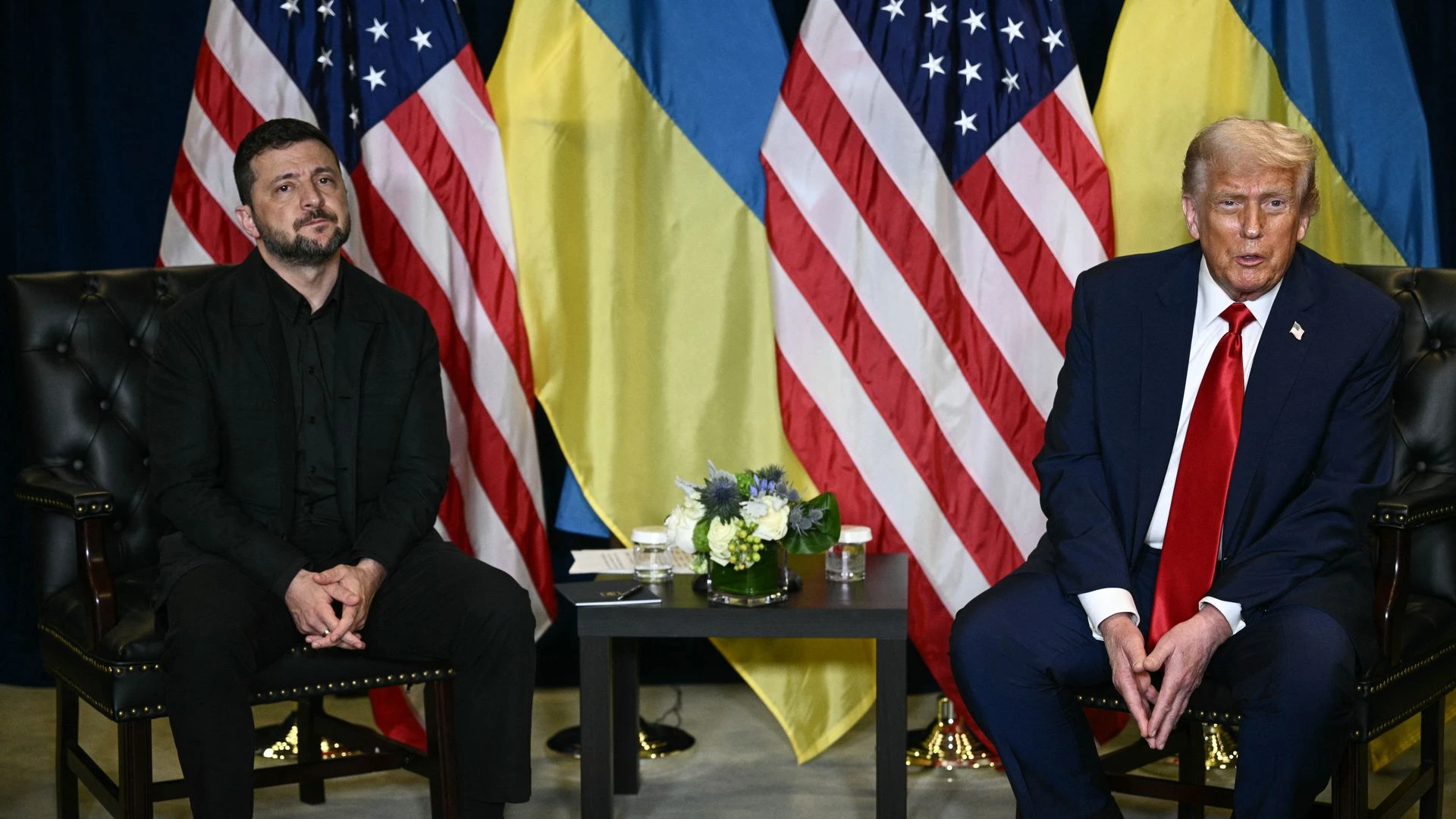
Ukrainian President Volodymyr Zelensky plans to meet US President Donald Trump in Florida on Sunday as diplomatic efforts intensify to end Russia’s nearly three year war in Ukraine.
The talks are expected to focus on a US brokered peace plan, possible American security guarantees for Kyiv and a separate economic framework tied to eastern Ukraine.
The planned meeting comes as Russian forces continued air attacks across Ukraine, injuring civilians in Kyiv and killing two people in Kharkiv, underscoring the urgency and fragility surrounding renewed negotiations.
Russia launched its full scale invasion of Ukraine in February 2022 and currently controls most of the eastern Donbas region, including about three quarters of Donetsk and nearly all of Luhansk.
The territories have become the central obstacle in peace talks, with Kyiv rejecting formal territorial concessions while Moscow insists on security guarantees and recognition of its control.
Zelensky said Friday that a twenty point peace framework was about ninety percent complete and that talks with Trump and his senior negotiators had produced “new ideas” for ending the war.
He confirmed that the Zelensky Trump meeting would take place “in the near future,” adding that “a lot can be decided before the new year.”
Trump, in an interview with Politico, said Zelensky “doesn’t have anything until I approve it,” while expressing confidence that talks with both Zelensky and Russian President Vladimir Putin would “go good.”
Western analysts said the Zelensky Trump meeting signals a shift toward direct, high level bargaining after months of stalled diplomacy.
“This is an attempt to compress negotiations at the very top, where political authority can override bureaucratic deadlock,” said Elena Markovic, a senior fellow at the European Council on Foreign Relations.
“But the gap between US and Russian positions remains wide.” Russian Deputy Foreign Minister Sergey Ryabkov described the US proposal as “radically different” from what Moscow had been discussing with Washington, accusing Ukraine of attempting to undermine talks.
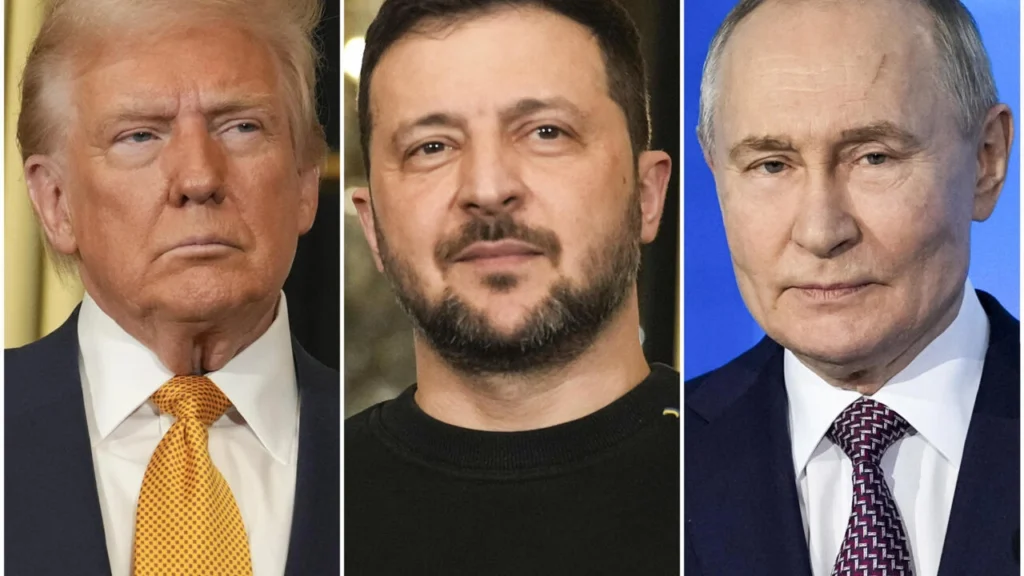
The White House proposal includes the creation of a demilitarized zone in eastern Ukraine, postponing the question of legal sovereignty over contested areas.
Zelensky has said Ukraine would consider withdrawing up to forty kilometers from the front line if Russian forces did the same.
According to Ukrainian and Western estimates, Russia controls roughly eighteen percent of Ukrainian territory.
The Donbas region has suffered extensive damage, with the World Bank estimating reconstruction costs in eastern Ukraine alone exceeding one hundred billion dollars.
Ukraine’s air force reported near daily drone and missile attacks over the past month, with air raid alerts covering the entire country on several occasions.
Civilian casualties remain highest in frontline regions and major cities. The Zaporizhzhia nuclear power plant, Europe’s largest, remains under Russian control.
US officials have proposed sharing its electricity output between both countries as part of a broader settlement. In Kyiv, residents said the latest air strikes reinforced skepticism about Russia’s intentions.
“We hear about peace talks, but we still wake up to explosions,” said Olena Hrytsenko, a teacher who sheltered in a metro station overnight.
“It’s hard to believe in agreements while missiles are flying.” In eastern Ukraine, factory worker Dmytro Kovalenko said economic considerations mattered alongside security.
“If there is a free economic zone and no fighting, people might return,” he said. “But only if there are real guarantees.”
Former US diplomat Michael Reynolds said security assurances would be decisive. Any deal without credible enforcement mechanisms risks collapsing within months, he said.
Zelensky said weekend talks would cover multiple documents, including US security guarantees and an economic agreement. Territorial issues and the future of the Zaporizhzhia plant remain unresolved and highly sensitive.
Trump said he expected to speak with Putin soon, while Kremlin envoys have continued phone discussions with US officials.
Whether the Zelensky Trump meeting can bridge differences between Washington, Kyiv and Moscow remains uncertain.
Negotiators face pressure to show progress as the war approaches its fourth year and international fatigue grows.
The planned Zelensky Trump meeting reflects renewed momentum in efforts to end the war in Ukraine, even as fighting continues and positions remain far apart.
With competing peace frameworks, unresolved territorial questions and ongoing violence, the coming talks are likely to test whether high level diplomacy can translate into a sustainable path forward.


