
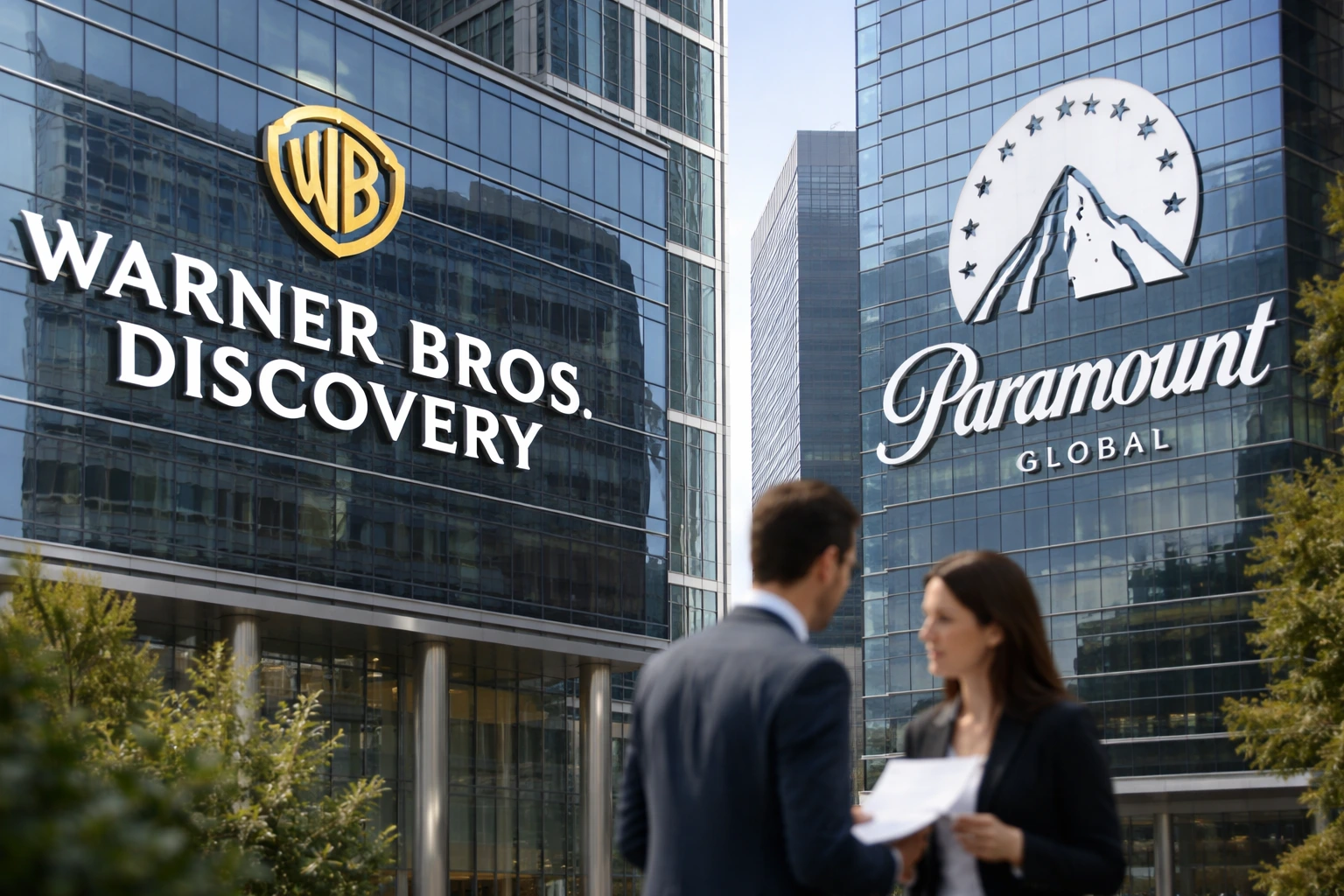
Warner Bros Discovery is expected to formally urge its shareholders to reject a $108.4 billion takeover bid from Paramount Skydance, according to multiple media reports, setting the stage for a high stakes confrontation in the global media industry.
The proposed deal, often referred to as the Warner Bros Paramount bid, would mark one of the largest media mergers in history and reshape competition in film, television and streaming.
The company was expected to communicate its position as early as Wednesday, citing concerns about financing, regulatory risk and strategic uncertainty, the Financial Times reported.
The Warner Bros Paramount bid emerged days after Warner Bros Discovery announced it would sell its film and streaming assets to Netflix in a separate $72 billion agreement finalized on Dec five.
Paramount Skydance, backed by the billionaire Ellison family, quickly countered with a broader proposal to acquire the entire Warner Bros Discovery group, including its television networks.
Paramount described its offer as “superior,” arguing it preserved the company as an integrated media powerhouse rather than breaking it apart.
Warner Bros, however, has privately raised doubts about the funding structure of the bid, according to people familiar with the discussions.
Complicating matters further, Affinity Partners, a key financial backer of Paramount’s effort, has reportedly withdrawn its support.
The investment firm was founded by Jared Kushner, the son in law of President Donald Trump. Warner Bros, Paramount and Affinity declined to comment when contacted by the BBC and other outlets.
Media analysts said the withdrawal of Affinity Partners significantly weakens the credibility of the Warner Bros Paramount bid.
“Financing clarity is everything at this scale,” said Daniel Rothman, a media mergers analyst based in New York. “If a cornerstone investor steps away, boards have a fiduciary duty to question whether the offer is executable.”
Regulatory scrutiny also looms large. Any takeover of Warner Bros would likely face extensive review by US and European competition authorities due to its impact on content ownership, advertising markets and streaming competition.
“Even if the numbers worked, the regulatory pathway would be long and uncertain,” said Laura Mendel, a former Justice Department antitrust adviser.
Warner Bros Discovery’s library includes globally recognized franchises such as Harry Potter, Friends, the MonsterVerse and premium brands under HBO Max.
Combined with Paramount’s assets, including CBS and Paramount Plus, the merged entity would rival Netflix and Disney in scale.
Streaming competition has intensified as subscriber growth slows. Netflix reported more than two hundred sixty million global subscribers earlier this year, while HBO Max and Paramount Plus remain far behind.
Industry data from Ampere Analysis shows that consolidation has reduced the number of major US streaming platforms from eight to five over the past decade, raising concerns about consumer choice and pricing power.
Labor groups have voiced strong opposition to any merger involving Warner Bros. The Writers Guild of America East and West branches warned that consolidation could lead to layoffs and lower wages.
“When companies get bigger, workers often get squeezed,” said Maria Alvarez, a television writer based in Los Angeles. “We’ve already seen how mergers reduce opportunities for creators.”
Some shareholders expressed caution rather than outright opposition. “This is a premium offer, but premium offers only matter if they close,” said Robert Chen, a small Warner Bros investor in San Francisco.
Warner Bros Discovery put itself up for sale in October after receiving multiple expressions of interest. While the Netflix transaction remains on track, the fate of the Warner Bros Paramount bid appears increasingly uncertain without Affinity’s backing.
Analysts expect Paramount to either revise its proposal or step back entirely if financing and regulatory hurdles remain unresolved.
As Warner Bros Discovery prepares to advise shareholders to reject the Warner Bros Paramount bid, the episode underscores the financial and regulatory challenges facing large scale media consolidation.
With investor confidence, competition policy and labor concerns all in play, the outcome is likely to influence the future structure of the global entertainment industry.


