
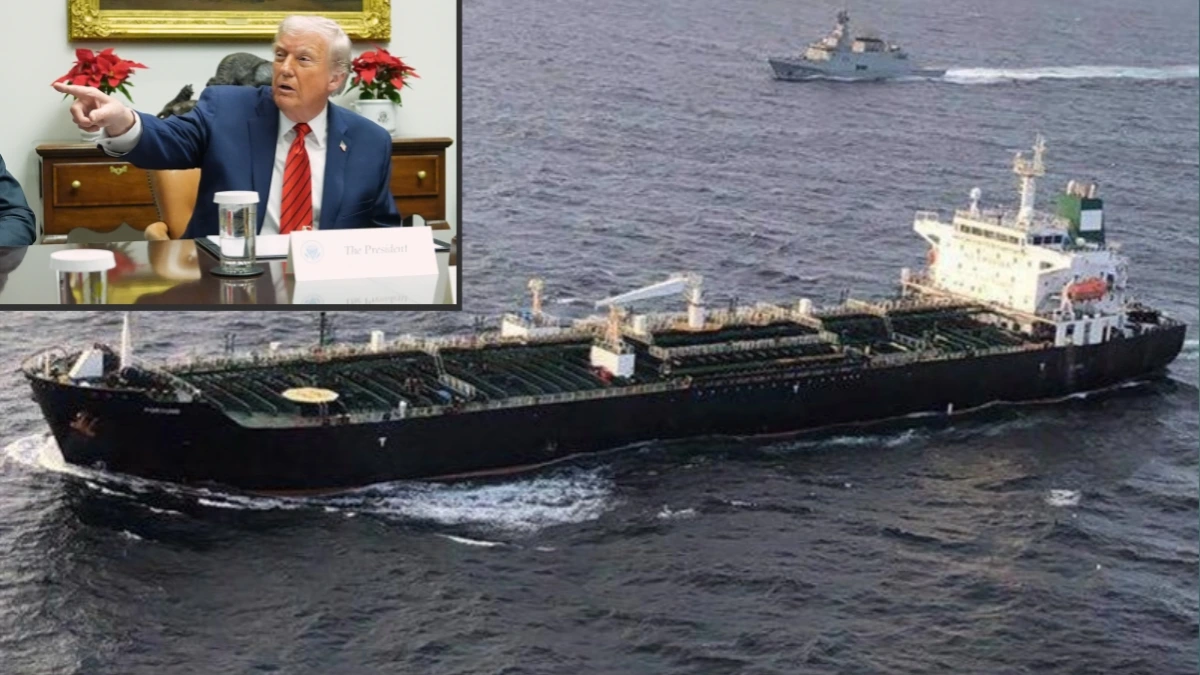
WASHINGTON — President Donald Trump said Tuesday that he has ordered a blockade of sanctioned oil tankers entering and leaving Venezuela, sharply escalating US efforts to cut off a key source of revenue for President Nicolás Maduro’s government and widening an already aggressive maritime campaign in the Caribbean.
In a statement posted on Truth Social, Trump said Venezuela was now “completely surrounded” by US naval forces and warned that enforcement actions would intensify.
He later said he was ordering “a total and complete blockade of all sanctioned oil tankers” connected to Venezuelan exports, arguing that oil profits are being used to finance drug trafficking and other illicit activities.
The announcement comes amid heightened US military activity near Venezuela and follows the recent seizure of an oil tanker by American forces.
The United States has imposed sweeping sanctions on Venezuela for years, targeting its oil sector, senior officials and state owned companies.
US administrations from both parties have accused Maduro’s government of corruption, human rights abuses and cooperation with international drug trafficking networks.
Oil exports remain central to Venezuela’s economy despite sanctions. US officials say the Maduro government has relied on covert shipping practices, including falsely flagged vessels and ship to ship transfers, to move sanctioned crude to foreign buyers.
Last week, US forces seized The Skipper, a large oil tanker operating near Venezuelan waters. The administration said the vessel was falsely registered as Guyanese and was transporting roughly one point eight million barrels of oil linked to Venezuela and Iran.
Trump’s blockade order signals a willingness to use military force more openly to enforce sanctions at sea.
Security analysts said the decision marks a notable shift in how Washington enforces sanctions against energy exporters.
“This is one of the most assertive maritime actions the US has taken against Venezuela,” said Laura Mendoza, a former Defense Department analyst now at the Center for Strategic Maritime Studies.
“A blockade of sanctioned oil tankers carries both legal and geopolitical risks, especially if vessels from third countries are involved.”
Others noted the administration’s emphasis on narcotics enforcement. Trump said Monday that US operations against suspected drug traffickers would soon expand onto land, calling them a direct military threat to the United States.
White House chief of staff Susie Wiles told Vanity Fair that Trump wants to keep pressure on Maduro until he backs down, underscoring the administration’s hard line approach.
According to the Pentagon, US forces have carried out more than two dozen strikes on suspected drug smuggling boats in the Caribbean and eastern Pacific since early September. Nearly one hundred people have been killed in those operations, the department said.
Maritime intelligence firm Windward reported that at least seven other sanctioned oil tankers, similar to The Skipper, are currently operating near Venezuela under false flags.
The firm said those vessels could become targets as the US tightens enforcement of oil sanctions. By comparison, US efforts against Iranian oil shipments have often relied on financial penalties and ship monitoring rather than direct naval seizures.
In Venezuela, residents said the announcement added to fears of deeper economic hardship.
“When oil shipments are disrupted, it’s ordinary people who feel it first,” said José Ramírez, a dockworker in the port city of Maracaibo. “Jobs disappear and prices go up, while politics stays the same.”
In Washington, Democrats voiced concern about the conduct of recent military operations.
Lawmakers focused on a September strike in which US forces hit a boat suspected of carrying narcotics and later carried out a second strike that killed survivors of the initial attack.
After a classified briefing Tuesday, some Senate Democrats called for video footage of the strike to be shown to the full chamber.
Defense Secretary Pete Hegseth said he would share the footage with select congressional committees but did not plan to release it publicly.
Trump’s order to blockade sanctioned oil tankers around Venezuela could lead to additional ship seizures and further military engagement in the region.
Analysts said the policy may also raise questions under international maritime law and increase tensions with countries whose flags have been used without authorization.
Regional governments have largely remained quiet, though diplomats said discussions are underway as shipping companies assess the risks of operating near Venezuelan waters.
The decision to impose a blockade on sanctioned oil tankers marks a significant escalation in US policy toward Venezuela, combining economic sanctions with expanded military enforcement.
As the strategy unfolds, its effects on regional stability, global oil flows and Venezuela’s population remain uncertain.


