
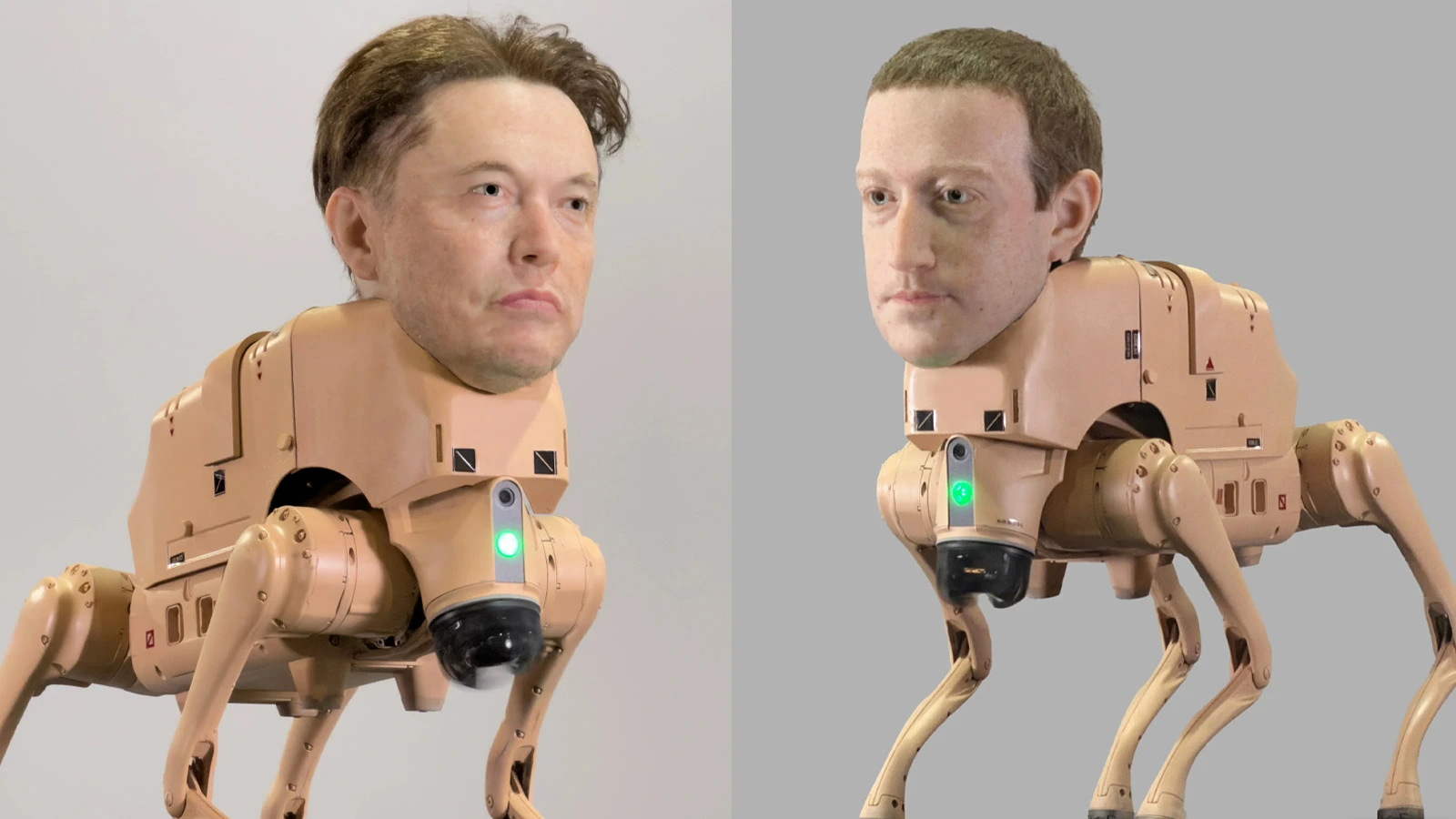
MIAMI BEACH, Florida — A striking art installation featuring Beeple robot dogs with hyper realistic silicone faces of tech billionaires including Elon Musk, Jeff Bezos, and Mark Zuckerberg has drawn widespread attention at Art Basel Miami Beach, combining humor, discomfort, and commentary on digital culture.
The robots move within a fenced area, snapping photos of their surroundings and periodically entering an intentionally absurd “poop mode,” ejecting small printed artworks. The installation highlights how art, technology, and satire can intersect in provocative ways.
Digital artist Beeple, also known as Mike Winkelmann, said the project comments on the growing influence of tech moguls, algorithms, and digital platforms in shaping public perception, often surpassing traditional art or journalism.
“This installation reflects how much our reality is filtered through platforms and personalities rather than through conventional art,” Beeple said during the VIP preview at the fair.
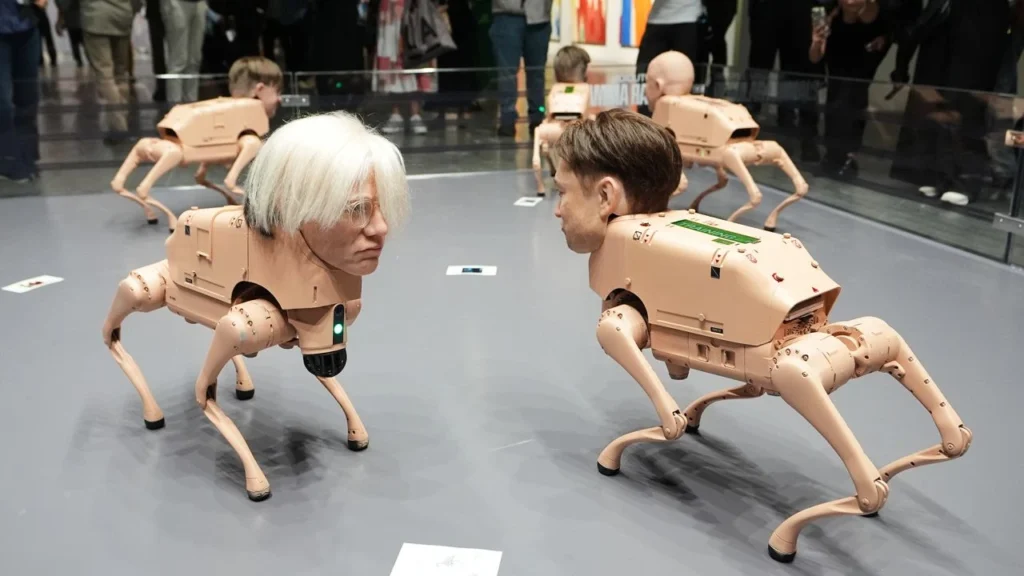
Each Beeple robot dog produces prints in a style associated with its face. For instance, the Warhol inspired dog generates popbart prints, while the Picasso faced robot produces cubist imagery.
Some prints link to non fungible tokens (NFTs) via QR codes, merging physical and digital art in a unique way. Art historian Dr. Lena Torres of the University of Miami described the installation as a challenge to traditional notions of authorship.
“Beeple is using robotics and satire to highlight how technology intermediates our perception of culture and influence,” Torres said. Curator Michael Reyes added that the awkward, mechanical movements of the robots create a deliberate tension.
“The familiar faces of billionaires combined with robotic behavior reflect how automated systems shape our cultural consumption,” Reyes said. Art Basel Miami Beach increasingly showcases works that blend physical and digital mediums.
Beeple, who previously sold a single NFT for $69 million in 2021, has become a prominent figure in technology driven art. Reports indicate that most editions of the Beeple robot dogs sold out during the VIP preview, emphasizing the market’s appetite for provocative digital works.
Visitors had mixed reactions. “It’s bizarre, funny, and a little unsettling,” said attendee Sarah Johnson. “Seeing these familiar faces on dogs that walk and ‘poop’ art makes you think about how content is produced and discarded today.”
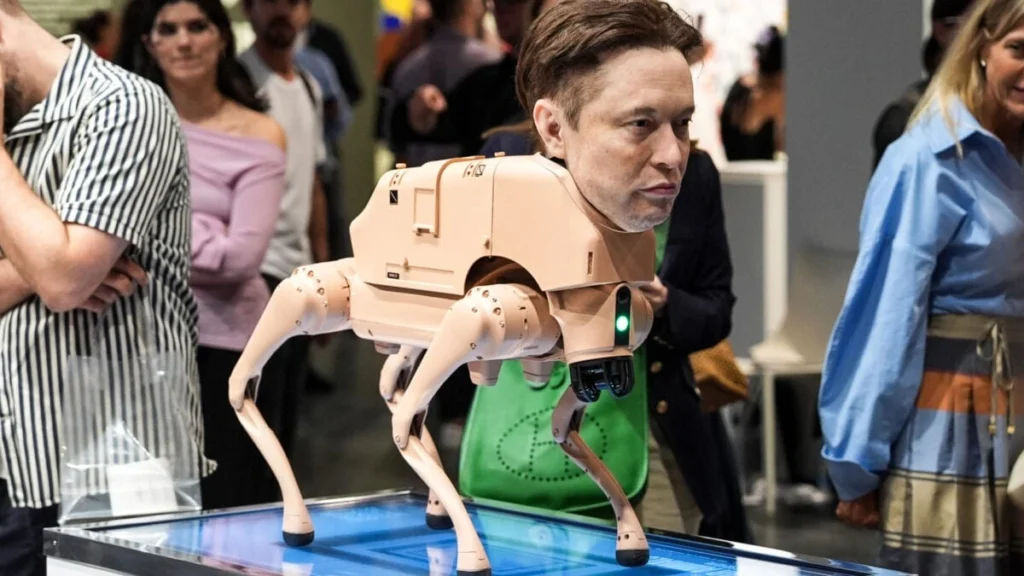
Entrepreneur Marcus Lee commented, “It’s a playful but sharp reflection on the influence of billionaires and platforms over public perception. You can’t look at it without thinking about the media ecosystem.”
Observers suggest installations like Beeple robot dogs may become more common as digital art intersects with robotics, AI, and social commentary.
Dr. Torres noted, “The future of art may involve more interactive, technologically mediated works that challenge our ideas about creativity and cultural influence.”
Beeple’s robot dogs installation at Art Basel Miami Beach combines robotics, satire, and social critique, prompting reflection on the influence of tech moguls and digital platforms.
By merging hyper realistic celebrity faces, robotic movements, and print generation, the project challenges traditional definitions of art and authorship.
Visitors and experts noted its mix of absurdity, humor, and commentary, reflecting the evolving landscape of digital art in the 21st century.


