
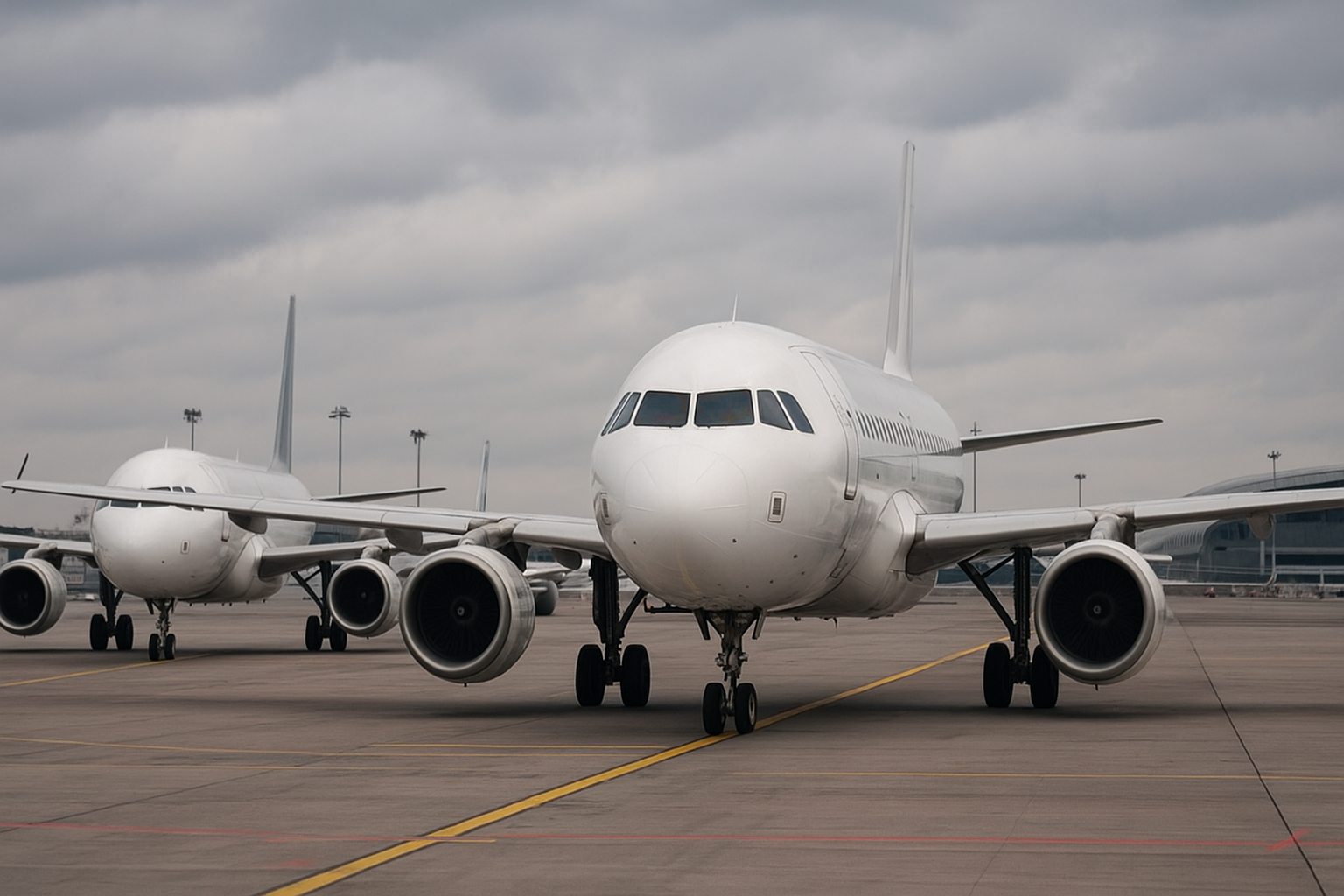
Thousands of flights were disrupted this weekend after Airbus moved to ground a large portion of its fleet when it discovered that intense solar radiation could interfere with onboard flight control computers.
The policy led to what officials described as one of the largest groundings in commercial aviation history.
Airbus said it identified the problem while investigating an incident in October in which a flight between the United States and Mexico suddenly lost altitude before making an emergency landing in Florida. At least fifteen passengers suffered minor injuries.
The investigation revealed that intense solar radiation had disrupted the aircraft’s computers controlling flight controls, a vulnerability affecting the company’s A320 series and older models including A318 A319 and A321.
As a precaution Airbus instructed airlines to ground affected aircraft until software patches or, in some cases, hardware replacements could be completed.
That decision resulted in the majority of the company’s A320 fleet roughly six thousand planes being taken out of service.
On about five thousand one hundred aircraft the issue could be fixed with a relatively simple software update that takes around three hours.
The remaining nine hundred planes with older onboard systems require a full computer replacement before carrying passengers again.
“Grounding that many planes is very much out of the ordinary,” said aviation analyst Sally Gethin. “It underscores how vulnerable modern airplanes can be to phenomena outside traditional engineering hazards.”
Officials at Airbus emphasized that the risk was manageable once identified. “We are rolling out updates as a matter of urgency,” said European Union Aviation Safety Agency (EASA) spokesperson Martina Rossi.
“Our priority is the safety of passengers and crew. This action shows how seriously we take external threats such as solar radiation.”
In the United Kingdom, Civil Aviation Authority policy director Tim Johnson said the grounding was “a very rare event” and that the rigorous maintenance and safety checks typical for commercial aviation helped minimize greater risk.
The grounding affected about half of Airbus’s global A320 fleet. Among major airlines Air France saw roughly fifty flights from its Paris hub cancelled Saturday morning.
JetBlue Airways, whose US Mexico flight triggered the alert, grounded an unspecified number of planes, resulting in several delays and one emergency landing.
American Airlines said 340 of its planes were affected but expected most updates to be completed by Saturday evening.
In Australia Jetstar Airways canceled ninety flights after confirming that about a third of its fleet was impacted.
By contrast some airlines such as British Airways reported limited disruptions. British Airways declined to comment in detail but said “software upgrades are under way on our affected aircraft.”
Passengers caught up in the grounding described frustration and uncertainty. “I was due to fly from Paris to Mumbai on Saturday morning,” said traveler Anita Desai, 29.
“The flight was cancelled abruptly. The airline offered rebooking but I might arrive a day late to meet my family for holiday.”
At London’s Gatwick Airport a ground service employee, speaking on condition of anonymity, said crews were working through the night to apply software patches.
“We got the update files late Friday,” the worker said. “It’s a race against time. Every plane patched means fewer cancellations tomorrow.”
Airbus says it expects the majority of its affected aircraft to return to service quickly thanks to the swift software upgrades.
But for the roughly nine hundred older models requiring hardware replacement, the timeline remains uncertain.
The company said the pace will depend on the availability of replacement computers and scheduling of maintenance slots. Aviation regulators worldwide are reviewing existing safety and maintenance protocols.
“This event may prompt a re‑evaluation of how external environmental factors such as solar radiation are considered in aircraft design and certification,” analyst Sally Gethin said.
Meanwhile airlines are working to reschedule flights. Some have already issued revised timetables through end of weekend. Others are advising passengers that service might remain limited until all affected planes are cleared.
The decision to ground a significant portion of Airbus’s fleet underscores the aviation industry’s vulnerability to environmental risks.
While most grounded aircraft are expected to return to service after software updates many older planes remain sidelined until hardware replacement is completed.
Airlines around the world continue to adjust to the disruption while regulators and manufacturers reassess safety measures against less‑common threats such as solar radiation.


