
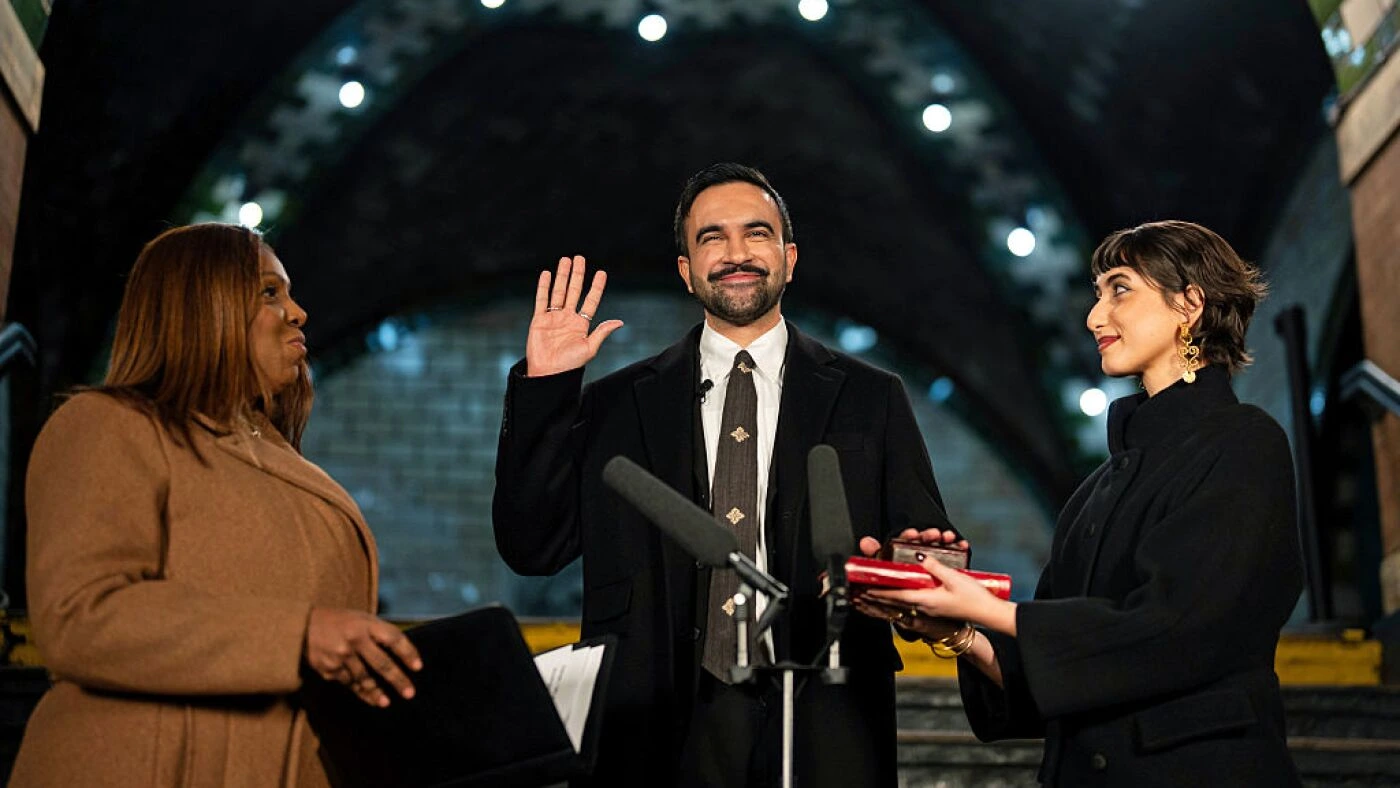
Zohran Mamdani was sworn in as mayor of New York City shortly after midnight Thursday in a brief, symbolic ceremony held at a long closed City Hall subway station, marking the formal start of his administration and a historic milestone for the nation’s largest city.
Key Points
- Zohran Mamdani becomes the first Muslim and first South Asian mayor of New York City after a yearlong rise from state politics.
- The low key swearing in underscored themes of transit, affordability and institutional renewal central to the Zohran Mamdani mayor of New York City agenda.
- Mamdani now assumes control of the country’s largest municipal government amid fiscal pressure and deep political divisions.
The overnight ceremony capped an unconventional political ascent for Zohran Mamdani mayor of New York City, a thirty four year old left leaning populist whose campaign focused heavily on cost of living pressures.
While largely private, the event carried heavy institutional and cultural symbolism for a city facing economic strain, infrastructure challenges and heightened national scrutiny.
Mamdani’s rise reflects broader shifts within Democratic politics in large US cities, where younger candidates aligned with labor groups and transit advocates have gained traction.
A former state lawmaker, Mamdani built name recognition through social media campaigns highlighting everyday expenses, including rent, transportation and child care.
New York City has not elected a mayor so closely associated with democratic socialist figures in decades.
His election followed a period marked by ethics controversies under outgoing Mayor Eric Adams and lingering voter dissatisfaction over housing costs and public safety.
Mamdani’s win also placed New York at the center of national conversations about religion, immigration and generational change in political leadership.
Urban governance experts say Mamdani inherits a complex administrative structure with limited fiscal flexibility.
“The mayor controls vast agencies but operates within tight state and federal constraints,” said Nicole Gelinas, a senior fellow at the Manhattan Institute, referring to Albany’s influence over rent law and transit funding.
Political scientists note that Zohran Mamdani mayor of New York City faces the dual challenge of maintaining his grassroots credibility while managing institutions often resistant to rapid change.
His past criticism of the New York Police Department and his pro Palestinian activism have drawn skepticism from moderate voters and some Jewish community leaders, increasing pressure for pragmatic governance.
Cost of Core Policy Proposals
| Program / Item | Estimated Annual Cost | Key Dependency |
|---|---|---|
| Universal Child Care | $5 { billion} | State funding approval |
| Free and Faster Buses | $1 { billion} | Metropolitan Transportation Authority coordination |
| Rent Freeze Enforcement | $1 { billion} | State rent regulation authority |
| Total Estimated Cost | $7 { billion} | Albany and federal budget outlook |
City budget analysts note that these figures represent rough projections and could shift with inflation, labor contracts and federal aid levels.
Letitia James, New York’s attorney general, administered the oath and said the moment reflected the city’s evolving identity.
“New York continues to show the world that representation and leadership can expand together,” she said.
Labor leader Bhairavi Desai, whose organization backed Mamdani’s campaign, said the election resonated with working class voters. “For many people who have felt ignored, this result felt personal,” Desai said.
Transit advocates also welcomed the venue choice. “Holding the ceremony in the old City Hall station sends a clear message about public investment,” said John Raskin, president of Riders Alliance.
Mamdani is scheduled to take a ceremonial oath later Thursday on the steps of City Hall before a large public crowd.
His administration’s early focus is expected to center on appointments, negotiations with Gov. Kathy Hochul and preliminary budget planning ahead of the next fiscal year.
Observers say Zohran Mamdani mayor of New York City will be closely watched by national political leaders as a test case for whether affordability focused platforms can translate into durable urban governance.
Any major policy shifts will require cooperation from the state Legislature and, in some cases, federal partners.
The quiet overnight swearing in marked the formal beginning of a mayoralty that carries both symbolic weight and operational complexity.
As Zohran Mamdani mayor of New York City moves from campaign messaging to governing, his ability to navigate fiscal realities and institutional resistance will shape not only his administration but New York City’s political trajectory in the years ahead.
Author’s Perspective — Adnan Rasheed
In my analysis, Zohran Mamdani’s midnight swearing in was not just a ceremonial choice but a calculated signal about governance priorities, using infrastructure and symbolism to frame affordability as a civic identity rather than a policy slogan.
I believe his real test will be administrative discipline translating movement politics into day to day control of the nation’s largest municipal bureaucracy without losing public trust.
Looking ahead to 2026-27, I predict that Mamdani’s mayoralty will become a national case study in whether affordability driven platforms can survive fiscal stress and state level constraints, influencing how progressive candidates campaign in other global cities.
Actionable tip for readers: Watch early budget negotiations and agency appointments closely they will reveal far more about this administration’s direction than inaugural speeches or campaign promises.
NOTE! This report was compiled from multiple reliable sources, including official statements, press releases, and verified media coverage.


