
SUMMARY
- The Year of the Fire Horse combines one of the 12 zodiac animals with the fire element in a 60-year cycle.
- The Fire Horse is associated with momentum, independence and rapid change during Lunar New Year 2026.
- The last Fire Horse year, 1966, coincided with major global political upheavals.
BEIJING — Lunar New Year celebrations began across Asia and in diaspora communities worldwide this week as 2026 ushers in the Year of the Fire Horse, a zodiac combination that appears only once every 60 years under China’s traditional lunisolar calendar.
From Beijing to Singapore and from Sydney to San Francisco, Lunar New Year festivities featured red lanterns, lion dances and imagery of galloping horses rendered in gold and crimson.
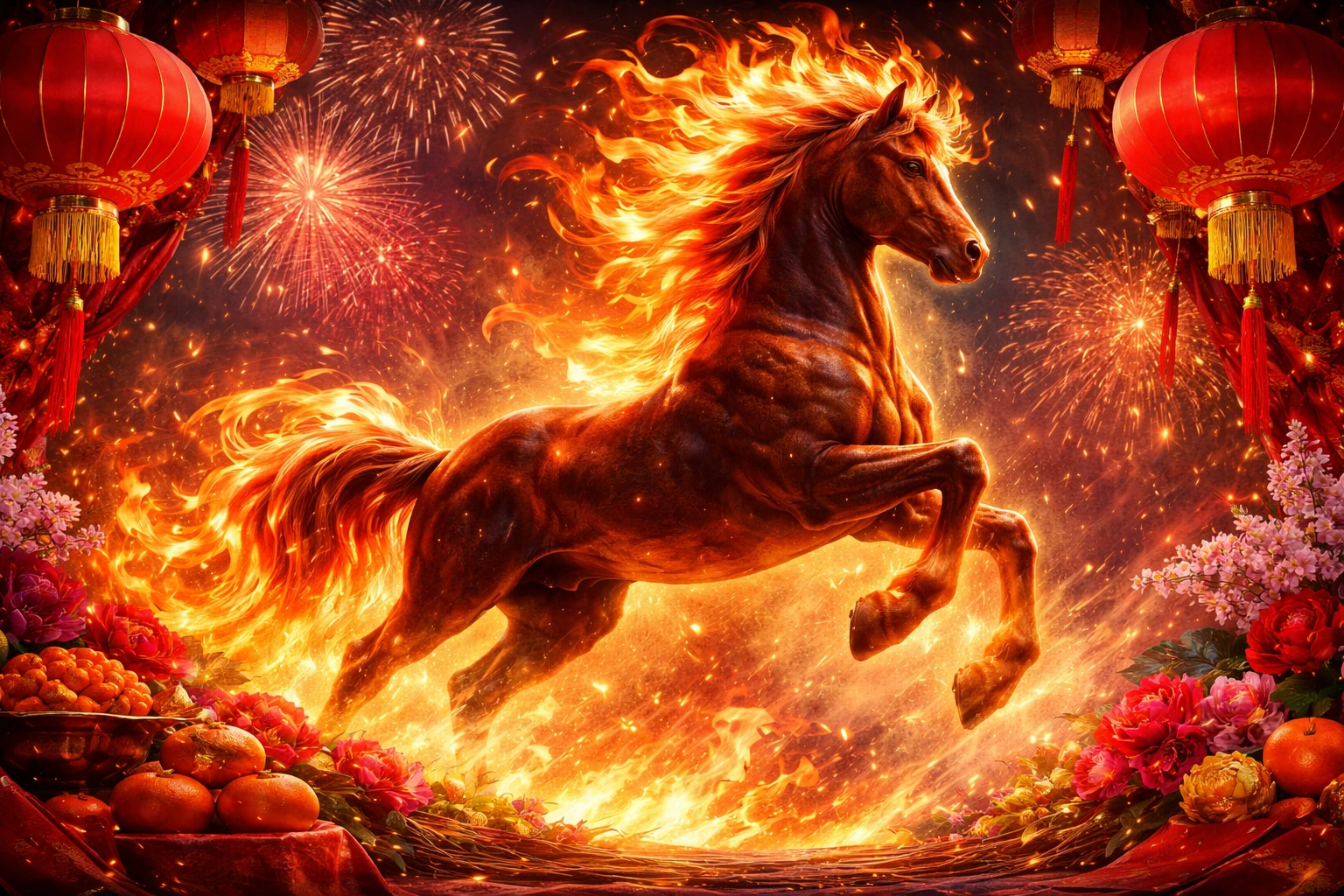
The Year of the Fire Horse carries particular cultural resonance because it unites the horse, a symbol of strength and mobility, with fire, the most dynamic of the five traditional Chinese elements wood, fire, earth, metal and water.
The lunar new year date, which falls between late January and mid February, is determined by the Chinese lunisolar calendar, a system in use for more than two millennia.
Each year is named for one of 12 zodiac animals in a repeating cycle, with an element assigned in a rotating two year pattern.
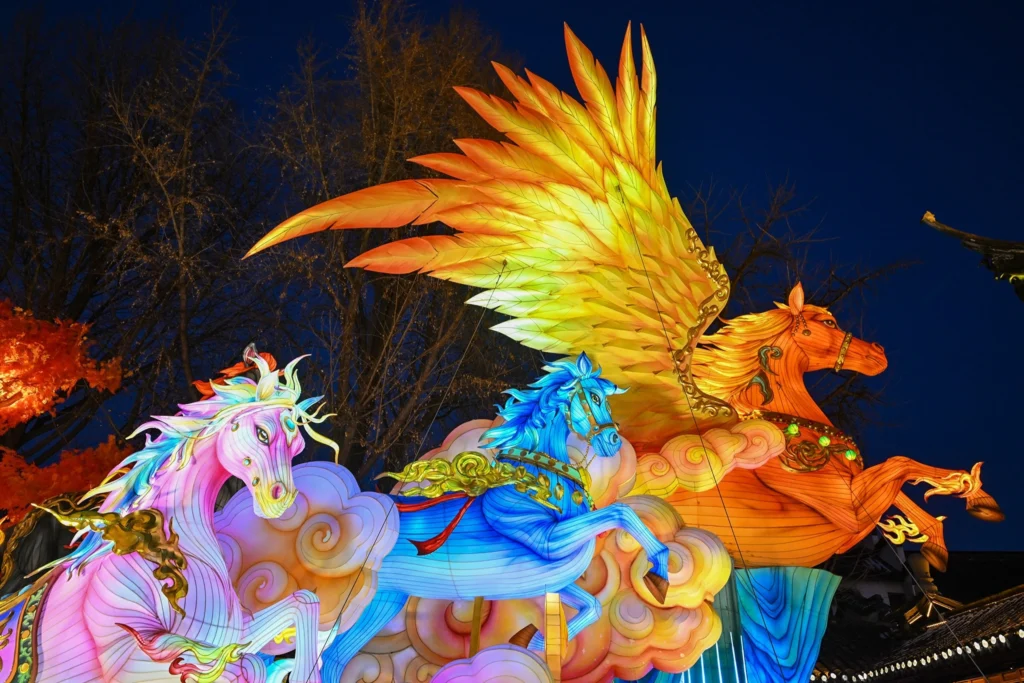
The horse has held a prominent place in Chinese civilization due to its historical roles in agriculture, transport and warfare. In zodiac tradition, it represents endurance, ambition, loyalty and freedom.
Jonathan H. X. Lee, professor of Asian and Asian American studies at San Francisco State University, said the horse is linked to “yang energy,” which in Chinese cosmology signifies activity and vitality.
“When the horse arrives, success arrives,” Lee said, referencing a traditional idiom. “It symbolizes forward movement and the possibility of growth through decisive action.”
The addition of fire intensifies those qualities. Under the sexagenary cycle that pairs 12 animals with five elements, each specific animal element combination recurs once every 60 years. The previous Year of the Fire Horse occurred in 1966.
Scholars note that so-called “Bing-Wu” years, the technical term for Fire Horse years, have long been associated in historical writings with disruption.
Xiaohuan Zhao, professor of Chinese history and culture at the University of Sydney, said the Fire Horse occupies “a complex symbolic space” in traditional thought.
“There is a longstanding association between Bing-Wu years and periods of social or political instability in historical tradition,” Zhao said.
He cautioned that such associations reflect cultural narratives rather than predictive science.
The year 1966, the last Fire Horse year, marked the beginning of China’s Cultural Revolution and a period of intensified conflict in Vietnam.
Historians stress that major political events stem from structural conditions, not zodiac cycles, but acknowledge that symbolism can shape public perception and behavior.
Lee said the Fire Horse is often described as a “sprinting animal,” suggesting that events during Lunar New Year 2026 may feel accelerated. “Fire amplifies the horse’s drive,” he said. “It encourages initiative but also warns against impulsiveness.”
In financial and business circles across East Asia, some companies have incorporated Fire Horse themes into marketing campaigns promoting innovation and risk taking, reflecting how zodiac symbolism intersects with contemporary economic messaging.
In Hong Kong, cultural historian Clara Chan said holiday merchandise featuring stylized horses has sold briskly.
“People see it as an energetic year,” she said. “There is a sense of wanting to move forward after several cautious years.”
In Kuala Lumpur, event organizer Lim Wei Jian said community groups have emphasized themes of resilience and renewal in public celebrations.
“The Fire Horse represents stamina,” Lim said. “That resonates with families rebuilding plans and businesses.”
Meanwhile in Los Angeles, community leader Grace Wong said diaspora celebrations blend tradition with local identity.
“For many young people, the zodiac is a cultural anchor,” Wong said. “It connects heritage with present-day aspirations.”
Astrologers and scholars emphasize that zodiac interpretations function primarily as cultural frameworks rather than forecasts.
Still, the Year of the Fire Horse is widely viewed as encouraging bold decisions, entrepreneurial ventures and personal reinvention.
As Lunar New Year 2026 unfolds, governments and businesses across Asia will monitor economic indicators and geopolitical developments shaped by policy and market forces, not astrology.
Yet the symbolism of the Fire Horse continues to influence how communities interpret change, ambition and risk at the start of a new lunar cycle.
The Year of the Fire Horse marks a rare moment in the 60-year zodiac sequence, blending historical tradition with contemporary meaning.
For millions observing Lunar New Year 2026, it offers a culturally significant lens through which to frame hopes for momentum, resilience and renewal in the year ahead.
NOTE! This article was generated with the support of AI and compiled by professionals from multiple reliable sources, including official statements, press releases, and verified media coverage. For more information, please see our T&C.


