
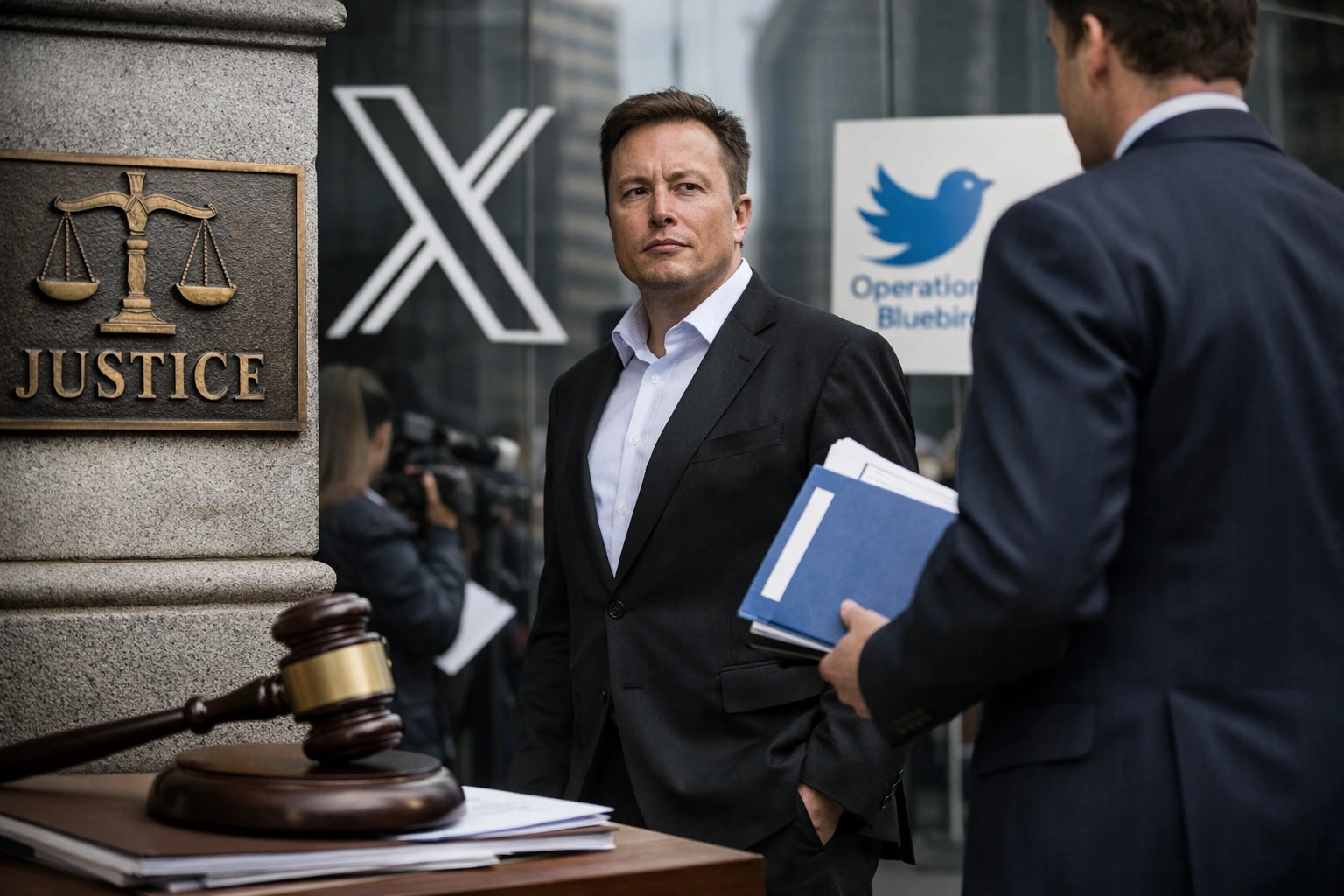
X Corp, the company formerly known as Twitter, has filed a federal lawsuit against a Virginia based startup that is seeking to revive the Twitter name as a competing social media platform.
The case centers on whether X abandoned its rights to the Twitter brand after billionaire Elon Musk rebranded the platform in two thousand twenty three.
The lawsuit, filed Tuesday in Delaware federal court, accuses Operation Bluebird of trademark infringement and argues that the Twitter brand remains active despite the company’s shift to the name X.
The legal fight has quickly become a closely watched test of how far a corporate rebrand can go without forfeiting valuable intellectual property.
Musk bought Twitter for forty four billion dollars in two thousand twenty two and soon announced plans to rename the platform X. In a post the following year, Musk said the company would “bid adieu to the Twitter brand and, gradually, all the birds.”
Despite the public rebrand, X Corp has continued to operate the platform through twitter.com, while many users, advertisers and media outlets still refer to the service as Twitter.
Operation Bluebird, a startup led by founder Michael Peroff, filed a petition on December two with the US Patent and Trademark Office seeking to cancel X’s federal Twitter trademarks.
The company argued that X had abandoned the marks and that Bluebird intended to use Twitter related branding for a rival platform called twitter.new.
The petition was filed by Stephen Coates, a former Twitter trademark attorney who now serves as Operation Bluebird’s general counsel.
In its lawsuit, X Corp said the move amounted to an attempt to “steal” one of the world’s most recognizable brands.
“Simply put, a rebrand is not an abandonment of trademark rights,” the company said in the filing. The case has become known in legal circles as the X Corp Twitter trademark lawsuit.
Trademark law experts say the dispute hinges on whether X can demonstrate continued use and enforcement of the Twitter brand.
“Abandonment is a high bar,” said Laura Chen, a professor of intellectual property law at Georgetown University.
A company must show both nonuse and an intent not to resume use. Based on what has been reported, X appears to still be using Twitter in several commercial contexts. Others note that Musk’s public statements could complicate the company’s position.
“When a CEO publicly announces the end of a brand, it gives challengers something to point to,” said David Morales, a trademark attorney in New York. “But courts usually focus more on conduct than rhetoric.”
The X Corp Twitter trademark lawsuit may also test how courts view partial rebrands in the digital era, where legacy URLs and user habits can persist long after a name change.
Twitter was ranked among the top ten most recognized global brands for more than a decade before the rebrand, according to multiple brand valuation studies.
Even after the transition to X, analytics firms estimate that tens of millions of users still access the platform through twitter.com each day.
Comparable disputes have emerged in other industries. Meta Platforms retained rights to the Facebook brand even as it shifted its corporate identity.
Google continues to protect legacy product names years after retiring them. “These cases show that brand value does not disappear overnight,” Chen said.
Among users, the dispute has drawn mixed reactions. “I still call it Twitter, and everyone I know does too,” said Ahmed Khan, a small business owner in Chicago who advertises on the platform.
“If someone else launched a new Twitter, it would definitely confuse people.” Others expressed curiosity about Operation Bluebird’s plans.
“If they really brought back old Twitter features, some users might try it,” said Jenna Morales, a college student in Los Angeles. “But the name alone would be misleading.”
Operation Bluebird founder Peroff said in a statement that his company’s cancellation petition was based on “well established trademark law” and that the startup was prepared to pursue the matter as far as necessary.
The Delaware court will first consider whether X has standing to block the trademark cancellation effort and whether consumer confusion is likely. The US Patent and Trademark Office will separately review Bluebird’s petition.
Legal analysts say the X Corp Twitter trademark lawsuit could take months or longer to resolve, particularly if appeals follow.
“If X prevails, it reinforces the idea that rebranding does not equal surrender,” Morales said. “If Bluebird wins, it could embolden others to challenge dormant or partially used marks.”
At its core, the case reflects the enduring power of the Twitter name and the legal complexities surrounding modern rebrands. X Corp maintains that the brand remains “alive and well,” while Operation Bluebird argues it has been left behind.
As the X Corp Twitter trademark lawsuit moves forward, courts and regulators will weigh how trademark law applies in an era where digital identities evolve faster than ever, but brand recognition can be difficult to erase.


