
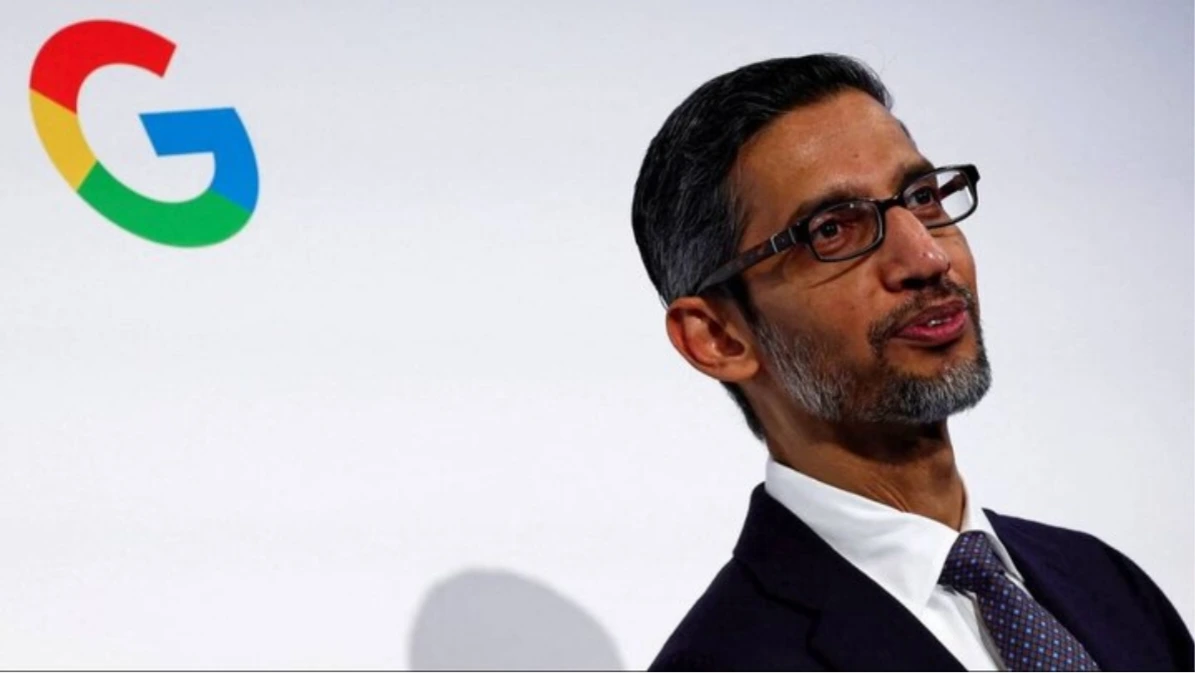
SAN FRANCISCO — Google and Alphabet CEO Sundar Pichai said vibe coding is transforming software development, making it more enjoyable and accessible to workers without formal coding experience.
In a recent interview on the Google for Developers podcast, Pichai compared the rise of vibe coding to how blogging and YouTube once created new career pathways for content creators.
“It’s making coding so much more enjoyable,” Pichai said. “Things are getting more approachable, it’s getting exciting again, and the amazing thing is, it’s only going to get better.”
Vibe coding, a method where users leverage AI tools to generate functional code based on high level ideas or prompts, is rapidly expanding beyond traditional software engineering.
Pichai noted that professionals from various fields, including human resources and accounting, are using AI platforms like ChatGPT, Gemini, Claude, and Replit to create applications without needing extensive technical knowledge.
Vibe coding has emerged as part of a broader trend of AI assisted software development, where artificial intelligence aids in writing code or generating applications from minimal input.
Unlike traditional coding, which requires syntax knowledge and debugging skills, vibe coding allows users to “visualize” and experiment with their ideas directly.
“Traditionally, you would have to describe your idea to a developer or learn coding yourself,” Pichai said. “Now, maybe you’re kind of vibe coding it a little bit and showing it to people.”
Tech companies have started noticing the impact internally. At Meta, product managers have reportedly used vibe coding to prototype apps and demonstrate concepts to CEO Mark Zuckerberg.
At Google, Pichai said there has been a sharp increase in first time changelist submissions, or CLs, which involve small code changes addressing features or bugs.
Industry analysts suggest that vibe coding may lower barriers to entry in software development, democratizing access to technology creation for non-technical professionals.
Experts caution that while vibe coding is expanding opportunities, there are limitations and risks. Jonathan Mills, a software engineer and AI ethics consultant, said the technology is best suited for experimentation and low risk projects.
“Vibe coding can accelerate idea testing and prototyping, but for critical systems or large codebases, human oversight is essential,” Mills said. “Security, maintainability, and reliability remain major concerns if AI generated code is deployed without review.”
Similarly, Dr. Elena Rodriguez, a professor of computer science at Stanford University, highlighted that the technology is evolving rapidly.
“The promise of vibe coding is that it reduces friction for non technical users, but it’s not a replacement for trained developers,” Rodriguez said. “We are seeing a shift in how teams collaborate, where AI augments human creativity rather than replaces expertise.”
Although hard statistics on adoption are limited, anecdotal evidence from AI development platforms indicates significant uptake among non technical users.
Replit, an online coding platform, reported that its user base of non developers experimenting with AI assisted coding tools has grown by over fifty percent in the last year. Analysts draw parallels with early internet content creation.
Blogging platforms in the early 2000s allowed writers to build audiences and careers without traditional publishing experience, while YouTube enabled content creators to monetize video content outside established media networks.
Vibe coding is now being positioned as a similar gateway into technology development for the non technical workforce.
HR professionals and small business owners experimenting with vibe coding report tangible benefits. Maria Chen, an HR manager in Seattle, said she used AI coding tools to build an internal dashboard for tracking employee engagement metrics.
“I had no coding experience, but I was able to vibe code a prototype and show it to my team,” Chen said. “It saved time and made the process more collaborative.”
Small tech startups are also taking advantage of vibe coding to rapidly prototype products.
David Patel, founder of a San Francisco startup, said, “Being able to quickly iterate on ideas without waiting for a developer is a game changer. It accelerates our workflow and encourages creativity.”
Pichai said he expects the capabilities of vibe coding to grow, making AI assisted development an integral part of the future of technology.
He acknowledged potential risks, including misuse or over reliance on AI generated code for critical systems.
“It’s both amazing to see, and it’s the worst it’ll ever be,” Pichai said. “I can’t wait to see what other people in the world come up with it.”
Industry observers anticipate that as AI tools become more sophisticated, vibe coding may evolve into a standard part of enterprise software development and innovation workflows.
However, experts emphasize the need for ethical guidelines and security oversight to prevent errors and vulnerabilities.
Vibe coding represents a shift in how people interact with technology, lowering barriers for non technical professionals to create and experiment with software.
While experts urge caution for high stakes applications, the trend signals a growing democratization of coding and innovation.
As the technology matures, vibe coding could reshape workflows in tech companies, startups, and beyond, making software development more accessible and engaging.


