
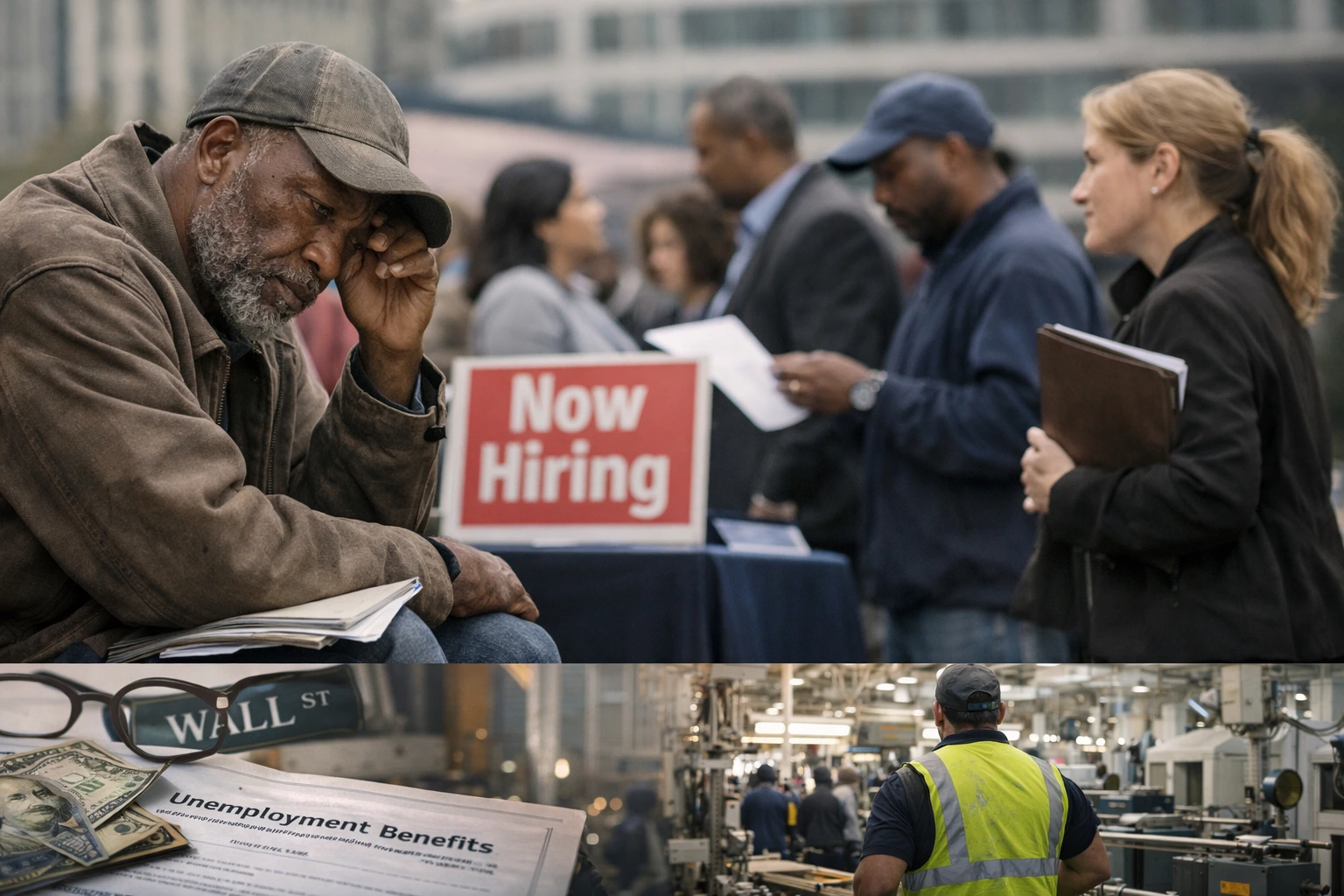
The US unemployment rate rose in November, signaling new strain in a labor market that had shown resilience for much of the year but is now facing headwinds from federal layoffs, slowing wage growth and rising living costs.
The jobless rate climbed to four point six percent, up from four point four percent in September and marking the highest level since September twenty twenty one, according to data released Friday by the Labor Department.
The increase comes after months of mixed economic signals and amid growing public pessimism about the economy. Employers added sixty four thousand jobs in November, a modest rebound after a decline in October.
Hiring, however, remained uneven across sectors and was weighed down by significant job losses at the federal level. The government shed one hundred sixty eight thousand jobs over the past two months as deferred resignations tied to a federal efficiency program took effect.
The US unemployment rate has now risen steadily from four percent in January, underscoring a cooling labor market following several years of rapid post pandemic recovery. Wage growth also slowed sharply in November, reaching its weakest pace since twenty twenty one.
“This is not a collapse, but it is a clear deceleration,” said Laura Mendoza, a labor economist at the University of Michigan. “The labor market is losing momentum at a time when households are already feeling pressure from high prices.”
Federal Reserve officials are closely monitoring labor data as they balance slowing job growth against still elevated inflation. Last week, the Fed delivered another quarter point interest rate cut, continuing a series of reductions that began in September.
“The rise in the US unemployment rate reinforces the Fed’s cautious pivot toward supporting employment,” said Mark Ellison, chief economist at Horizon Policy Group. “Policymakers appear increasingly concerned that weakness could spread if financial conditions remain too tight.”
Analysts cautioned, however, that November’s report is unusually complex due to delays caused by a forty three day government shutdown that disrupted data collection earlier in the fall.
Beyond the headline figure, broader measures of labor market slack showed notable deterioration.
The share of workers who are employed part time but want full time jobs, along with those marginally attached to the workforce, rose to eight point seven percent in November.
That figure is up a full percentage point from a year earlier. Manufacturing employment declined by five thousand jobs last month, continuing a trend that has frustrated policymakers who had hoped trade policies would boost domestic factory hiring.
Health care and hospitality remained among the few sectors posting consistent gains. The US unemployment rate for Black workers rose to eight point three percent, an increase of more than two percentage points since the start of the year.
Economists often view unemployment among Black workers as an early indicator of broader labor market stress. For workers affected by federal layoffs, the numbers reflect lived reality.
James Carter, a former program analyst at a federal agency in Maryland, said he has been searching for work since accepting a deferred resignation this summer.
“I thought the private sector would be hiring more aggressively,” Carter said. “Instead, I’m seeing fewer openings and more competition.”
Small business owners also reported caution. Maria Lopez, who runs a catering company in Phoenix, said higher borrowing costs earlier in the year forced her to delay expansion plans.
“When customers pull back, you feel it immediately,” Lopez said. “I’m not laying people off, but I’m not hiring either.”
Economists expect job growth to remain subdued in the coming months as employers adjust to slower consumer demand and tighter budgets.
While additional interest rate cuts could provide some relief, analysts warned that monetary policy acts with a lag.
“The path forward depends on whether job losses remain concentrated or begin to spread,” said Ellison. “If the US unemployment rate continues to rise into early next year, the conversation will shift from cooling to contraction.”
November’s employment report paints a picture of a labor market under increasing strain but not yet in crisis.
With hiring slowing, layoffs mounting in the public sector and wage growth easing, the US unemployment rate has become a focal point for policymakers and investors alike.
The coming months will determine whether the recent uptick represents a temporary adjustment or the start of a more sustained slowdown.


