
The United States carried out airstrikes targeting Islamic State militants in northwestern Nigeria this week, escalating its military involvement in West Africa following warnings from President Donald Trump about attacks against Christian communities.
The operation marked the latest instance of US strikes ISIS in Nigeria, a campaign American officials said was conducted in coordination with Nigerian security forces.
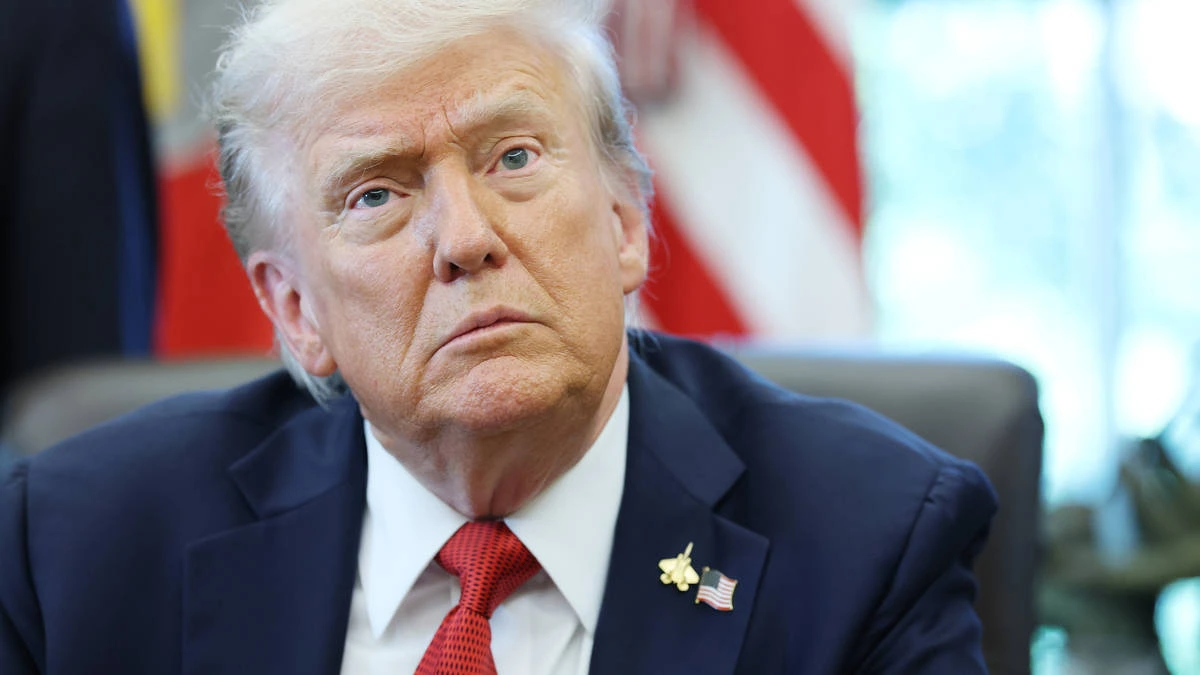
President Trump announced the action Thursday on his social media platform Truth Social, describing the strikes as aimed at Islamic State fighters accused of killing civilians, “primarily innocent Christians.”
US military officials later confirmed that American missiles struck two ISIS linked camps in Nigeria’s Sokoto State.
Nigeria has faced a complex insurgency for more than a decade involving Boko Haram, Islamic State West Africa Province and criminal armed groups operating across the country’s north and central regions.
The violence has killed thousands of people, including Christians and Muslims, and displaced millions.
US officials said the latest strikes were directed at Islamic State fighters operating in the country’s northwest, a region increasingly affected by militant activity and banditry.
A US defense official, speaking on condition of anonymity to discuss operational matters, said the strikes were carried out with Nigerian government approval.
Nigerian authorities have consistently rejected claims that the violence amounts to a targeted genocide against Christians.
Government officials have argued that attacks are driven by a mix of ideological extremism, criminality and competition for land and resources, affecting communities across religious lines.
Security analysts say the decision to expand US strikes ISIS in Nigeria reflects growing concern in Washington about the Islamic State’s efforts to regroup in West Africa.
“The Islamic State has been seeking to exploit local grievances and weak governance structures,” said Michael O’Hanlon, a senior fellow at the Brookings Institution.
“Targeted strikes can disrupt leadership and logistics, but they do not resolve the underlying drivers of instability.” Other experts cautioned that increased foreign military involvement carries risks.
“There is always the danger of civilian harm or backlash if communities perceive outside forces as favoring one group over another,” said Zainab Ahmed, a Nigerian conflict researcher based in Abuja.
According to data from the Armed Conflict Location and Event Data Project, Nigeria recorded more than three thousand conflict related deaths last year, with casualties split across religious and ethnic groups.
Islamic State linked factions were responsible for a fraction of those deaths compared with criminal gangs and local militias.
US Africa Command has previously conducted counterterrorism operations in Somalia and the Sahel, but direct U.S. strikes ISIS in Nigeria have been relatively rare.
The latest operation follows a November directive from Mr. Trump ordering the Defense Department to prepare options to protect civilians from militant attacks.
Residents in Sokoto State said they heard explosions overnight but reported limited information about the targets.
“We were afraid because of the noise, but we do not know exactly where it happened,” said Musa Abdullahi, a farmer in a village near the border with Niger.
Christian leaders expressed cautious relief. “Any effort that reduces violence is welcome, but we pray that innocent people are not harmed,” said Rev. Samuel Okeke, a church leader in northern Nigeria.
Muslim community leaders echoed similar concerns. “Extremists do not represent our faith,” said Imam Ibrahim Sadiq of Sokoto. “Our communities want peace, not more fighting.”
US officials said the strikes were part of a broader counterterrorism strategy rather than the start of a sustained campaign.
Defense Secretary Pete Hegseth said the United States was grateful for Nigeria’s cooperation and stressed that further actions would depend on evolving threats.
Nigerian security forces continue to face challenges in controlling vast rural areas, and analysts say long term stability will depend on improved governance, economic development and regional cooperation.
The latest US strikes ISIS in Nigeria underscore Washington’s growing concern about extremist activity in West Africa and the protection of civilian populations.
While American and Nigerian officials describe the operation as precise and coordinated, the broader conflict remains shaped by deep rooted political, economic and social factors.
The effectiveness of military action, experts say, will ultimately be measured by whether it contributes to lasting security for all Nigerians.


