
SUMMARY
- The Trump administration is reportedly seeking to remove Cuban President Miguel Díaz-Canel while maintaining the Communist government’s structure.
- US officials aim to open Cuba’s economy to American business while securing symbolic political wins, including the release of political prisoners.
- Cuba faces severe economic strain, including nationwide blackouts, partly attributed to US sanctions on oil imports.
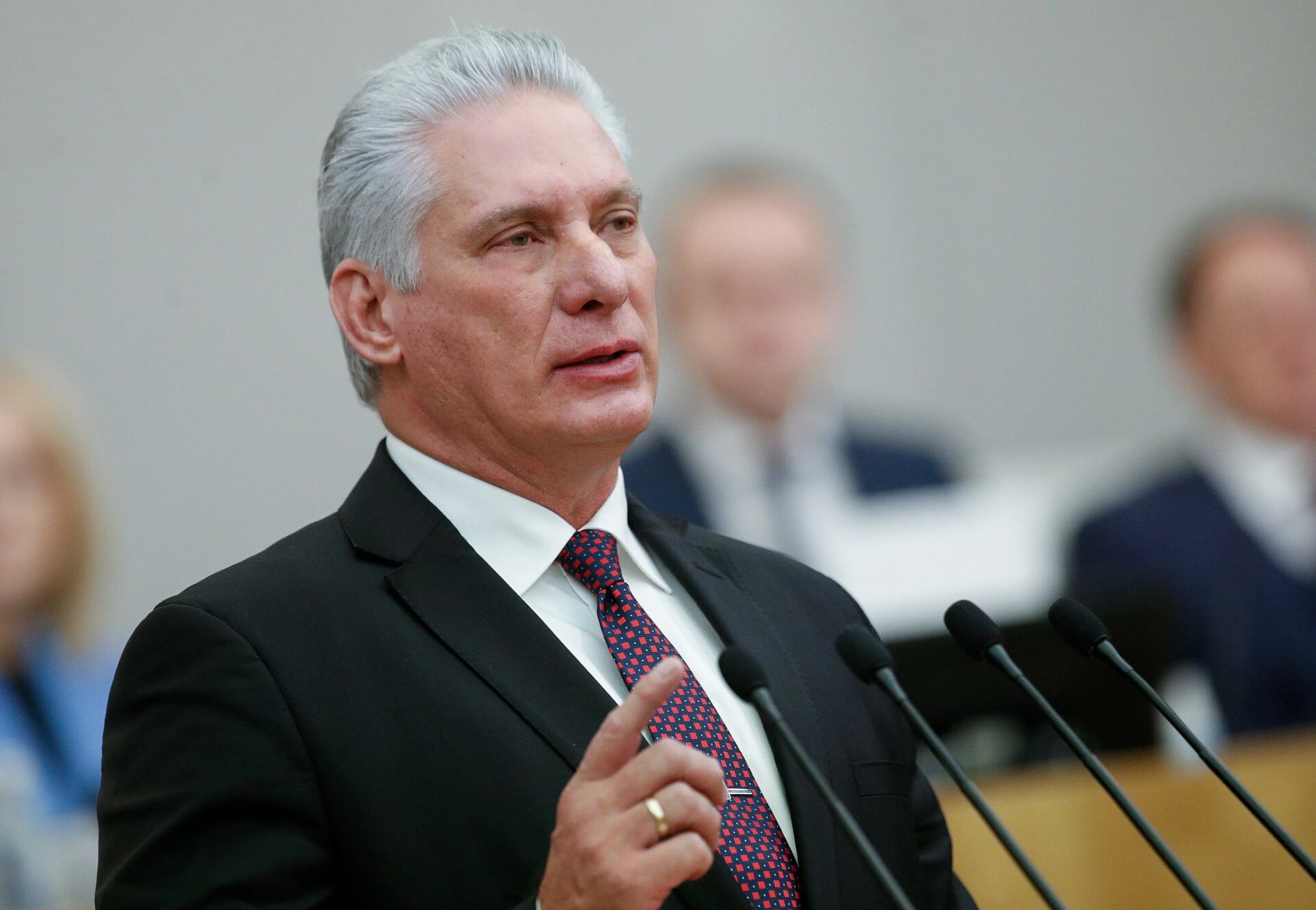
HAVANA — The Trump administration is pressing for the removal of Cuban President Miguel Díaz-Canel as part of ongoing negotiations over the island’s economic future, according to multiple sources familiar with the talks.
The push seeks a leadership change while leaving the Communist government intact, signaling a strategic approach focused on economic leverage rather than wholesale regime transformation.
According to four people who spoke on condition of anonymity, US officials have communicated that Díaz-Canel must leave office to facilitate structural economic reforms, though the decision on timing and execution remains with Cuban authorities.
The move, if agreed upon, would represent the first major political shake-up resulting from bilateral discussions that began several months ago.
Díaz-Canel, 65, has served as Cuba’s president since 2018 and also leads the Communist Party. He was the first non Castro to hold Cuba’s top office since the 1959 revolution.
Considered largely a figurehead, Díaz-Canel’s influence is reportedly constrained by the military run conglomerate GAESA and senior members of the Castro family.
Cuba has faced increasing economic strain under U.S. sanctions. The Trump administration has blocked foreign oil imports, contributing to nationwide blackouts and accelerating a humanitarian crisis.
Recent protests, including the July 2021 demonstrations, have underscored widespread public frustration over economic hardship and governance.
Former Obama administration National Security Council official Ricardo Zúniga, who previously engaged in secret negotiations with Cuba, described Díaz-Canel as a “captain going down with a ship,” noting that his removal could reset US/Cuba relations without drastic policy shifts.
Marlene Azor Hernández, a former University of Havana sociologist now in exile, said, “Yes, they do have to get rid of him along with the entire political bureau of the Communist Party and GAESA. He is a totally manipulated figurehead.”
US negotiators are reportedly emphasizing symbolic political outcomes, including the release of political prisoners, while prioritizing access for American businesses.
Sources suggest that Raúl Guillermo Rodríguez Castro, a grandson of former leader Raúl Castro, would maintain behind-the-scenes influence even after Díaz-Canel’s departure.
Oscar Pérez-Oliva Fraga, grandnephew of Fidel and Raúl Castro and deputy prime minister, recently spoke to US media about opening Cuba to foreign investment.
He stated, “We are exploring ways to modernize our economy while safeguarding national sovereignty.”
U.S. Secretary of State Marco Rubio, son of Cuban immigrants, has reportedly engaged directly with Cuban negotiators, emphasizing political and economic reform without military intervention.
If Cuba agrees to replace Díaz-Canel, the transition would be largely symbolic, enabling Washington to claim a political milestone while maintaining economic engagement.
Observers note that deeper reforms depend on cooperation from GAESA and the Castro family, who remain central to decision making.
The ongoing negotiations highlight the US strategy of leveraging economic influence to achieve targeted political outcomes, aiming to gradually reshape Cuba’s economic landscape without destabilizing the Communist government’s broader structure.
NOTE! This article was generated with the support of AI and compiled by professionals from multiple reliable sources, including official statements, press releases, and verified media coverage. For more information, please see our T&C.


