
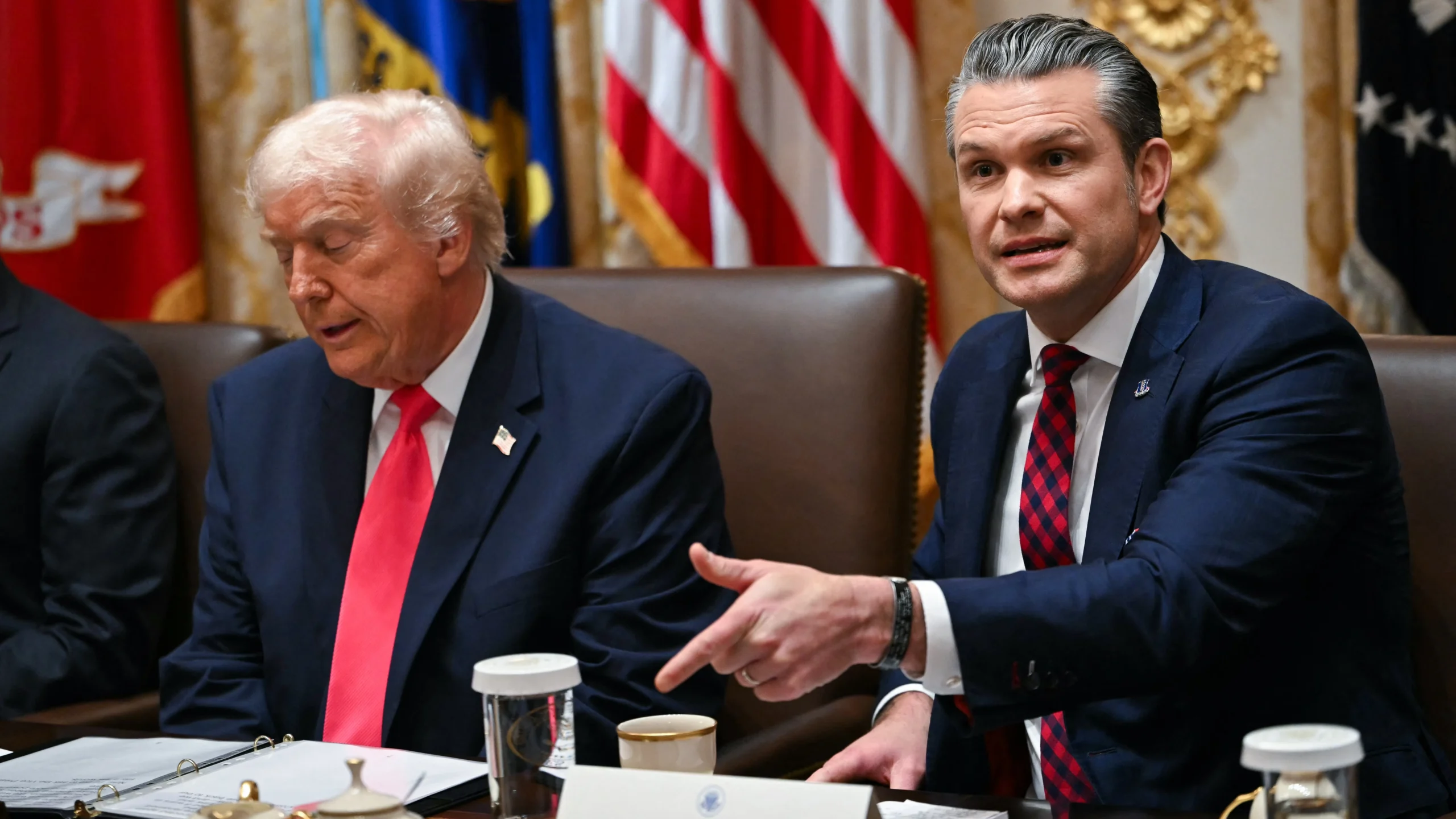
WASHINGTON — Following a US military operation that captured Venezuelan President Nicolás Maduro, the United States will temporarily oversee governance in Venezuela.
Defense Secretary Pete Hegseth said Sunday, as the Trump administration seeks to secure oil assets, curb drug trafficking, and ensure regional stability.
KEY POINTS
- The United States plans to manage Venezuela temporarily until a transition of power is established, focusing on security, energy production, and law enforcement.
- Maduro’s capture is being treated as a law enforcement operation, with US officials emphasizing that final governance decisions will involve both American and Venezuelan authorities.
- International reaction is emerging, with questions raised over sovereignty, legality, and the potential regional impact of US oversight.
The capture of Nicolás Maduro marks an unprecedented intervention by the United States in Venezuela.
In remarks to “CBS Evening News,” Hegseth stressed that President Donald Trump “sets the terms” for the temporary administration.
Which includes stopping drug shipments, safeguarding oil resources, and preventing criminal extraditions to the United States.
Officials described the operation as highly complex and successful, highlighting the coordination between multiple US military branches.
Relations between Washington and Caracas have been tense for years, driven by sanctions on Venezuelan oil, accusations of human rights violations, and concerns over drug trafficking.
US forces deployed to the Caribbean to monitor Venezuelan military movements, culminating in the January 3, 2026, operation in Caracas that led to Maduro’s capture.
The operation reportedly involved air, land, and sea units and was executed without US casualties.
Historically, the US has exerted influence in Latin America through sanctions and support for opposition groups.
But direct administration of a sovereign nation is rare and raises questions under international law.
Experts say the US assumption of governance in Venezuela is legally complex.
International law generally limits foreign administrative control to either consented arrangements or clear self defense scenarios, both of which are disputed in this case.
Political analysts suggest that while the operation may stabilize oil exports and counter narcotics trafficking, it could also spark regional tensions.
The operation is unprecedented in scale and scope, and Latin American nations are closely watching for any long term implications on sovereignty.
Said Maria Delgado, a senior analyst at the Latin American Policy Institute.
Energy economists note that US efforts to restore Venezuelan oil production face challenges due to damaged infrastructure, skilled labor shortages, and lingering sanctions.
Bringing facilities back to full capacity may take months, despite US oversight.
Venezuelan Vice President Delcy Rodríguez, recognized domestically as Maduro’s constitutional successor, rejected US claims, asserting that Maduro remains the legitimate president and demanding his release.
Opposition leaders expressed cautious optimism that US oversight could stabilize governance and improve essential services.
But emphasized that Venezuelans must have a decisive role in shaping their country’s future.
In Washington, a Senate Foreign Relations Committee member noted the importance of congressional oversight.
Signaling that hearings may be convened to examine the legal and operational scope of US actions.
The Trump administration has not released a comprehensive plan for governance but has indicated that decisions will evolve with input from Congress.
International organizations, including the United Nations and Organization of American States, are expected to review legal and humanitarian considerations.
The interim administration may remain in place until a formal transition is negotiated or a new leadership structure is established.
The temporary US governance of Venezuela represents a significant moment in international relations, raising complex questions about sovereignty, legality, and regional stability.
The operation’s long term impact will be closely monitored across Latin America and by global institutions.
Shaping both US foreign policy and Venezuelan political developments for months to come.
Author’s Perspective Adnan Rasheed
In my analysis, the US oversight in Venezuela highlights a strategic mix of security and energy control rather than simple regime change.
I predict that US backed management of Venezuelan oil will set a precedent for hybrid governance models in resource rich nations.
Watch US Venezuelan energy and security moves closely to gauge the intervention’s long term focus.
NOTE! This report was compiled from multiple reliable sources, including official statements, press releases, and verified media coverage.


