
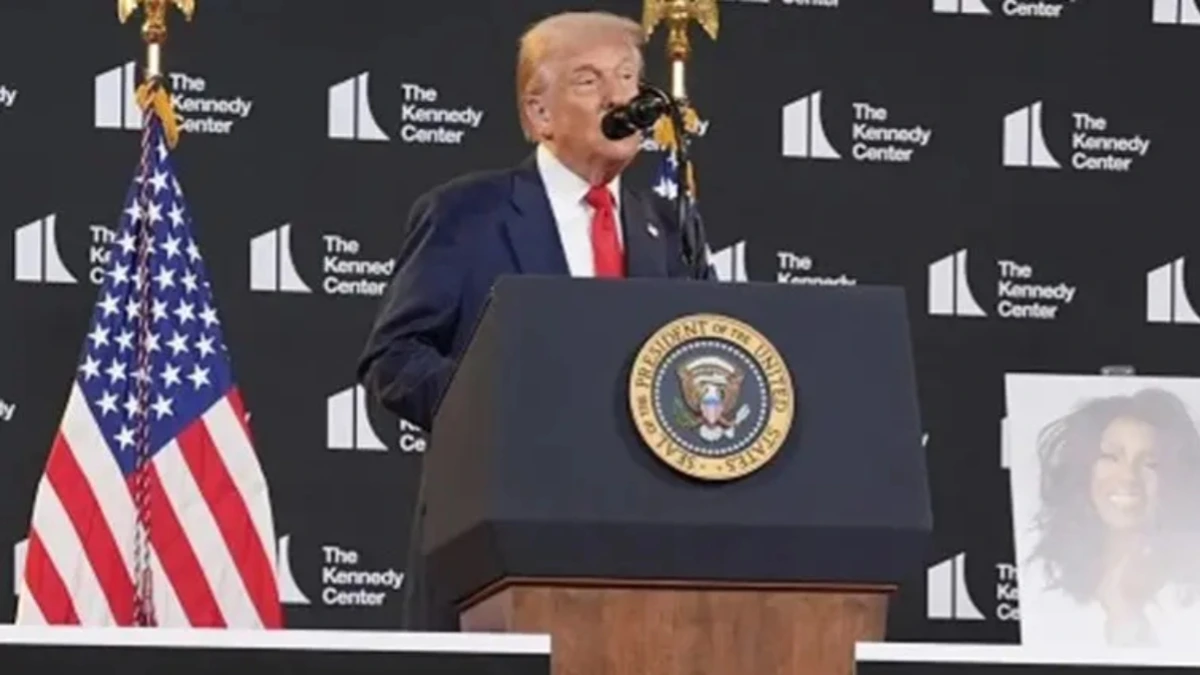
WASHINGTON — President Donald Trump on Wednesday announced a plan to provide one time payments of $1,776 to roughly 1.45 million active duty and reserve service members, unveiling what he called a military “Warrior Dividend” as inflation continues to weigh on household budgets across the United States.
Speaking from the White House, Trump said the payments would be distributed before Christmas and framed the move as both a financial boost and a symbolic gesture tied to the nation’s founding year.
“Military service members will receive a special we call Warrior Dividend before Christmas, in honor of our nation’s founding in seventeen seventy six,” Trump said.
The announcement comes as economic anxiety remains elevated, with rising prices for food, housing and energy shaping voter concerns ahead of the next election cycle.
The Warrior Dividend proposal follows months of criticism from Democrats and some economists who argue that inflation has eroded wage gains, particularly for middle and lower income households.
While inflation has cooled from its peak, prices remain significantly higher than pre pandemic levels.
Administration officials said the payments would be funded through existing defense appropriations and would not require new taxes.
A senior White House official, speaking on condition of anonymity to discuss internal planning, said the payments were intended to recognize service members facing higher living costs, especially those stationed in high cost areas.
Trump has previously backed targeted financial relief measures, though critics note that one time payments offer short term relief rather than structural economic change.
Economists were divided on the likely impact of the Warrior Dividend. Mark Ellison, a senior fellow at the nonpartisan Fiscal Policy Institute, said the payments could provide meaningful short term assistance without significantly affecting inflation.
“A one time transfer of this size, limited to a specific group, is unlikely to move overall inflation,” Ellison said. “For military families living paycheck to paycheck, it could help cover essentials like rent or utilities.”
Others cautioned that symbolic payments risk politicizing economic policy. “Linking financial relief to patriotic framing can resonate emotionally.
But it does not substitute for broader affordability reforms,” said Laura Chen, an economist at Georgetown University.
According to Defense Department data, the average enlisted service member earns about $2,300 per month before allowances. Housing and food stipends vary widely depending on location and family size.
By comparison, Congress approved stimulus checks of up to $1,200 per person during the pandemic, reaching a far broader segment of the population. The Warrior Dividend, at $1,776, is smaller in scope but more narrowly targeted.
Pentagon budget figures show total military compensation costs have risen steadily over the past decade, though advocates for service members argue that pay increases have not fully kept pace with living expenses near major bases.
For some service members, the announcement was met with cautious optimism. Staff Sgt. Angela Ruiz, stationed at Fort Hood, Texas, said the payment would help offset rising grocery costs.
“Everything costs more now, especially with kids,” Ruiz said. “It’s not life-changing money, but it helps.”
Others expressed skepticism. Petty Officer First Class James Nolan, based in San Diego, said housing affordability remained the bigger issue. “One payment is nice, but rent here keeps going up every year,” he said.
Military family advocacy groups welcomed the gesture while urging longer-term solutions. “Any support is appreciated,” said Karen Whitfield, director of the Military Families Network. “But stability matters more than one time relief.”
The White House said details on eligibility and distribution would be released in the coming weeks, with payments expected to be issued automatically.
Congressional reaction was mixed, with some lawmakers praising the recognition of military service and others questioning the timing and fiscal precedent.
Analysts said the Warrior Dividend could become part of a broader campaign narrative as Trump seeks to position himself as attentive to cost of living pressures while emphasizing national security.
Whether the proposal gains lasting policy traction may depend on economic conditions and legislative response in the months ahead.
Trump’s announcement of the Warrior Dividend marks a targeted effort to address inflation concerns among service members while underscoring the administration’s support for the military.
The payments promise short term financial relief but leave open broader questions about affordability and long term economic policy.


