
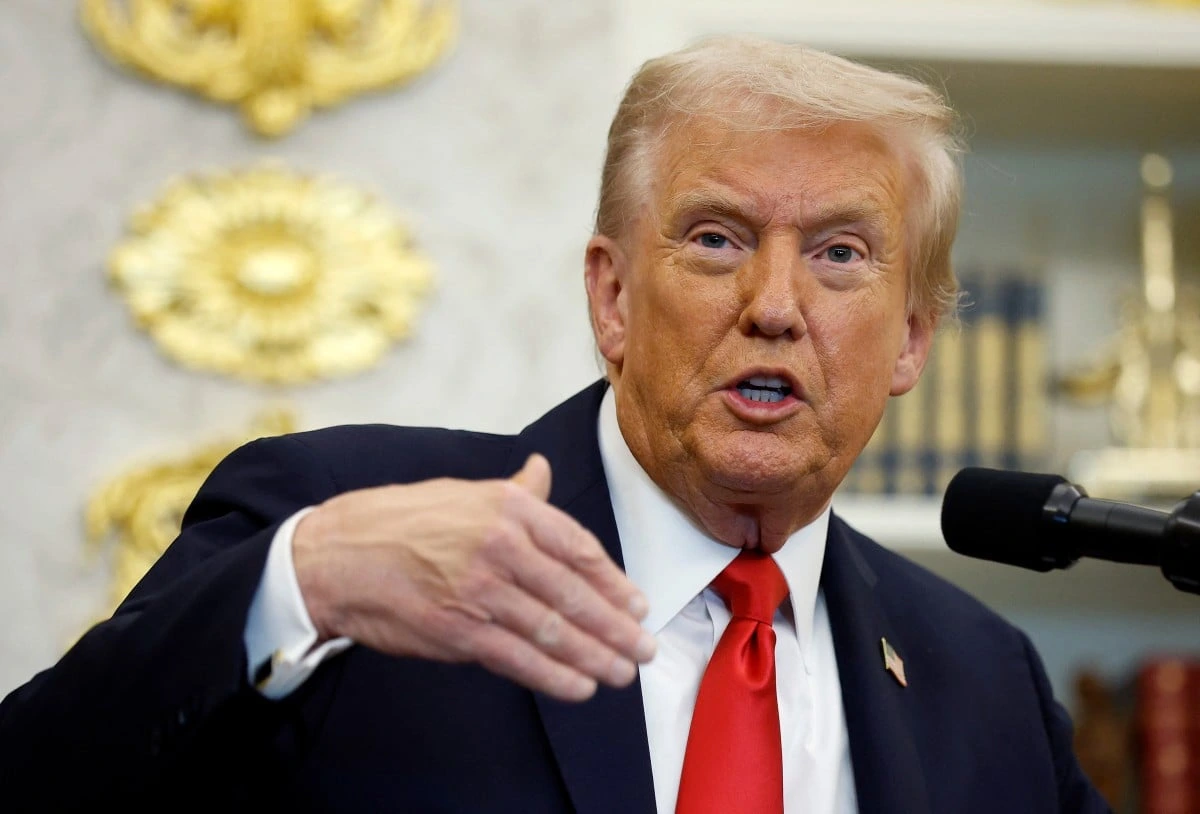
CARACAS/NEW YORK — President Donald Trump has issued a stern warning to Venezuela’s interim government, stating that the United States could launch a second military operation.
If acting President Delcy Rodríguez refuses to cooperate with US plans to stabilize the country.
The warning follows a high profile US military raid that captured former Venezuelan President Nicolás Maduro and his wife, Cilia Flores, earlier this month.
Trump, speaking to NBC News on Jan. 4, emphasized that the United States remains “very serious” about ensuring Venezuela’s political and economic transition.
He also suggested that US backed oil companies could be involved in efforts to rebuild Venezuela’s energy infrastructure.
The president’s remarks have intensified international scrutiny and fueled diplomatic tensions in Latin America and beyond.
KEY POINTS
- Second strike warning, Trump stated that failure to cooperate with US objectives in Venezuela could result in another military intervention.
- The United Nations and multiple global actors condemned the operation as a potential violation of international law.
- Latin American leaders, including Colombia and Mexico, publicly denounced the US intervention, citing threats to sovereignty.
The Trump administration’s warning comes in the wake of Operation Absolute Resolve, a US military operation executed on Jan. 3 that resulted in the capture of Nicolás Maduro and his wife.
US officials described the operation as a law enforcement mission, but critics argue it constitutes an act of military aggression against a sovereign nation.
The capture has left Venezuela politically fragmented. Delcy Rodríguez, sworn in as interim president in Caracas.
Is attempting to consolidate power amid ongoing instability and public unrest, including reports of gunfire and demonstrations in the capital.
US Venezuela relations have long been fraught due to ideological differences, allegations of narcotrafficking, and disputes over oil and natural resources.
Maduro’s government faced widespread economic collapse, hyperinflation, and mass emigration, creating long standing US concerns over regional stability.
The Monroe Doctrine, a historical US foreign policy asserting influence over Latin America, has been cited by critics as a framework underpinning Trump’s aggressive posture.
Colombian President Gustavo Petro compared recent US actions to historical expansionist policies, warning that such interventions violate international law and sovereignty norms.
International law experts have expressed concern about the legality of US operations in Venezuela.
Ravina Shamdasani, spokesperson for the United Nations High Commissioner for Human Rights, said the operation.
“Undermined a fundamental principle of international law that States must not threaten or use force against the territorial integrity or political independence of any state.”
Political analysts warn that Trump’s approach, which blends coercive diplomacy with military action, could destabilize not only Venezuela but the wider Latin American region.
Luis Fernández, a Caracas based political analyst, said, “The capture of Maduro has created deep uncertainty.
Citizens are unsure who truly controls power, and there is fear that further US involvement may escalate violence.”
Delcy Rodríguez, interim president of Venezuela, described the US intervention as illegal and vowed to pursue diplomatic remedies to protect national sovereignty.
“We will not submit our nation to external dictates,” Rodríguez said in a televised address. Venezuelan citizens expressed concern about the instability.
María Corina Machado, a prominent opposition leader, cautioned against trusting US aligned authorities, stating that Venezuelans must remain vigilant against foreign influence in national affairs.
Regional and Global Reactions
The raid has triggered broad international criticism.
At a UN Security Council meeting, several nations characterized the US action as a crime of aggression.
European NATO members also voiced concern, linking the situation to ongoing territorial disputes, including U.S. interest in Greenland.
Mexico’s president condemned the US raid on Venezuela, while emphasizing the need for careful diplomacy to avoid escalation.
Meanwhile, global powers such as China and Russia warned that unilateral military interventions threaten the international legal order and regional stability.
Trump’s threats of additional military action mark an unprecedented phase in US Latin American relations, where military coercion is tied directly to political compliance.
Diplomatic engagement, including negotiations at the UN and regional forums like the Organization of American States.
Will likely determine whether the situation stabilizes or escalates further.
The coming weeks are expected to test Venezuela’s interim government, the influence of the United States in Latin America.
And the resilience of international legal norms governing sovereignty and nonintervention.
Author’s Perspective
In my analysis, the US military operation in Venezuela marks a bold shift toward coercive diplomacy that could strain Latin American alliances.
I predict that continued US pressure may push regional nations to form independent defense and economic pacts, reducing Washington’s influence.
Watch emerging regional agreements they often reveal shifts in power before mainstream news reports them.
NOTE! This report was compiled from multiple reliable sources, including official statements, press releases, and verified media coverage. Caracas, New York, NBC News, and international diplomatic


