
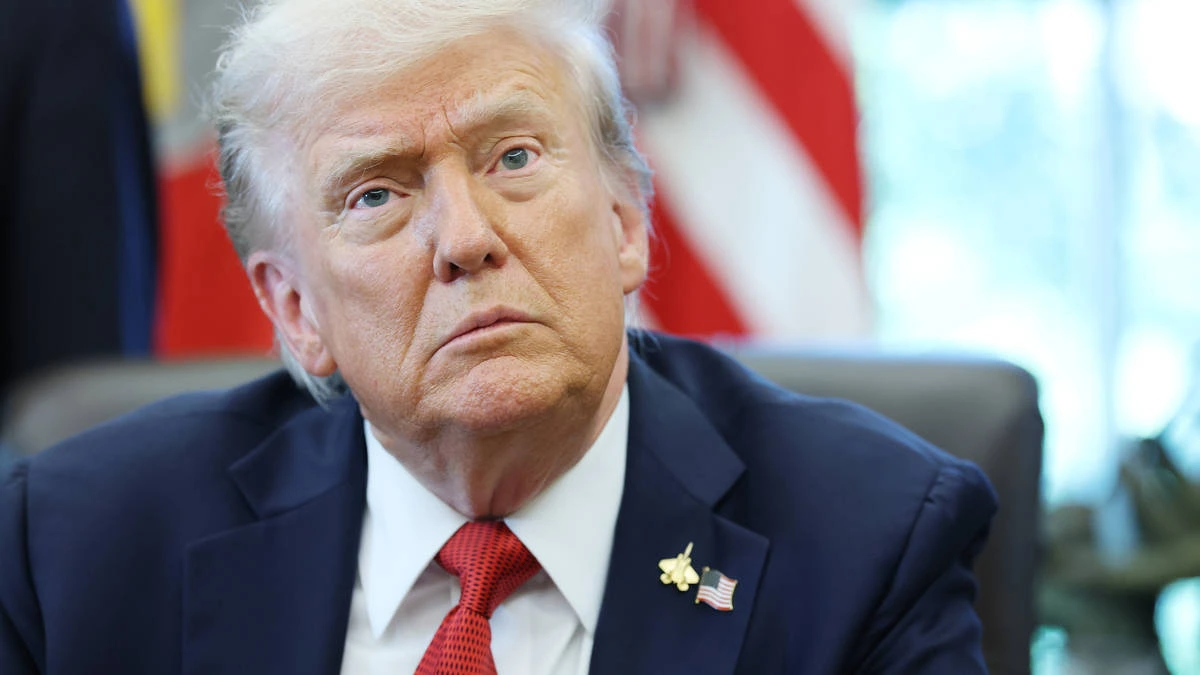
President Donald Trump delivered a Trump primetime address on economy Wednesday night, using a nationally televised speech to highlight what his administration described as key accomplishments during his first year back in office and to outline priorities heading into the 2026 election cycle.
Speaking at nine p.m. from the Diplomatic Room at the White House, Trump addressed the nation at a moment of political pressure, as public opinion polls show widespread concern over inflation, affordability and health care costs.
The address came as Trump faces subdued approval ratings and intensifying scrutiny over the economic direction of his second term.
The Trump primetime address on economy followed the release of a Quinnipiac University poll showing that only forty percent of Americans approved of the president’s handling of the economy, while fifty four percent disapproved of his overall job performance.
The survey found that economic conditions ranked as the most urgent issue facing the country, surpassing immigration and foreign policy.
Earlier Wednesday, Trump previewed the tone of his remarks while traveling back from Dover Air Force Base after attending a dignified transfer for US service members killed in Syria.
He characterized current economic challenges as the result of policies enacted under former President Joe Biden.
“We inherited a mess and we’ve done a great job,” Trump said. “Our country is going to be stronger than ever before very soon.”
Political analysts said the Trump primetime address on economy reflected a broader effort to reframe public perception ahead of next year’s midterm elections.
“Prime time presidential speeches are designed to reach voters who may not follow daily political news,” said Daniel Harper, a professor of political communication at American University.
“The economic message is especially critical because voters tend to judge presidents based on how they feel financially right now.”
Harper added that attributing economic challenges to a previous administration is common but may have diminishing effectiveness as a president moves further into a term.
Recent economic indicators show a mixed picture. Federal data released this month indicated a slowdown in hiring compared with earlier in the year, alongside a modest increase in consumer prices driven largely by housing and health care expenses.
Gas prices have declined in several regions, a point administration officials have highlighted as evidence of progress.
The Quinnipiac poll found that economic dissatisfaction cut across party lines, with independent voters expressing the highest level of concern.
Similar surveys conducted during Trump’s first term showed stronger economic approval at comparable points, when inflation was lower and job growth more robust.
For many Americans, the Trump primetime address on economy resonated unevenly.
“I listen to the speeches, but what matters is what I see at the store,” said Maria Lopez, a mother of two in San Antonio. “Food and rent are still expensive.”
Others said the president deserved more time. “I think he’s focused on the right things,” said Kevin Wallace, who owns a trucking business in Ohio. “Fuel costs are better than last year, and that helps businesses like mine.”
Health care advocates were also watching closely as Affordable Care Act subsidies are set to expire in 2026, potentially raising premiums for millions of Americans.
“That issue affects household budgets directly,” said Sharon Kim, a senior analyst at a nonpartisan health policy institute. “How it is handled will influence voter sentiment.”
White House press secretary Karoline Leavitt said the Trump primetime address on economy was intended to spotlight what she called the administration’s historic accomplishments, including border security efforts and energy policy.
She said Trump would also outline plans for the next three years, focusing on economic growth and national strength.
Republicans face a challenging environment heading into the 2026 midterms, where control of Congress is at stake.
Analysts said economic performance and health care affordability are expected to dominate campaign debates, regardless of broader foreign policy developments.
“If inflation remains elevated, it will be difficult to shift the conversation,” Harper said. “Economic outcomes will matter more than rhetoric.”
The Trump primetime address on economy underscored the central role financial concerns are likely to play in shaping the remainder of the president’s second term.
While Trump emphasized achievements and cast current challenges as inherited, polling data suggest many Americans remain unconvinced.
As the 2026 elections approach, the administration’s economic policies and their tangible impact on daily life are expected to remain at the forefront of national political discussion.


