
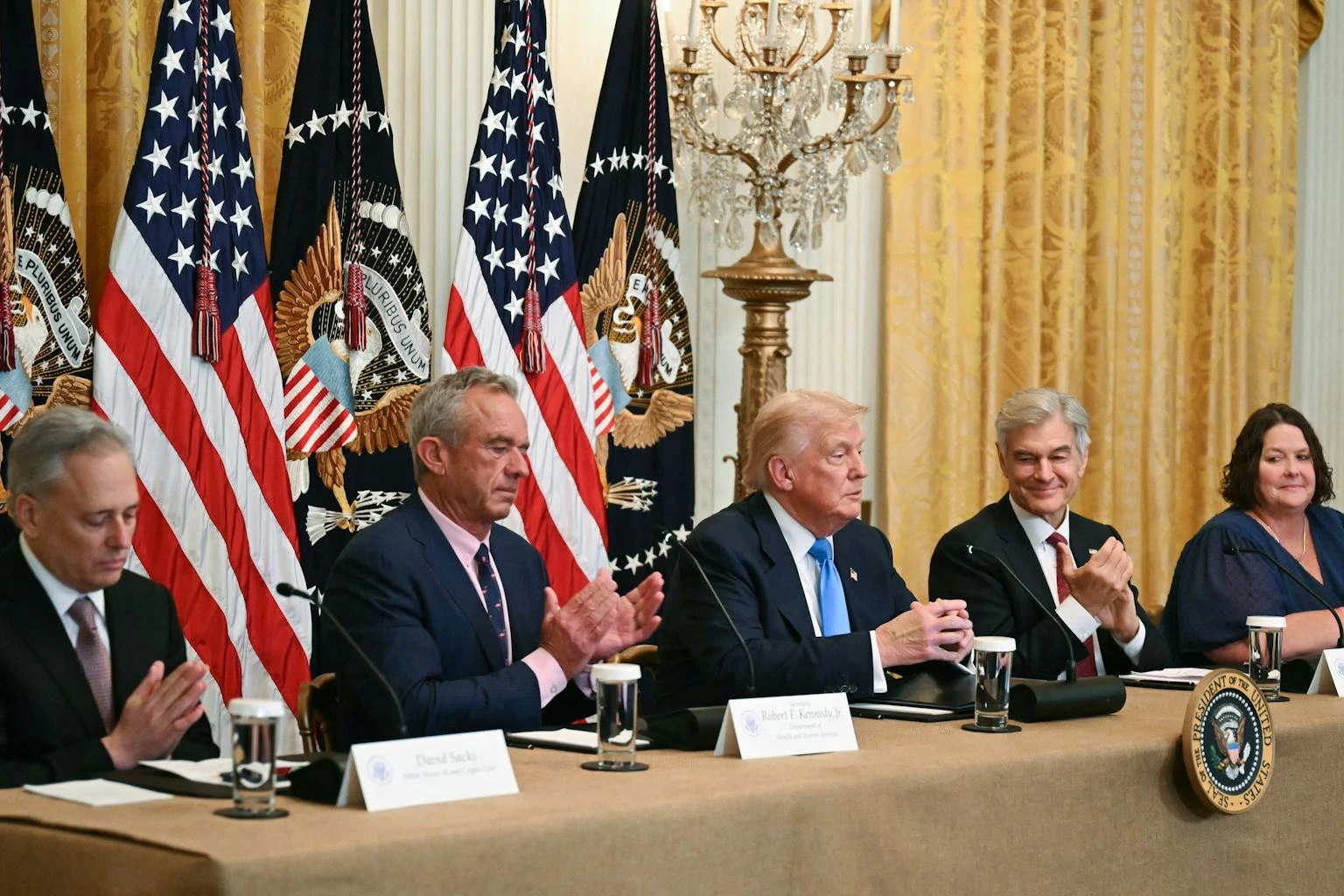
TECHY QUANTUM — President Donald Trump is taking an unusual step in his second term by attaching his personal brand to major government buildings, programs and initiatives, blurring the line between private identity and public institutions in ways that have little modern precedent.
The effort, which includes renaming cultural landmarks and introducing Trump branded federal programs, has drawn scrutiny from historians, legal scholars and political opponents who say the move raises questions about presidential power, legacy and the durability of such changes.
The Trump branding of government programs has emerged as a defining feature of the administration’s first year back in office, reshaping how federal initiatives are presented to the public and how credit for them is assigned.
Trump built his public profile long before politics by placing his name on real estate towers, golf courses and consumer products.
That approach carried into his first term, when his name became closely associated with policies such as tax cuts and immigration restrictions, though federal programs themselves retained traditional titles.
Since returning to office in January, the scope has expanded. Trump’s name has been added to prominent Washington institutions, including the Kennedy Center for the Performing Arts and the US Institute of Peace.
New initiatives launched or proposed by the administration include Trump Accounts, a tax advantaged federal savings program for children, the Trump Gold Card visa program for wealthy foreign investors and TrumpRx.gov, a government run prescription drug pricing platform planned for launch in twenty twenty six.
Administration officials say the branding reflects accountability and leadership rather than personal promotion. Critics argue it marks a shift in how presidential authority is exercised and communicated.
Some scholars view the Trump branding of government programs as a strategic attempt to cement political legacy without relying solely on legislation.
“Branding is a shortcut to visibility,” said Daniel Reeve, a political historian at Georgetown University. “Laws can be repealed and policies can be revised, but names shape public memory, at least temporarily.”
Others question whether the changes will endure. Institutions renamed through executive action or board decisions could be renamed again under a future administration, particularly if control of Congress or the White House changes hands.
“Federal naming conventions have traditionally followed a norm of restraint,” said Laura Mendel, a constitutional law professor at Northwestern University. “Breaking that norm does not make the changes illegal, but it does make them vulnerable.”
The administration disputes claims that the strategy weakens institutions. A White House official, speaking on background, said the president believes clear branding helps citizens understand which administration delivered specific benefits.
Historically, most federal buildings named after presidents received those designations years after they left office, often through acts of Congress.
According to the National Park Service, fewer than five major federal landmarks were named for sitting presidents during the twentieth century, and those were largely ceremonial.
In contrast, Trump’s second term has seen multiple naming decisions within a single year, spanning culture, defense, finance and health policy.
No previous administration has proposed naming a class of Navy warships after a sitting president, though the Trump class battleships remain in the early design phase and are not yet approved by Congress.
Polling by the nonpartisan Pew Research Center earlier this fall found Americans evenly divided on whether presidents should attach their names to federal programs, with sharper opposition among independents and Democrats.
Reaction has varied across communities directly affected by the changes. At the newly renamed Donald J. Trump and John F. Kennedy Memorial Center for the Performing Arts, several artists canceled scheduled performances in protest.
“It feels like history is being rewritten in real time,” said Margaret Ellis, a longtime Kennedy Center donor. “The building belongs to the public, not to any one political moment.”
Supporters say the president is being transparent. “At least you know who’s responsible,” said Robert Klein, a small business owner from Ohio visiting Washington. “If it works, he gets credit. If it doesn’t, voters can judge.”
The durability of the Trump branding of government programs will likely depend on future elections, court challenges and congressional action.
Programs created by statute, such as Trump Accounts, would require legislative approval to rename. Others, including websites and executive branch initiatives, could be altered more easily.
Legal experts say lawsuits are possible but uncertain. Courts have historically deferred to executive discretion on naming unless it conflicts with statutory language.
Meanwhile, administration officials suggest additional branded initiatives may be announced, particularly tied to infrastructure, veterans services and national security.
President Trump’s decision to place his name on federal institutions and programs marks a significant departure from modern presidential norms, reflecting a governing style shaped by decades in private branding.
Whether these changes represent a lasting legacy or a temporary assertion of power remains unclear.
What is certain is that the Trump branding of government programs has reshaped the visual and symbolic landscape of Washington, raising enduring questions about how leadership, credit and public trust intersect in American governance.
NOTE! This report was compiled from multiple reliable sources, including official statements, press releases, and verified media coverage.


