
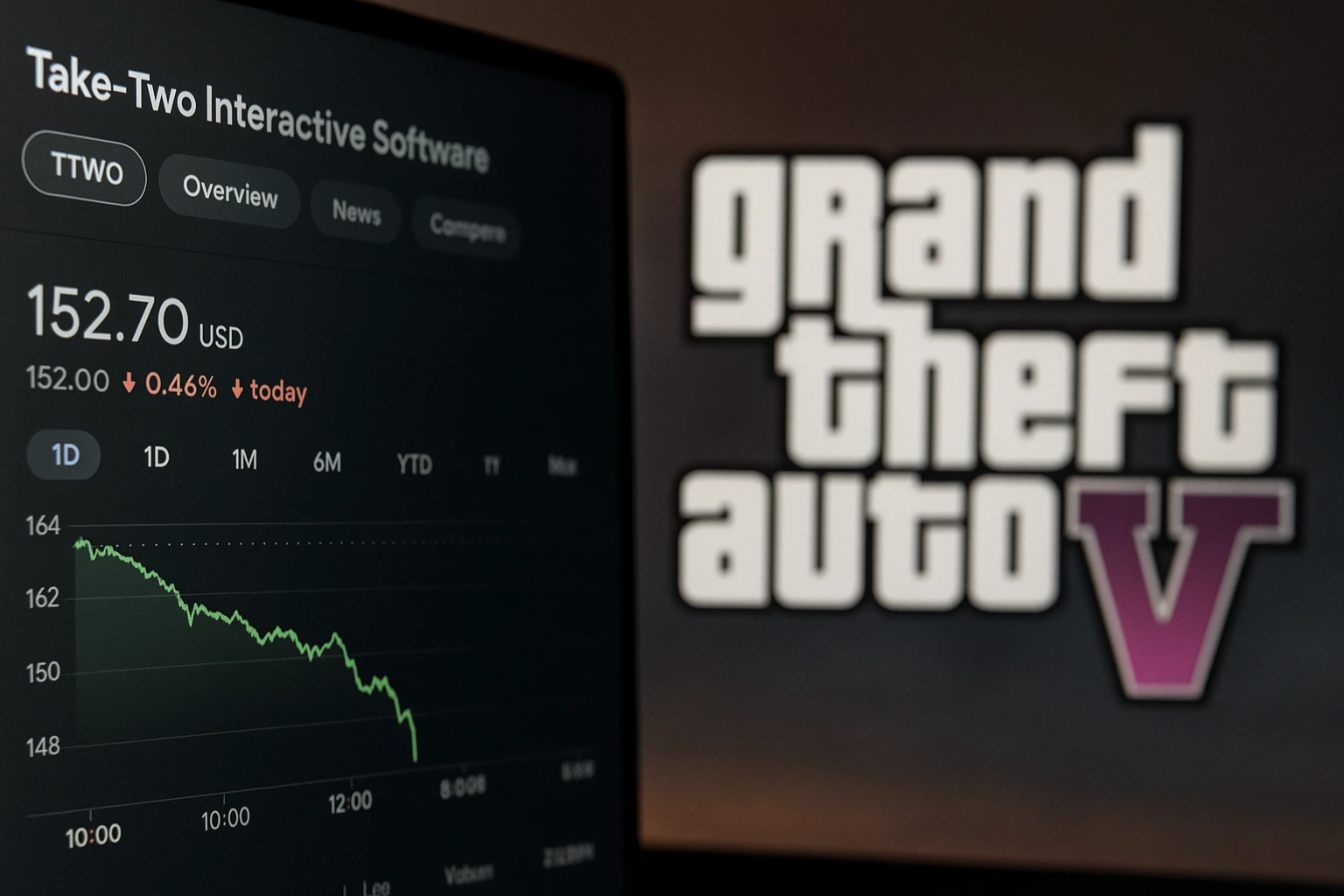
Take Two Interactive Software’s stock tumbled 7% in after hours trading Thursday after its subsidiary Rockstar Games announced another delay in the release of Grand Theft Auto VI, pushing the long awaited launch to Nov. 19, 2026.
The setback marks the latest in a series of postponements for what is widely considered one of the most anticipated video game releases in history.
“We are sorry for adding additional time to what we realize has been a long wait, but these extra months will allow us to finish the game with the level of polish you have come to expect and deserve,” Rockstar said in a post on its social media channels.
The Grand Theft Auto franchise, a cultural and commercial juggernaut for more than two decades, has generated billions in revenue and remains one of gaming’s most influential series.
The previous main installment, Grand Theft Auto V, has sold over 190 million copies worldwide since its 2013 debut, making it the second best selling video game of all time after Minecraft.
The upcoming title, Grand Theft Auto VI, was originally slated for a fall 2025 release. The first trailer, unveiled in December 2023, broke YouTube records with more than 100 million views in 24 hours, highlighting the immense anticipation surrounding the game.
Rockstar had already postponed the launch once earlier this year, in May, citing production challenges. Thursday’s announcement extends the release window by another year, sparking disappointment among investors and players alike.
Analysts say the delay underscores both the massive scale of Rockstar’s production ambitions and the mounting pressures facing major game publishers to meet rising player expectations.
“Rockstar Games has a reputation for delivering near flawless open world experiences, and that comes with development challenges that few studios can manage,” said Andrew Marks, a senior gaming analyst at Wedbush Securities.
“However, repeated delays can erode investor confidence, especially when tied to a flagship franchise like Grand Theft Auto.” Industry experts point to the increasing costs of game development as a contributing factor.
According to Newzoo, top tier “AAA” games now take an average of six to eight years and hundreds of millions of dollars to produce.
“When you’re dealing with a property that has this much global expectation, it’s not unusual for publishers to extend timelines,” said Marks. “But the market reacts swiftly to any sign of uncertainty.”
Take Two reported strong financial results for its fiscal second quarter despite the delay. Revenue rose 33% to $1.96 billion, beating LSEG estimates of $1.72 billion.
The company reported a net loss of $133.9 million, or 73 cents per share, an improvement from the $365.5 million loss, or $2.08 per share, reported a year earlier.
CEO Strauss Zelnick described the results as part of a broader upward trend, driven by strong sales of titles such as NBA 2K26, Borderlands 4, and Red Dead Redemption 2.
“With the most robust pipeline in our company’s history, we expect to achieve record levels of net bookings in fiscal 2027,” Zelnick said in the earnings release.
Take Two also raised its annual bookings forecast to between $6.38 billion and $6.48 billion, up from its previous range of $6.05 billion to $6.15 billion. The midpoint of that forecast, $6.43 billion, exceeds Wall Street expectations of $6.18 billion.
Despite the short term market reaction, some analysts believe the delay may ultimately bolster Take Two’s long term performance.
“If Rockstar delivers another industry defining title, the payoff will far exceed any temporary stock dip,” said Lisa Chang, a senior equity strategist at Morganfield Capital. “GTA VI will likely dominate both sales and cultural conversation when it launches.”
Fans, meanwhile, expressed a mix of frustration and understanding following the announcement. “I’ve been waiting for GTA VI since college,” said Malik Johnson, a gamer from Atlanta.
“It’s disappointing, but if the delay means fewer bugs and a better experience, I can live with it.” Others were less forgiving. “This is the third time they’ve moved the date,” said Claudia Ramirez, a digital artist in Los Angeles.
“At some point, you start wondering if the hype is bigger than the game itself.” Developers familiar with large scale game production defended Rockstar’s decision.
“Players often underestimate how complex open world systems are,” said Javier Ortiz, a former game designer at Ubisoft. “Every city block, every NPC, every mission needs testing and optimization. It’s better to delay than release something broken.”
Looking ahead, Take Two’s focus appears to be on sustaining momentum through its broader portfolio while GTA VI remains in development.
The company has continued to expand its mobile division and live service offerings, aiming to diversify revenue streams beyond single blockbuster releases.
Zelnick emphasized that the extended production window will not derail the company’s growth trajectory. “We remain excited and confident they will deliver an unrivaled blockbuster entertainment experience,” he said.
Market analysts predict that Grand Theft Auto VI could become one of the highest-grossing entertainment products ever made upon release, potentially surpassing GTA V’s $1 billion in launch week sales.
However, with the new timeline pushing the launch into fiscal 2027, investors may face an extended wait before seeing a tangible payoff.
The delay of Grand Theft Auto VI highlights the delicate balance between creative perfection and corporate pressure in today’s video game industry.
While Take Two’s immediate stock drop reflects market frustration, the company’s growing revenues and ambitious project pipeline suggest underlying resilience.
For fans, another year of waiting may feel long but for Rockstar Games, time remains the ultimate tool in crafting the next evolution of one of gaming’s most iconic franchises.


