
KEY POINTS
- A major Verizon outage on January 14 disrupted service for millions of users across the US, leaving devices in “SOS” mode.
- T-Mobile response to Verizon outage emphasized operational transparency and network reliability without criticizing competitors.
- Public reaction included both frustration and humor, highlighting the social and practical impacts of large scale mobile service disruptions.
On January 14, a widespread Verizon outage interrupted cellular voice, text, and data services across the United States, affecting millions of customers and limiting access to emergency services in some regions.
In a strategic move, T-Mobile publicly addressed the incident on social media, underscoring the stability of its own network.
This incident illustrates both the operational vulnerabilities of large mobile networks and the marketing impact of timely, fact-based communication from competitors.
Verizon Communications serves over 140 million wireless subscribers in the US, and outages of this scale, while uncommon, have occurred in prior years.
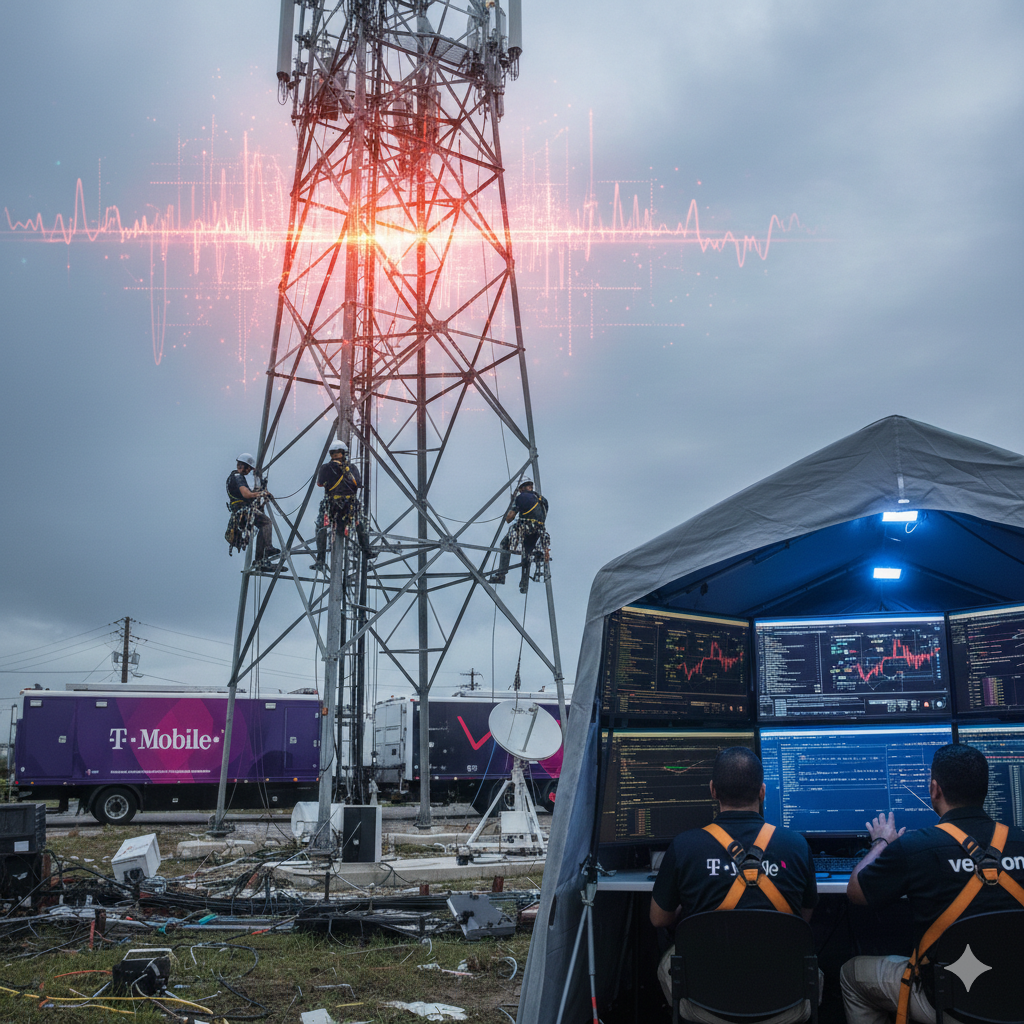
The January 14 outage was first reported around midday Eastern Time, with users across major metropolitan areas including New York, Chicago, Boston, Washington, DC, and Seattle experiencing disrupted service.
Devices displayed “SOS” or “network unavailable,” indicating loss of carrier connectivity. Verizon acknowledged the outage without specifying the cause or estimated restoration time, while engineering teams were deployed to resolve the issue.
Telecommunications analysts note that network outages can arise from software configuration errors, routing failures, or overloaded core network elements.
According to an industry spokesperson, the T-Mobile response to Verizon outage was “measured, factual, and designed to reassure customers while minimizing competitive tension.”
Experts emphasize that such factual communications are increasingly important in an era where social media amplifies customer concerns in real time.
From a business perspective, measured competitor responses can shape public perception, with long term implications for customer loyalty, brand reputation, and regulatory scrutiny.
Federal Communications Commission (FCC) officials have indicated they will monitor the incident as part of their oversight of network reliability and emergency service access.
Christina Farrell, deputy commissioner, New York City Emergency Management, said city agencies were monitoring the outage and coordinating with network providers to mitigate impact on emergency communications.
Anonymous telecom analyst highlighted that “T-Mobile’s measured approach during the Verizon outage demonstrates strategic use of social media for transparency without escalating competitive conflict.”
Social media users shared mixed reactions, ranging from frustration at connectivity loss to humor, posting memes referencing T-Mobile’s communications and public statements.
Verizon teams continued troubleshooting into the evening, with full restoration projected over several hours. Analysts anticipate regulatory review focusing on outage transparency, network redundancy, and public safety implications.
Carriers may accelerate investment in resilience and contingency planning to prevent similar disruptions.
The January 14 Verizon outage underlined the operational and societal stakes of network failures.
The T-Mobile response to Verizon outage highlighted the importance of transparent, fact based communication, setting a model for competitor engagement during service disruptions while emphasizing the critical nature of reliable mobile connectivity in modern life.
Author’s Perspective
In my analysis, T-Mobile’s measured response underscores the strategic value of network transparency during outages.
I predict carriers will adopt real time outage dashboards as an industry standard. Consumers gain reliability insights, while businesses can anticipate disruptions. Monitor competitor communications to benchmark service resilience.
NOTE! This report was compiled from multiple reliable sources, including official statements, press releases, and verified media coverage.


